Identifying Wide Moats in a Fragmented REIT Market

Identifying Wide Moats in a Fragmented REIT Market
Those of us who have dealt with REITs in our income portfolios may understand very well that not all cash flows are created equal. Now this is especially true in the current climate where the real estate market is showing serious signs of being fragmented. According to JP Morgan, the market is characterized by a "stall" rather than a uniform crash, where 40% of the market is in decline while others remain stable. Regional disparities are severe, with falling prices and inventory gluts on the West Coast and Sun Belt, contrasted with limited inventory in parts of the Northeast and Midwest.
With such conditions, it is easy for investors to mistake "high occupancy" for a "sustainable moat", especially when it comes to REITs specifically. However, for the institutional allocator, the distinction lies in the quality, durability, and growth potential of those underlying distributions. A true wide moat in the REIT sector is defined by a company’s ability to generate consistently high returns on invested capital (ROIC) that exceed its weighted average cost of capital (WACC) over long, often volatile, cycles.
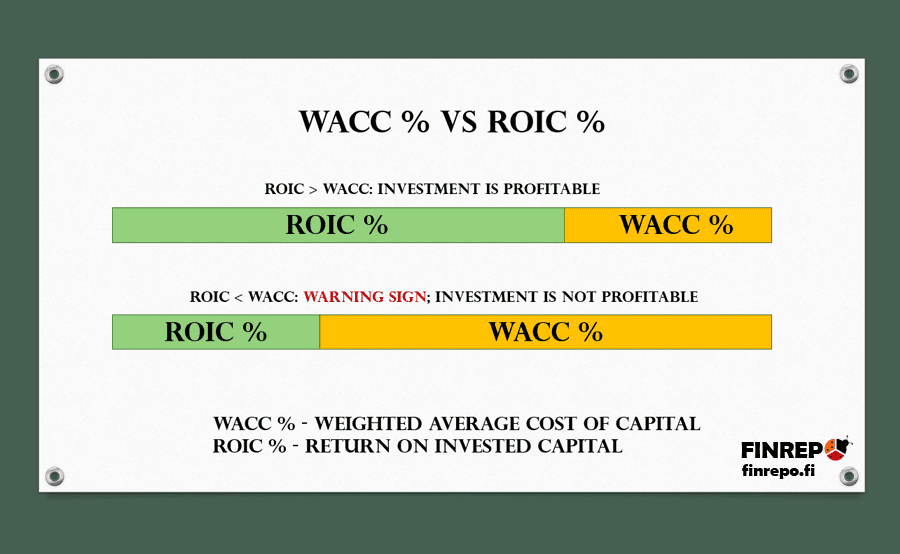
Transitioning from the "dirt" side of commercial development to the macro-analysis of publicly traded vehicles makes sense, given that the public market provides a transparency that private partnerships often lack. More importantly, it also demands a more rigorous definition of competitive advantage. We are no longer just looking for "location, location, location." We are looking for structural barriers that prevent the erosion of margins.
As we navigate the current fiscal landscape, identifying these moats is the primary driver of idiosyncratic alpha. Whether it is the scarcity of power in the data center space or the cost-of-capital dominance of the net lease giants, the goal is to separate the "average" landlords from the "elite" compounders.
This blog post examines the anatomy of these advantages and why a wider moat is the only reliable insurance policy against market fragmentation.
Supply Constraints and Switching Costs
For the professional allocator, identifying a wide moat involves looking for assets where the replacement cost is not just high, but where replication is effectively impossible due to external constraints. Typically, this scarcity engine manifests in two primary forms:
1. Infrastructure Complexity and Ecosystem Stickiness
In high-tech sectors like Data Centers and Cold Storage, the moat is no longer defined by the four walls of the warehouse. Instead, it is defined by entitled power, connectivity density, and integration.
As AI compute demand skyrockets, the bottleneck is the power grid. Incumbents like Digital Realty (DLR) and Equinix (EQIX) hold legacy sites with massive, pre-secured power allocations that would take years (if not a decade) to replicate today.
For an enterprise tenant, the cost of moving a mission-critical server deployment is massive, and it involves significant operational risk and downtime. This "stickiness" allows these REITs to maintain high retention rates and push annual escalators even when new, raw "shell" space enters the market.
2. Regulatory & Zoning Barriers: The "Entitlement" Moat
The most durable moats are often protected by municipal friction. When new supply is effectively legislated out of existence, the existing assets gain immense pricing power.
Manufactured Housing (MH): Often cited as the most "recession-resistant" sector, REITs like Equity LifeStyle (ELS) benefit from the fact that virtually no new MH communities are being permitted in high-demand coastal markets. This creates a natural monopoly on "attainable" housing.
Billboard Monopolies: Companies like Lamar (LAMR) operate in a highly regulated environment where the number of legal permits is capped. You cannot simply build a competing sign next to an existing one. This regulatory cap on supply, combined with the low capital expenditure required to maintain a sign, results in some of the highest free cash flow margins in the REIT universe.
3. Embedded Growth Through Scarcity
The ultimate result of the Scarcity Engine is mark-to-market upside. In the Industrial sector, specifically with players like EastGroup (EGP), the "infill" nature of the assets means they are located in land-constrained areas where developers cannot add new inventory.
This supply-demand imbalance allows landlords to capture double-digit leasing spreads as old leases roll over to current market rates, providing a structural growth lever that is independent of broader economic volatility.
The Cost of Capital Advantage
While we discussed how critical a moat is to REIT investing, it is also important to keep in mind the cost of capital angle. This, of course, requires looking past the gross assets to the spread between the investment cap rate and the marginal cost of capital.
When we’re dealing with a fragmented market, elite REITs like Prologis (PLD), Realty Income (O), and Agree Realty (ADC) utilize their "A-rated" balance sheets as a strategic weapon in three distinct ways:
1. The WACC Arbitrage
While private equity and smaller syndicators often rely on high-cost mezzanine debt or expensive preferred equity, the "Big Three" net lease and industrial players can tap the unsecured bond market at significantly tighter spreads. When a REIT’s WACC is 100 to 200 basis points lower than the market average, they can outbid competitors for "trophy" assets while still achieving a higher internal rate of return (IRR) for their shareholders.
2. Accretive Consolidation of Fragmented Portfolios
Scale allows these entities to act as the "consolidator of choice." For instance, REITs such as Realty Income have transitioned from a landlord for regional fast-food chains to a global aggregator of mission-critical infrastructure. Because of their liquidity, they can execute massive sale-leaseback transactions (often in the billions) that smaller players simply cannot digest. This ability to provide "certainty of close" allows them to negotiate favorable terms, effectively buying at a discount to the "retail" cap rate.
3. The Development Yield Spread
Scale grants the ability to fund proprietary development pipelines internally. REITs such as EastGroup (EGP) and Prologis, are not just buying stabilized assets at a 5% cap rate; they build them at a 6.5% or 7% yield on cost.
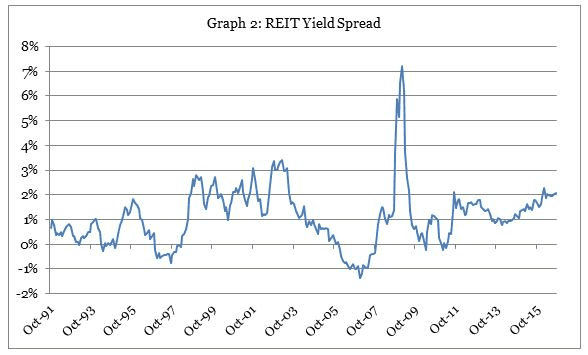
With supply-constrained market dynamics, the ability to manufacture "instant equity" through the development spread (while also maintaining a low cost of debt) creates a compounding machine that is nearly impossible for non-scale competitors to replicate.
Ultimately, when evaluating a REIT’s moat, the "Safety of the Spread" is paramount. A wide-moat REIT grows its AFFO per share without over-leveraging the balance sheet or diluting the equity base, thanks to its superior access to capital.
Automate Your REIT Alpha with Surmount Wealth
Identifying a wide moat is only half the battle; the other half is disciplined execution. In this market, where cost of capital and entry points shift by the hour, even the most sophisticated thesis can suffer from "implementation leakage" or emotional bias.
Surmount Wealth bridges the gap between institutional research and automated precision.
Whether you are looking to capitalize on the supply scarcity of Data Center REITs or arbitrage the valuation gaps in Industrial logistics, Surmount allows you to transform the insights we discussed today into a systematic, rule-based strategy.
Why Elite Advisors are Automating with Surmount:
Custom Strategy Logic: Don’t settle for a generic index. Build a custom "Wide Moat" strategy that targets specific P/AFFO multiples, dividend growth rates, or debt-to-equity thresholds.
Prebuilt Institutional Models: Gain immediate access to professionally vetted, automated strategies designed to outperform standard benchmarks.
Eliminate Execution Friction: Automate rebalancing and entry/exit points across your client portfolios, ensuring your thesis is executed exactly as intended—24/7.
Institutional-Grade Backtesting: Stress-test your REIT assumptions against historical volatility before committing a single dollar of client capital.
Stop Watching the Moat. Start Capturing It.
The opportunity in REITs is structural, but your advantage lies in your ability to scale your expertise. Don't let manual trading be the bottleneck of your firm's growth.
[Book a Private Demo with Surmount Wealth Today] and see how you can automate any investment thesis into a high-performance, hands-off engine.