Building a Resilient RIA: Tech, Custody, and Cybersecurity in a Post-Outage World
In June 2024, Evolve Bank & Trust disclosed a data breach affecting 16.9 million customers—names, Social Security numbers, account numbers, and birth dates exposed. That same year, a ransomware attack at a cloud IT service provider brought down 60 U.S. credit unions simultaneously. Meanwhile, nearly 20% of Schwab-affiliated advisors signaled they're evaluating adding or changing custodians.
These aren't isolated incidents. They're symptoms of a structural vulnerability in the RIA channel—one that's pushing resilience from back-office concern to boardroom imperative.
The Cost of Downtime Has Never Been Higher
Financial services firms now shoulder an average data breach cost of $6.08 million, 22% above the global average. But the real damage extends far beyond dollars. Client trust erodes. Regulatory scrutiny intensifies. Operational paralysis spreads.
The math is straightforward: financial institutions take an average of 168 days to identify a breach and 51 days to contain it. That's seven months of exposure—seven months when attackers move laterally, compromise additional systems, and exfiltrate sensitive data.
For RIAs managing client assets in the hundreds of millions or billions, this timeline is unacceptable. Yet many firms remain dangerously underprepared. Only about half of countries surveyed maintain a national, financial sector-focused cybersecurity strategy or dedicated regulations.
Why Multi-Custodian Strategies Are No Longer Optional
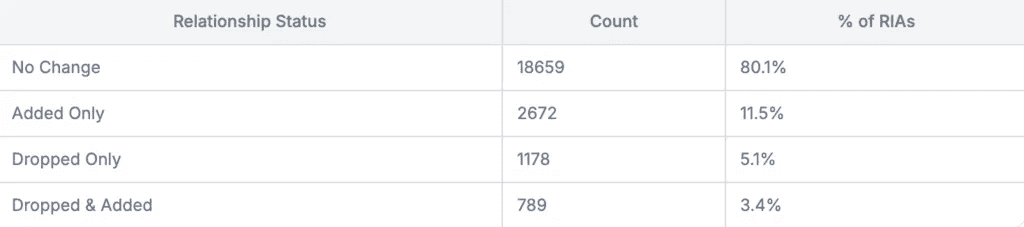
The 27.2% of RIAs now using two or more custodians aren't hedging for competitive pricing alone. They're building redundancy against operational failure.
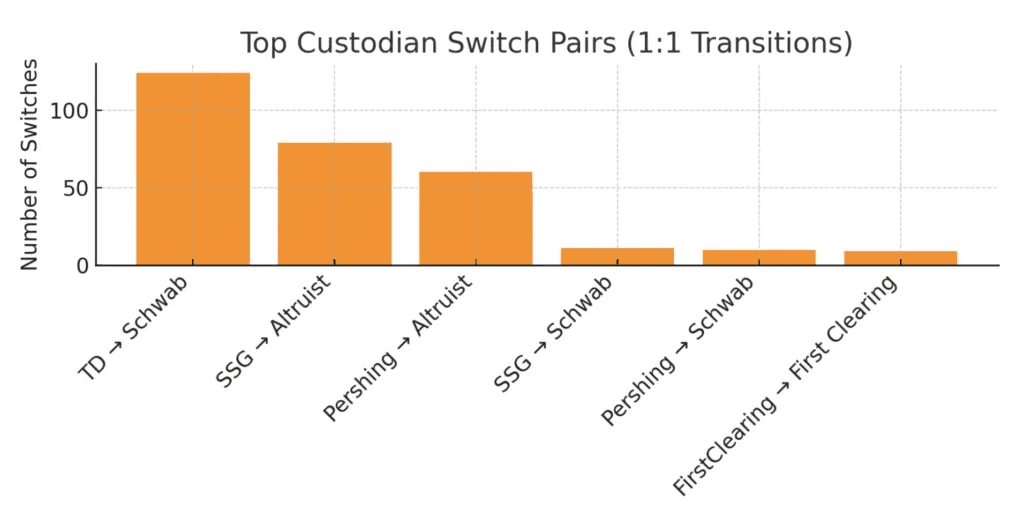
When Schwab absorbed TD Ameritrade, advisors watched closely. Service quality concerns surfaced. Integration hiccups emerged. The lesson? Concentration risk isn't just about assets—it's about infrastructure dependency.
A multi-custodian approach delivers three core benefits:
Operational redundancy: When one platform experiences downtime, business continues on another
Negotiating leverage: Competition for custody relationships improves service quality and technology offerings
Client optionality: Different custodians excel at different capabilities—international trading, alternative assets, UHNW services
But diversification introduces complexity. Inconsistent transaction categorization across custodians can miscalculate advisor payouts. Missing cost basis data compromises client performance reports. Timing mismatches between custodians create reconciliation headaches that consume hours of staff time.
Smart firms solve this through technology, not manpower. Unified data governance platforms eliminate format inconsistencies. Automated reconciliation catches errors before they compound. Real-time monitoring flags discrepancies immediately.
The Resilience Checklist: Scaled by AUM
Operational resilience isn't uniform. A $150 million RIA and a $1.5 billion firm face materially different risk profiles. Here's how the requirements scale:
Firms Over $100M AUM: Building the Foundation
Technology Stack
Cloud-based CRM and portfolio management with automatic failover
Multi-factor authentication across all systems
Daily encrypted backups with 30-day retention minimum
Documented vendor security protocols
Custody & Continuity
Primary custodian relationship with clear SLAs
Written business continuity plan addressing temporary and extended interruptions
Annual testing of disaster recovery procedures
Alternative communication channels for client contact
Cybersecurity Baseline
Quarterly vulnerability assessments
Annual third-party penetration testing
Employee phishing simulation and training
Incident response plan with defined escalation paths
Firms Over $1B AUM: Enterprise-Grade Resilience
Technology Stack
Zero-trust architecture with conditional access policies
Security Information and Event Management (SIEM) system with 24/7 monitoring
Privileged access management for system administrators
Quarterly tabletop exercises simulating breach scenarios
Custody & Continuity
Dual-custodian model with complementary capabilities
Dedicated disaster recovery site with failover in <4 hours
Weekly backup testing and quarterly full recovery drills
Crisis management team with pre-assigned roles and external communications protocols
Cybersecurity Advanced
Continuous threat exposure management (CTEM) program
Managed detection and response (MDR) service
Board-level cybersecurity expertise and quarterly briefings
Cyber insurance with adequate coverage for business interruption
The gap between these tiers isn't just operational—it's existential. Firms with mature incident response capabilities save an average of $248,000 annually compared to those without.
What Regulators Are Watching
The SEC expects robust business continuity plans as part of an RIA's fiduciary obligation, even though the 2016 proposed rule was never finalized. State regulators have moved faster—NASAA's model rule requires written business continuity and succession plans for state-registered advisors.
The message is clear: demonstrate preparedness or face heightened scrutiny. Recent enforcement actions target firms that:
Failed to protect client data despite known vulnerabilities
Lacked adequate vendor due diligence procedures
Couldn't restore operations within reasonable timeframes
Missed mandatory breach disclosure deadlines
SEC amendments in late 2023 require financial organizations to disclose material cybersecurity incidents. New York's NYDFS regulations now mandate reporting of ransomware attacks hitting material network segments within 24 hours, along with extortion payments.
Compliance isn't just defensive. Well-documented resilience programs become competitive differentiators when prospective clients conduct due diligence.
The Third-Party Problem
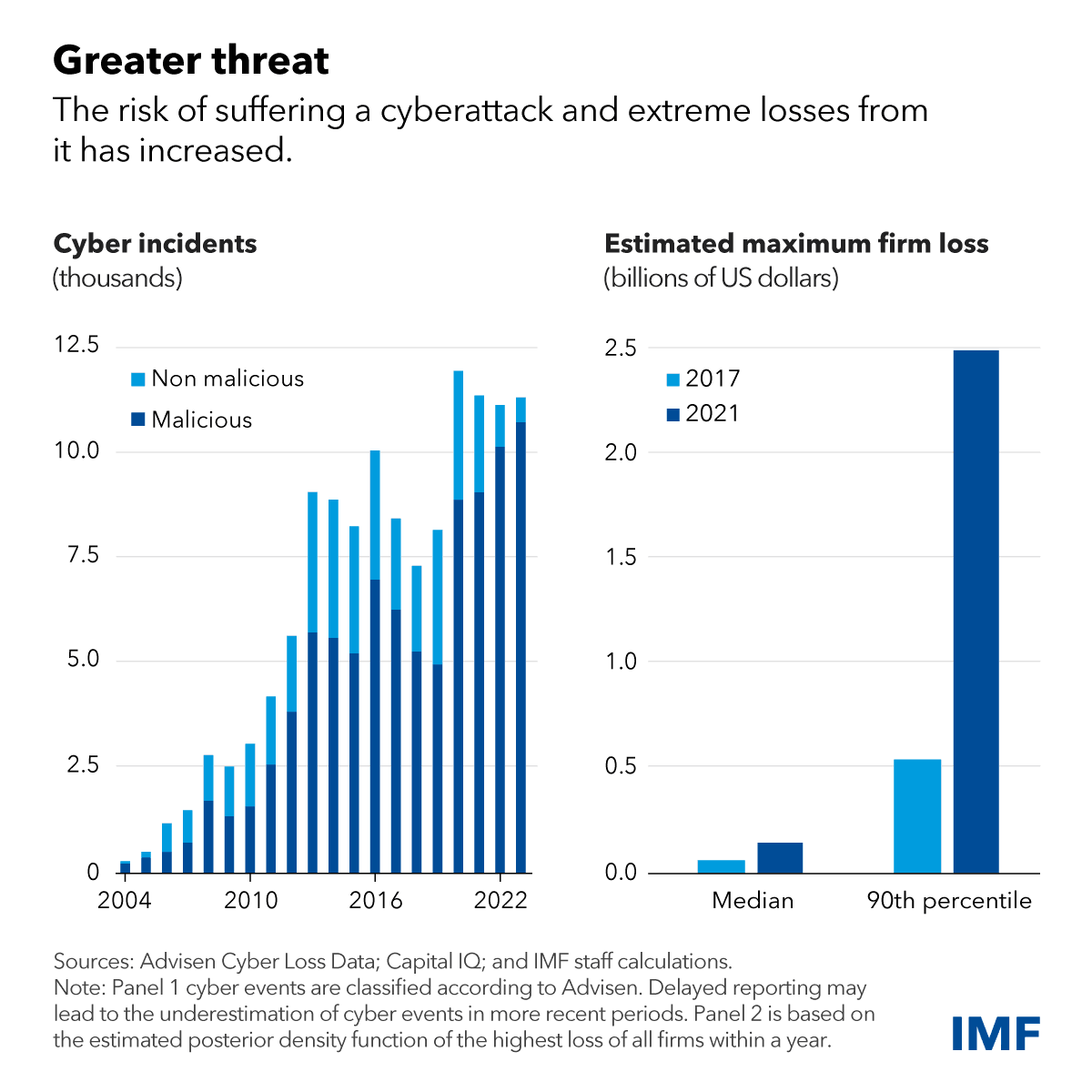
Cyberattacks targeting supply chain partners create cascading failures across the financial ecosystem. RIAs depend on custodians, portfolio accounting systems, CRM platforms, and data aggregators—each representing a potential vulnerability.
The 2024 SitusAMC breach highlighted how little-known vendors supporting critical infrastructure can become attack vectors. Financial services maintains the best digital defenses of any sector, but third-party exposure remains difficult to assess and control.
Best practices include:
Annual vendor security assessments using standardized frameworks
Contractual requirements for breach notification timelines
Regular reviews of vendors' own business continuity capabilities
Limiting data sharing to only what's operationally necessary
Where Modern Infrastructure Closes the Gap
The old model—manual processes, siloed systems, reactive security—can't scale to meet today's threat environment. Modern RIA infrastructure must be:
Unified: Single source of truth for client data that eliminates reconciliation errors across custodians and systems
Automated: Workflows that detect anomalies, trigger alerts, and execute responses without human intervention
Tested: Regular validation that backup systems actually work when needed, not just theoretical preparedness
Transparent: Real-time visibility into system health, user access, and potential vulnerabilities
Platforms built on these principles don't just reduce risk—they create operational leverage. Advisors spend less time on administrative tasks and more on client relationships. Compliance becomes continuous, not episodic. Growth doesn't require proportional staffing increases.
The Bottom Line
Building resilience isn't about paranoia. It's about recognizing that operational excellence now depends on infrastructure excellence. The firms thriving in 2025 aren't necessarily the largest or longest-established—they're the ones that treated technology, custody strategy, and cybersecurity as integrated components of their value proposition.
The question isn't whether your firm will face a disruption. Ransomware attacks in financial services hit 65% of institutions in 2024, up from 64% in 2023. The question is whether you'll recover in hours or months.
For RIAs managing client capital at scale, that difference determines survival.