
Blog

Your client calls after the market drops 2% on geopolitical headlines. Another emails demanding to "go to cash" after reading about recession risks. A third wants to shift their entire portfolio based on a policy announcement they saw trending on social media. The news cycle has accelerated to the point where every day brings multiple narratives that feel urgent, consequential, and action-demanding.
Yet the data tells a different story. The average equity investor has consistently underperformed the S&P 500 by substantial margins over the past two decades—not because they picked the wrong stocks, but because they traded at the wrong times in response to news and emotions. The gap between market returns and investor returns represents the cost of reacting to noise rather than adhering to disciplined strategy.
For advisors, the challenge isn't predicting which news will actually matter—it's building decision frameworks that help clients distinguish signal from noise, and maintaining the behavioral discipline that compounds into superior long-term outcomes.
Why News Cycles Destroy Portfolio Returns
Financial media operates on an incentive structure fundamentally misaligned with long-term investing. News organizations maximize engagement through urgency, novelty, and emotional intensity. Markets, meanwhile, reward patience, consistency, and emotional detachment. This mismatch creates predictable patterns of wealth destruction.
The behavioral mechanisms are well-documented:
Recency bias: Recent events feel more important than historical patterns, causing investors to overweight new information
Loss aversion: Losses hurt approximately twice as much as equivalent gains feel good, triggering panic selling during downturns
Confirmation bias: Investors seek information that confirms existing beliefs, creating echo chambers that reinforce poor decisions
Action bias: The psychological need to "do something" during uncertainty, even when inaction would produce better outcomes
Research from Morningstar's behavioral finance studies analyzing investor flows shows that money consistently enters equity funds near market peaks and exits near market troughs. This behavior—buying high and selling low—is precisely backward, yet it persists because news cycles amplify the emotional drivers that cause it.
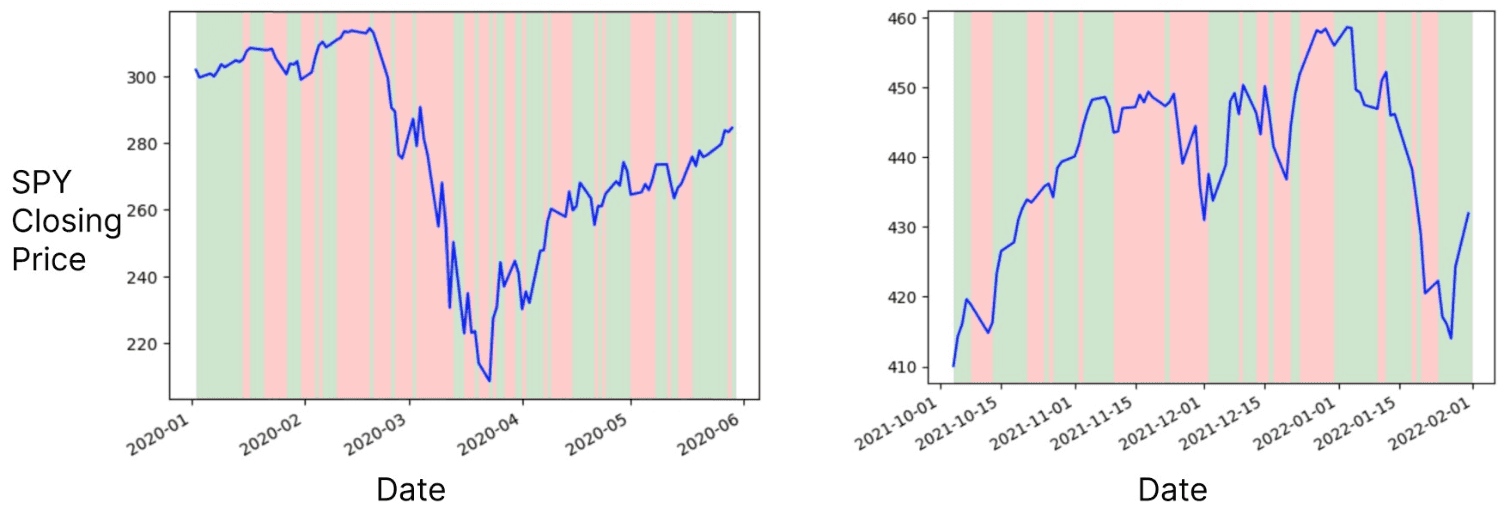
The 2020 pandemic crash provides a perfect case study:
Markets fell 34% in March 2020, with headlines screaming about economic collapse
Investors who sold in panic missed the subsequent recovery that reached new highs by August
Those who maintained discipline—or rebalanced into equities—captured the full rebound
The news was accurate about short-term disruption but completely misleading about investment implications
The pattern repeats across every crisis: September 11th, the 2008 financial crisis, the 2011 debt ceiling debate, Brexit, and countless smaller panics. Each time, staying invested outperformed reacting to headlines.
The Half-Life of Financial News Is Measured in Hours
A useful mental model for evaluating financial news is to ask: how long will this information remain relevant? Most headlines have a half-life measured in hours or days, not months or years.
Short-term noise that dominates headlines:
Policy announcements that get revised or watered down
Economic data that gets revised three times after initial release
Geopolitical tensions that escalate and de-escalate rapidly
Corporate earnings that beat or miss by pennies, moving stocks 5% on information that changes valuations by fractions of a percent
Fed commentary that markets over-interpret and subsequently correct
What actually moves markets over meaningful timeframes:
Earnings growth: Corporate profits compound over years and decades, not news cycles
Interest rate regimes: Monetary policy shifts matter, but markets price them months in advance
Economic cycles: Expansions and recessions unfold over years, with warning signs that develop gradually
Technological disruption: Fundamental shifts in productivity and business models take decades to fully manifest
Demographic trends: Population aging, workforce participation, and consumption patterns change slowly
None of these fundamental drivers change based on daily headlines. Yet daily headlines consistently trigger portfolio changes that disrupt exposure to these fundamental drivers.
Research from the CFA Institute on market timing shows that even institutional investors with sophisticated models rarely add value through tactical allocation changes. If professionals struggle to time markets based on news and data, retail investors reacting to headlines face even worse odds.
Volatility Represents Opportunity, Not Risk
The financial industry's biggest semantic failure is conflating volatility with risk. Volatility measures price fluctuation. Risk measures permanent capital loss. They're related but distinct concepts, and confusing them leads to costly mistakes during chaotic news cycles.
Understanding the critical difference:
Volatility: Your portfolio falls 10% over three months, then recovers to new highs—no permanent loss
Risk: Your portfolio permanently loses value because you invested in fundamentally flawed assets or sold during temporary volatility
Historical context matters enormously:
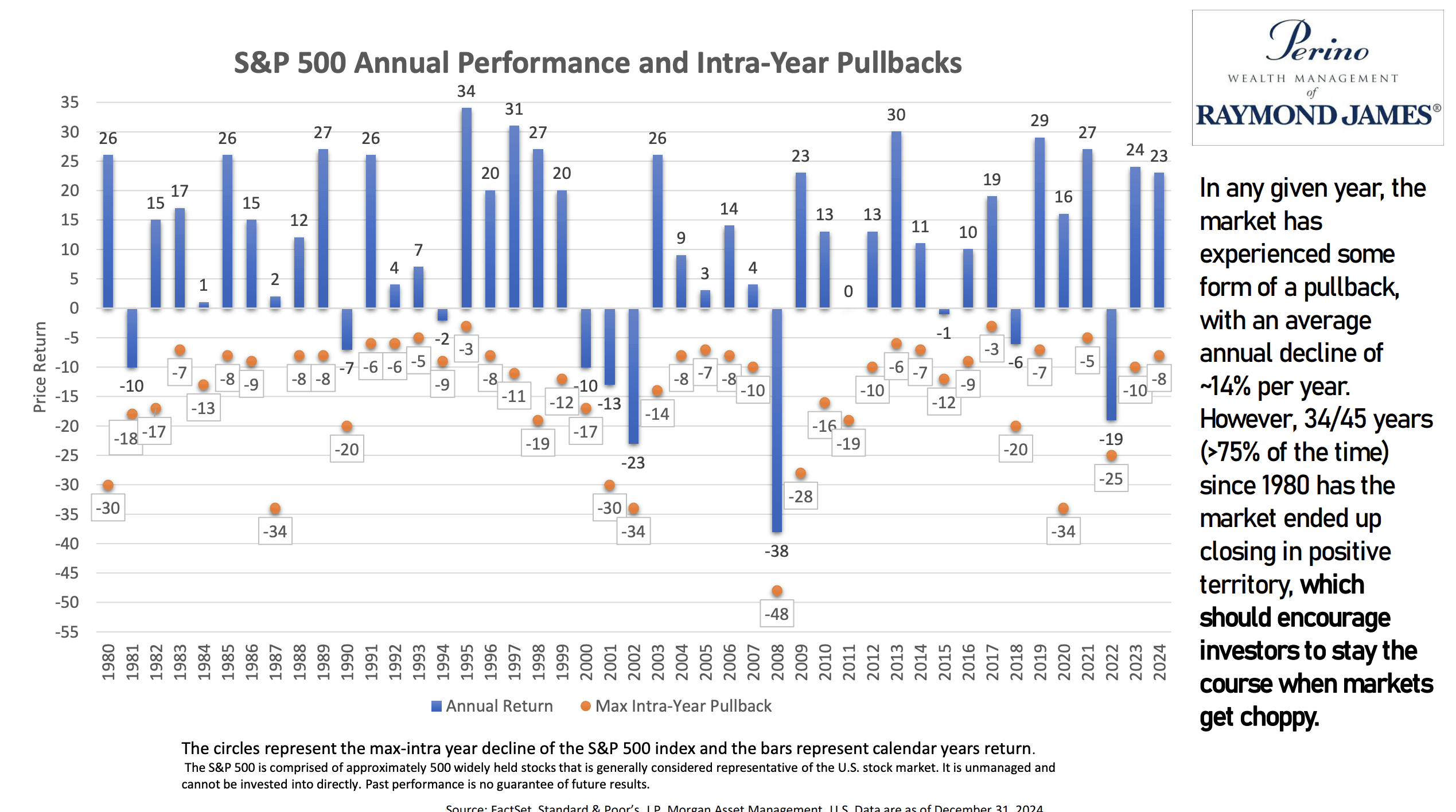
According to data from S&P Dow Jones Indices, the S&P 500 has experienced significant intra-year declines regularly since 1980:
Average intra-year decline: approximately 14%
Years ending positive despite declines: 33 out of 44 years
Maximum intra-year declines ranged from 3% to 49%
Average annual return: approximately 10% despite consistent volatility
Volatility is normal. Reacting to it is optional—and expensive.
Rules-based rebalancing transforms volatility into advantage:
When news-driven selloffs push equity allocations below targets, mechanical rebalancing forces buying at depressed prices
When euphoria drives allocations above targets, rebalancing enforces selling into strength
This countercyclical discipline captures the volatility premium without requiring predictions about market direction
The rebalancing math:
Portfolio target: 60% stocks, 40% bonds
After market decline: 55% stocks, 45% bonds (drift below threshold)
Rebalancing adds 5% to stocks at lower prices
Recovery generates outperformance from incremental exposure purchased cheaply
This only works if you execute it systematically, without subjective judgment about whether "this time is different" or whether the news justifies abandoning the process.
Build Decision Frameworks, Not Reaction Protocols
The solution to chaotic news cycles isn't better news consumption—it's decision frameworks that prevent news from triggering portfolio changes in the first place. Effective frameworks separate legitimate strategy adjustments from behavioral reactions disguised as rational decisions.
Establish clear criteria for portfolio changes:
Life event triggers: Retirement, inheritance, major expense needs—circumstances that change actual financial requirements
Rebalancing thresholds: Pre-defined drift from target allocations (e.g., 5% deviation), executed mechanically without discretion
Tax optimization: Systematic loss harvesting and gain management based on tax circumstances, not market views
Strategic reviews: Annual or semi-annual assessment of whether target allocations still match long-term goals and risk tolerance
Explicitly exclude emotional triggers:
Market declines of any magnitude
Policy announcements or political events
Geopolitical tensions or conflicts
Economic data releases
Media predictions about market direction
Recent performance of any asset class
"Expert" opinions or financial pundit commentary
This framework doesn't prevent clients from feeling anxious during market chaos—it prevents anxiety from destroying their financial outcomes. The conversation shifts from "should we do something about this news?" to "does this news change your retirement timeline, tax situation, or financial goals?" The answer is almost always no.
The Illusion of Control Costs Real Money
Behavioral finance research identifies a persistent illusion: people believe they can improve outcomes through activity, even when evidence proves otherwise. This illusion is particularly destructive in investing because markets are complex adaptive systems where individual actions rarely produce intended consequences.
The evidence against market timing is overwhelming:
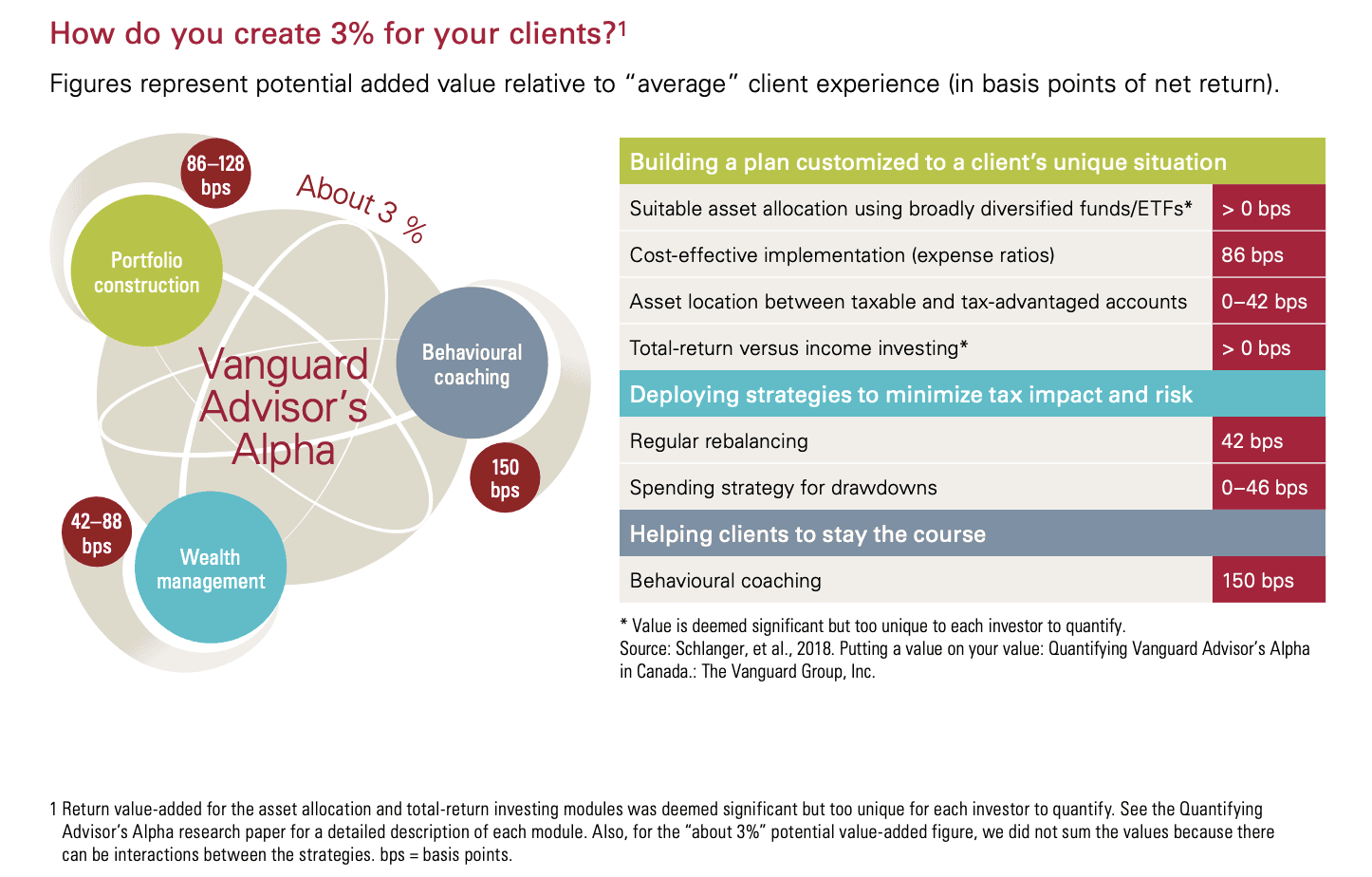
Research from Vanguard's Advisor's Alpha study quantifies the cost of behavioral mistakes:
Attempting to time markets reduces returns by approximately 1-3% annually compared to staying fully invested
Missing just the 10 best market days over 20 years cuts returns nearly in half
Those best days often occur during volatile periods when investors are most likely to be on the sidelines
The best and worst days cluster together, making market timing practically impossible
The compounding impact is devastating:
Portfolio growing at 8% annually: $1 million becomes $4.66 million over 20 years
Same portfolio with 1% annual drag from trading costs and behavioral mistakes: grows to only $3.31 million
Difference: $1.35 million lost to activity that felt productive but destroyed value
Systematic approaches eliminate the illusion of control:
Target allocations established once, changed only for legitimate strategic reasons
Automated rebalancing based on drift thresholds, not subjective judgment
Tax-loss harvesting executed systematically whenever opportunities arise
No manual intervention during market volatility or news events
Pre-committed rules that execute regardless of how you feel about current conditions
This doesn't mean ignoring markets—it means acknowledging that most market movements are noise, and the appropriate response to noise is disciplined inaction.
Information Overwhelm Versus Information Value
The explosion of financial information creates a paradox: more data makes worse decisions easier. Every data point feels potentially important. Every headline suggests action might be necessary. Yet research on decision-making shows that beyond a certain threshold, additional information reduces decision quality by increasing complexity without improving accuracy.
Distinguish between information types:
High-value information that warrants attention:
Changes in personal financial circumstances (job loss, windfall, health events)
Tax law modifications affecting planning strategies
Legitimate shifts in portfolio risk/return characteristics
Evidence-based research on long-term investment factors
Changes to financial goals or time horizons
Low-value noise to filter out:
Daily market commentary and predictions
Short-term economic data subject to revision
Geopolitical developments without clear transmission mechanisms to portfolio values
Individual stock recommendations based on recent performance
"Expert" predictions about market direction
Social media investing trends and memes
Create systematic information filters:
Quarterly portfolio reviews address everything that actually requires attention
Daily market monitoring adds anxiety without improving outcomes
Weekly or monthly check-ins focus on planning, not reacting
Client communication emphasizes long-term strategy over short-term noise
The discipline is surfacing what matters and suppressing what doesn't. For most clients, less information creates better decisions.
Systematic Processes Beat Discretionary Judgment
The defining characteristic of successful long-term investors isn't superior market insight—it's the discipline to follow systematic processes when discretionary judgment screams to do otherwise. This is why institutional investors increasingly embrace rules-based approaches that remove human emotion from execution.
Systematic advantages compound over time:
Consistency: Same response to same circumstances, eliminating behavioral drift
Scalability: Processes execute regardless of advisor bandwidth during chaos
Auditability: Clear documentation of why actions occurred, supporting fiduciary standards
Tax efficiency: Automated optimization captures opportunities human monitoring misses
Emotional detachment: Rules execute without fear or greed influencing timing
Repeatable excellence: Quality execution doesn't depend on having a good day or feeling confident
Compare two advisors during a market correction:
The discretionary advisor:
Agonizes over whether to rebalance
Calls clients to gauge sentiment
Debates whether "this time is different"
Makes scattered decisions influenced by recent news and client pressure
Treats each client situation uniquely based on who called when
Execution quality varies with stress levels and information overload
The systematic advisor:
Process automatically identifies drift thresholds
Executes rebalancing across all accounts simultaneously
Harvests losses where available
Generates client communications explaining what happened and why
All happens without subjective judgment or emotional interference
Consistent treatment regardless of market chaos
The systematic advisor's clients receive consistent treatment, optimal execution, and clear communication. The discretionary advisor's clients receive outcomes determined partially by which day they happened to call or which news the advisor saw that morning.
Client Communication Creates Behavioral Discipline
The most underrated aspect of managing through chaotic news cycles is proactive communication that reframes how clients interpret volatility. Clients who understand that volatility is normal, expected, and manageable stay invested. Clients who are surprised by volatility panic.
Effective communication strategies:
Pre-commit to volatility expectations:
Remind clients quarterly that 10-15% declines occur regularly
Explain that volatility doesn't change long-term strategy
Show historical frequency of corrections and recoveries
Set expectations before problems arise, not during them
Contextualize current events:
Explain why today's headlines resemble dozens of previous events
Show how past crises that felt equally significant proved temporary
Demonstrate market recovery patterns across different types of shocks
Reduce the sense that "this time is different"
Reframe portfolio changes positively:
Present rebalancing as capturing opportunity rather than defending against loss
Emphasize buying assets on sale during declines
Highlight tax-loss harvesting benefits during volatility
Transform anxiety into appreciation for systematic processes
Show historical patterns:
Demonstrate that staying invested through past crises produced better outcomes
Quantify the cost of missing recovery periods
Compare portfolios that reacted versus those that stayed disciplined
Use data, not opinions, to guide decisions
Research consistently shows that clients with more frequent communication from advisors make fewer behavioral mistakes. Not because the communication contains market predictions—but because it reinforces the plan and reduces the psychological need to take action during uncertainty.
The advisor's role during chaotic news cycles isn't to have better opinions about where markets are headed. It's to maintain the behavioral infrastructure that keeps clients executing their strategy when emotional pressure to deviate is highest. That infrastructure—systematic processes, proactive communication, and disciplined rebalancing—determines whether clients achieve their financial goals or become another statistic in the behavior gap.