
Blog

Two-Stage Momentum Exit Strategy: What the Research Says vs. What Actually Works
Momentum investing rewards patience on the way in. The harder discipline (the one that separates institutional-grade execution from retail behavior) is knowing how to get out. A coherent momentum exit strategy is not a single decision point. It is a staged process, and the evidence from both academic literature and live market history supports treating it that way.
This piece lays out a two-stage framework, examines what the research actually says about exit timing, and addresses where systematic rules tend to break down under real execution conditions.
Why a Single Exit Point Fails
The Momentum Crash Problem
The foundational tension in any momentum exit strategy is that the same behavioral dynamics that drive momentum returns also cause momentum crashes. Daniel and Moskowitz (2016) documented this directly: momentum strategies generate significant negative skewness, with crash risk concentrated in periods following sustained market drawdowns. Jegadeesh and Titman's original 1993 framework identified the return premium, but it was subsequent work that clarified the asymmetry — momentum works until it doesn't, and the reversal can be abrupt.
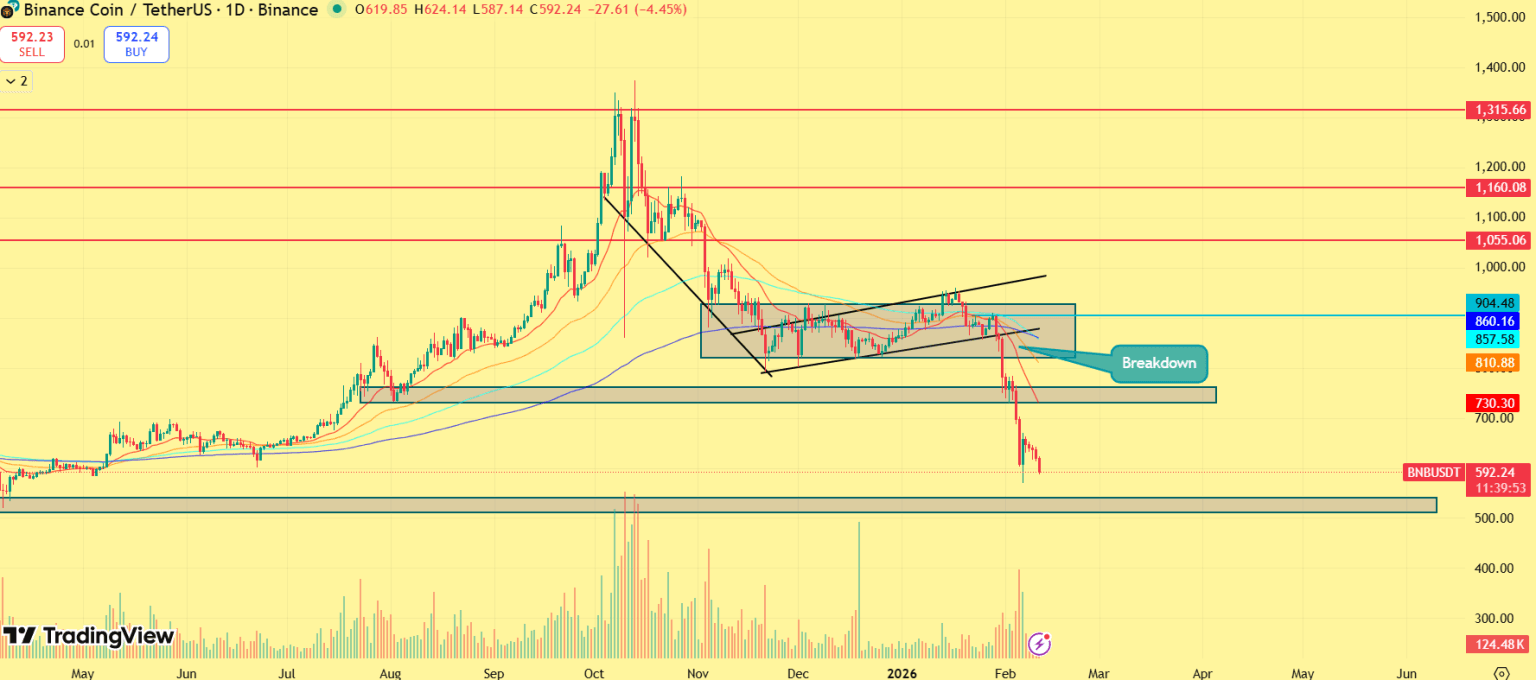
For portfolio managers, this creates a structural problem. The positions that have performed best are also the positions carrying the most embedded crash risk at peak momentum. A single trailing stop or fixed price target does not adequately account for this asymmetry because it treats exit as a binary event rather than a risk management process.
Discretionary vs. Systematic Exit Discipline
Practitioners consistently underperform their own backtested rules at exit. The behavioral finance literature is unambiguous on this point: loss aversion causes premature exits on winning positions during normal volatility, and overconfidence causes delayed exits during parabolic moves. The result is a pattern where investors sell too early in the middle of a momentum run and too late at the peak — the worst of both outcomes.
A two-stage momentum exit strategy addresses this by separating the decision into two distinct mandates with different risk tolerances and different time horizons. Stage one is a partial, rules-based reduction. Stage two is a conditional exit triggered by price structure, not emotion.
The Two-Stage Framework: Trailing Stop vs. Price Target
Stage One: Systematic Profit-Taking at Defined Thresholds
The first stage of a disciplined momentum exit strategy involves scaling out of a position before the anticipated peak, using a rules-based trigger rather than a discretionary judgment call. Academic work by Asness, Moskowitz, and Pedersen supports the use of value-momentum overlays to identify when a momentum position has become stretched relative to fundamental anchors — a useful input for setting stage one thresholds.
In practice, this might look like a 25–33% reduction in position size when a security has outperformed its benchmark by two or more standard deviations over a trailing 12-month window, or when price-to-earnings momentum diverges materially from earnings revision momentum. The exact trigger matters less than the pre-commitment to act. Investment committees that define stage one criteria in advance — and document them as part of the position thesis — demonstrate measurably better exit discipline than those relying on manager discretion alone.
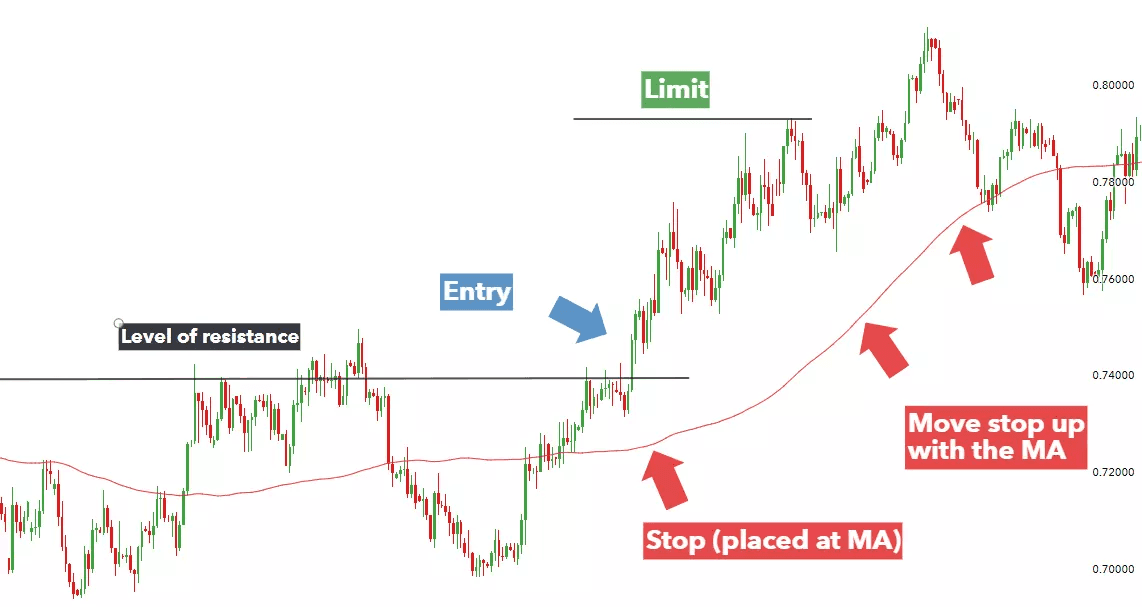
The trailing stop vs. price target debate is relevant here. Trailing stops are reactive and capture trend continuation well; fixed price targets are forward-looking and force valuation discipline. For stage one, a hybrid approach — a valuation-based price target with a trailing stop as a floor — tends to outperform either in isolation, particularly in late-stage momentum positioning where price acceleration can outrun fundamental justification rapidly.
Stage Two: The Rebound Harvest and Post-Bubble Recovery Rally
Stage two is where most practitioners either recover significant value or lose it entirely. Historical bubble episodes — 1929, the 1970s gold market, the 2000 Nasdaq peak — share a consistent structural feature: a sharp initial decline from the high is followed by a recovery rally that typically retraces 50–60% of the drawdown. This rebound rally, which historically has materialized roughly six months after the peak, represents a second exit window that a well-prepared momentum exit strategy can systematically exploit.
The challenge is psychological, not analytical. After a 20–30% initial drawdown, the instinct is to either panic-sell into weakness or anchor to the prior high and hold for a full recovery. Both responses are suboptimal. The rebound harvest requires pre-defining, at the time of stage one execution, the price level and time window at which remaining exposure will be exited regardless of subsequent direction.
If you are interested in how to identify the post-bubble recovery rally you might be interested in our blog about recognizing real recoveries.
Execution Friction and the Implementation Gap
The gap between backtested exit rules and live execution is real and documentable. Liquidity constraints in less liquid momentum positions, transaction cost drag on partial liquidations, and the institutional pressure to avoid realizing losses before period-end reporting all introduce friction that systematically delays exit. Portfolio managers operating under benchmark-relative mandates face an additional layer — exiting a momentum position early can create tracking error even when it is the correct absolute-return decision.
Acknowledging this friction is not a reason to abandon systematic rules. It is a reason to build the framework with implementation costs explicitly modeled, and to pressure-test stage one and stage two triggers against realistic transaction cost assumptions rather than theoretical midpoints.
Applying the Framework
The most reliable way to enforce a two-stage momentum exit strategy at the institutional level is to embed it in the original position documentation. When the entry thesis is written, the stage one and stage two exit conditions should be specified explicitly — including the criteria that would invalidate each stage. This transforms exit discipline from a manager-level judgment call into a governance obligation, which significantly reduces the behavioral drag documented in the literature.
Risk-Adjusted Exit Rules Across Market Regimes
No exit framework is regime-independent. In low-volatility trending markets, stage one thresholds can be set wider without materially increasing crash exposure. In high-dispersion, late-cycle environments — precisely the conditions under which parabolic price moves tend to emerge — tighter stage one triggers and shorter stage two windows are warranted. A risk-adjusted exit rules approach indexes the framework parameters to realized volatility or credit spread conditions, allowing the strategy to adapt without requiring discretionary override.
The Honest Limitation
Academic models of momentum exit timing assume frictionless execution, continuous pricing, and rational peer behavior. None of those assumptions hold in a genuine bubble environment. The value of a structured momentum exit strategy is not that it produces optimal outcomes — it is that it produces defensible outcomes that systematically outperform unstructured discretion. For portfolio managers accountable to investment committees and end clients, that distinction is not academic. It is the job.
Put the Framework on Autopilot — Surmount Wealth Automated Trade Strategies
Reading a framework is one thing. Executing it without hesitation, at 2am when a position is moving against you, during a volatile tape, under client pressure — that is where discipline breaks down. That is exactly the problem Surmount Wealth solves.
Surmount Wealth's platform lets portfolio managers and advisors build, backtest, and deploy automated trade strategies that execute your thesis systematically — removing the behavioral friction that costs you on every exit you've ever second-guessed.
Prebuilt Strategies. Custom Strategies. Your Rules, Automated.
Whether you want to deploy a proven prebuilt strategy or encode your own proprietary framework, Surmount handles the execution layer so you don't have to. Every trigger, every threshold, every stage — running automatically, exactly as designed.
What This Could Look Like in Practice
The following is a hypothetical strategy concept for illustration purposes only. It is not a live Surmount product, not investment advice, and not a guarantee of any outcome.
Imagine a strategy built around exactly the dynamics discussed in this article — call it the Momentum Two-Stage Exit Overlay. It might work as follows:
Entry: Flags securities exhibiting 12-month price momentum in the top quartile of their universe, cross-referenced against earnings revision momentum to filter for fundamental support.
Stage One Exit Trigger: Automatically reduces position size by 30% when price outperformance exceeds 2 standard deviations from the 12-month mean, or when price-to-earnings momentum diverges from earnings revision momentum beyond a defined threshold.
Stage Two Exit Trigger: Following a drawdown of 15% or more from the position high, the strategy monitors for a rebound rally. If price recovers 50–60% of the drawdown within a defined window, the remaining position is automatically liquidated — harvesting the second exit opportunity before the next leg lower.
Risk Overlay: Stage one thresholds tighten automatically when realized volatility in the position exceeds a rolling 30-day ceiling, adapting the exit rules to the market regime without requiring manual override.
The point is not the specific parameters — you would calibrate those to your mandate. The point is that every judgment call in this article, every place where behavioral friction typically causes underperformance, can be replaced with a rule. And that rule can run automatically.
Why Advisors and Portfolio Managers Choose Surmount
No coding required. Build and deploy sophisticated multi-stage strategies through an intuitive interface designed for investment professionals.
Full customization. Your IP stays yours. Encode any thesis — momentum exits, rebalancing overlays, hedging triggers — exactly as you would implement it manually, minus the human error.
Prebuilt strategy library. Not ready to build from scratch? Deploy proven prebuilt strategies immediately and customize from there.
Client-ready execution. Strategies run at the client account level, giving your practice scalability without sacrificing personalization.
The Behavioral Edge Is Only Valuable If You Can Execute It
Every framework in this article falls apart the moment emotion enters the room. Surmount removes emotion from the equation entirely — so the discipline you designed holds, every time, regardless of what the market is doing or what your clients are asking.
Book a demo with Surmount Wealth today and see how your next thesis — including a momentum exit framework like the one above — can be automated and deployed across your book.