
Blog

Investing in a ‘Wait-and-See’ Fed: A Framework for Adaptive Allocation
For nearly a decade, the playbook for institutional asset allocation was governed by a predictable, central-bank-led gravity. Portfolio managers could rely on a "Fed Put" to floor equity drawdowns or a clear easing cycle to provide a tailwind for duration. Today, with all the geopolitical and economic shocks we see unfolding around us, such as oil price spikes due to conflict in the Middle East, that clarity seems to have evaporated. As such, investors are increasingly entering into an era of a "Wait-and-See" Fed, a regime where policy is no longer proactive or trend-following, but hyper-reactive to lagging data.
For the professional investment advisor, this shift represents a fundamental challenge to traditional "Base Case" investing. When the Fed moves from a fixed trajectory to a data-dependent posture, the market’s sensitivity to macro noise is amplified. In this environment, the risk of a "policy error"—either over-tightening into a cooling labor market or easing too early into a sticky inflation floor—is at its highest decile.
The old model of making a concentrated directional bet (e.g., "Long Bonds for the Pivot") is increasingly fragile. Success in this cycle requires a transition from forecasting-based strategies to a scenario-based framework. We must stop asking "What will the Fed do next?" and start asking "What are the specific macro triggers that will force their hand, and is my portfolio structured to thrive in the divergence?"
This article outlines an Adaptive Allocation Framework designed to navigate this uncertainty. We will move beyond the headlines to identify the high-consequence triggers in energy, labor, and inflation expectations that define the current regime, and how to build a portfolio that remains resilient regardless of which path the data dictates.
The Macro Sentinel: Identifying High-Consequence Triggers
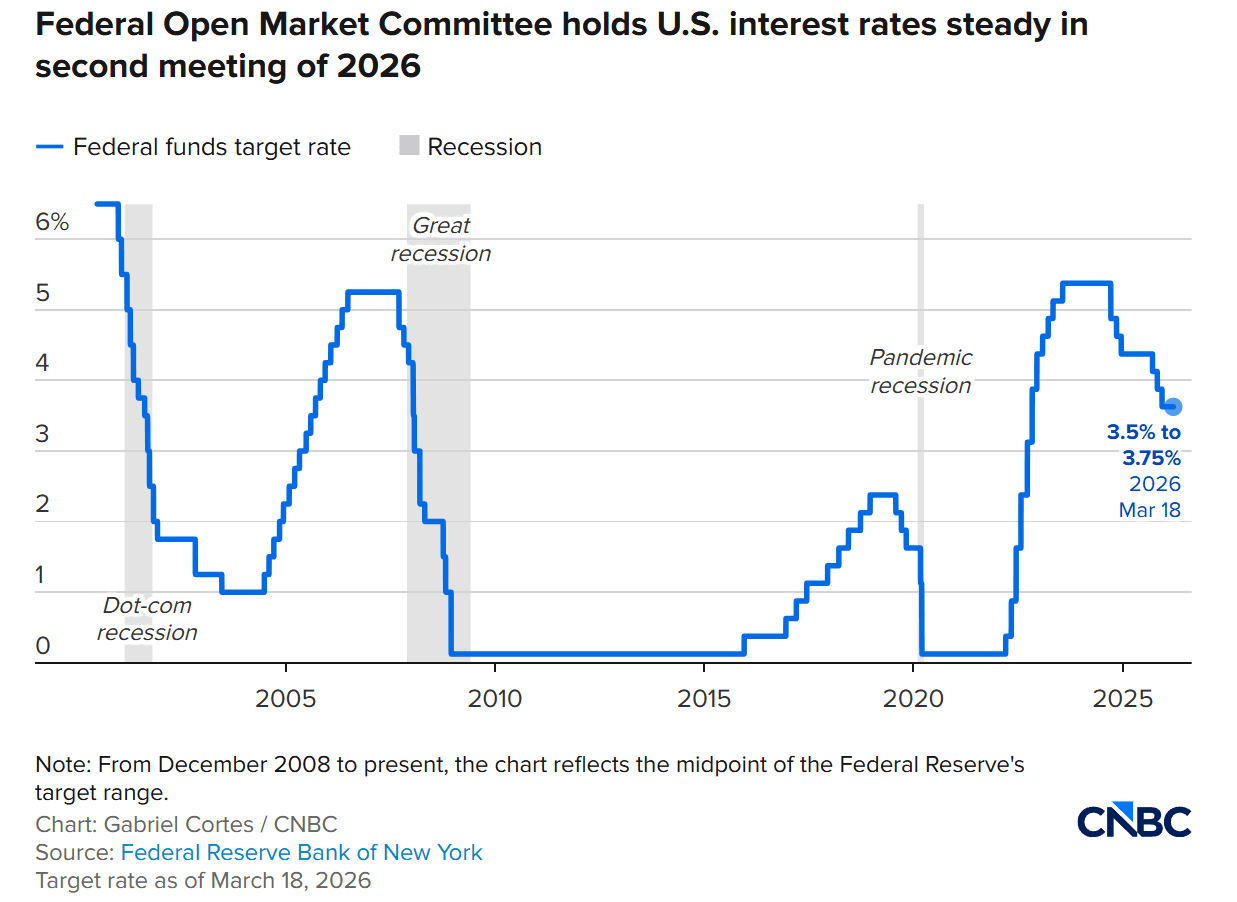
Given the nature of the current market climate, the Federal Reserve seems to no longer possess its edge of leading the market, and is, instead, following the exogenous data as it materializes. As such, at the time of writing this blog, the Fed has chosen to maintain the interest rate at 3.5%, with Fed Chair Jerome Powell stating it is "too soon to know" the full economic impact of the war, noting that the Fed must monitor whether the oil spike is a temporary "one-time" event or a persistent inflationary threat.
For portfolio managers, this broader approach necessitates a move away from broad economic sentiment toward a disciplined monitoring of Macro Sentinels. These are the triggers that represent a "break" in the current narrative, necessitating an immediate shift in duration or equity beta.
Energy Prices: The Inflation Floor and "Shadow" Expectations
While the Fed often prefers to look at "Core" PCE (excluding food and energy), professional allocators cannot afford that luxury. Energy prices act as a primary driver of consumer inflation expectations and a tax on discretionary spending.
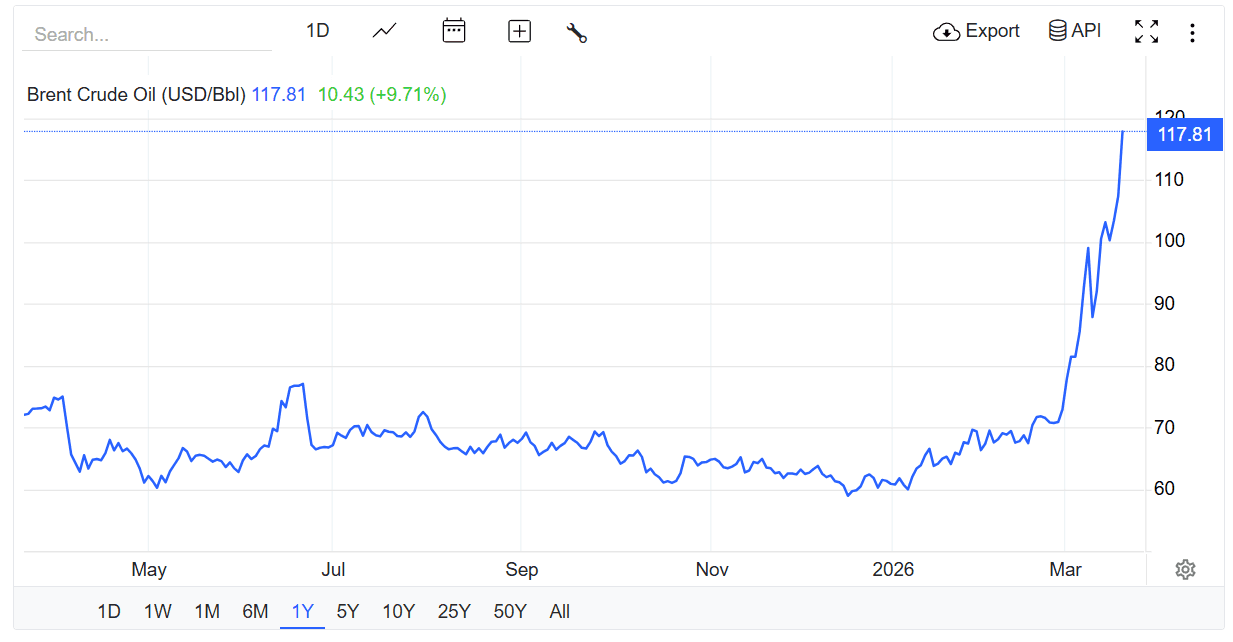
The Trigger: A sustained breach of the $100 Brent range.
The Consequence: This historically acts as a floor for headline CPI, preventing the "last mile" of disinflation. If energy spikes, the Fed’s "Wait-and-See" quickly turns into "Wait-and-Hike" (or at least "Hold-Longer"), creating a sharp repricing in the belly of the curve.
The current oil price surge seems to confirm this at this time:
Labor Market Inflection Points: From Cooling to Cracking
The transition from a "tight" labor market to a "recessionary" one is rarely linear. We monitor the JOLTS (Job Openings) and the Quit Rate as lead indicators for wage-push inflation.
The Trigger: A drop in the Job Openings-to-Unemployed ratio toward 1.0x or a move in the Sahm Rule (the 0.5% rise in the 3-month moving average of the unemployment rate).
The Consequence: Once the labor market "cracks," the Fed’s dual mandate shifts focus entirely to employment. This is the signal to aggressively increase duration and pivot toward defensive, high-quality growth equities as the "Hard Landing" probability scales.
Inflation Expectations: The Anchor of Policy Logic
The Fed is terrified of a de-anchoring of long-term expectations. If the market begins to price in a structural shift to a 3% inflation regime, the "Wait-and-See" approach collapses.
The Trigger: 5-Year/5-Year Forward Break-even Inflation Rates moving north of 2.5%.
The Consequence: This signal suggests the market has lost faith in the Fed’s restrictive stance. It forces a "hawkish hold," where the Fed must keep rates restrictive even as growth slows, creating a "stagflationary" trap for traditional 60/40 portfolios. This could instead encourage the adoption of barbell portfolios instead.
The Framework: Transitioning to Scenario-Based Allocation
When the Federal Reserve publicly commits to data-dependency, they are essentially signalling that the path is not pre-determined. With such dynamics, reliance on the traditional base case is essentially a liability.
For those managing portfolios, the optimal response is to move from a single-forecast model to a tri-modal scenario framework. This approach does not attempt to predict the winner; it ensures the portfolio survives the losers.
The Tri-Modal Architecture
To implement adaptive allocation, advisors should categorize the macro environment into three distinct "regime buckets," each with its own internal logic and asset class preferences:
Regime A: The Non-Linear Cooling (Hard Landing)
Labor market "cracks" (e.g., a sustained rise in the unemployment rate above the Sahm Rule threshold) and a rapid deceleration in consumer spending are triggers worth watching. This would signal an opportunity towards aggressive move into long-duration Treasuries and defensive secular growth (Quality factor).
Regime B: The Sticky Plateau (No Landing)
Keep an eye out for energy price shocks or a rebound in core services inflation that keeps the Fed on a prolonged pause despite cooling headlines. This would entail overweighting real assets, short-duration credit, and "Value" sectors that benefit from a higher nominal GDP environment.
Regime C: The Equilibrium Glide (Soft Landing)
When inflation is trending toward 2% while job gains remain near replacement levels, it may be a smart move to broaden equity exposure into mid-caps and cyclicals while maintaining a neutral duration stance.
Implementing the "Capital Recycling" Logic
The core of an adaptive framework is the Trigger-Action Pair. Rather than waiting for a quarterly committee meeting, the framework dictates pre-set allocation shifts based on the macro sentinels identified earlier.
Dynamic Rebalancing: If inflation expectations (10-year breakevens) breach a specific upper bound, the framework triggers an automatic "recycling" of capital from high-multiple tech into inflation-sensitive commodities or energy infrastructure.
Tactical Overlays: Instead of exiting core long-term equity positions—which creates tax and timing drag—the framework utilizes tactical overlays (e.g., put spreads or volatility harvesters) to hedge specific scenario risks as they become statistically more probable.
By adopting this structure, the advisor moves from being a "market caller" to a "risk architect," providing clients with a portfolio that evolves in lockstep with the Fed’s own reactive posture.
Putting the Framework on Autopilot: The Surmount Advantage
The biggest risk in an adaptive allocation framework isn't the data—it’s the execution lag. Even the most disciplined advisor can struggle to pivot a dozen client portfolios the moment a labor market trigger is tripped or an energy price spike occurs.
This is why so many trusted managers in this space leverage Surmount Wealth. Surmount allows you to bridge the gap between investment thesis and automated execution. Whether you are looking for pre-built, expert-vetted strategies or need to build a custom trade engine tailored to your specific macro signals, Surmount provides the infrastructure to deploy instantly.
Automate Your Thesis: Every "Wait-and-See" trigger discussed in this article—from JOLTS data inflections to inflation breakevens—can be codified into a rule-based strategy.
Institutional Precision: Eliminate emotional bias and manual rebalancing. When your pre-set macro triggers are hit, Surmount executes the move across your accounts automatically.
Bespoke Control: Use the No-Code or AI Strategy Builder to design a "Capital Recycling" engine that perfectly matches your firm’s risk tolerance and allocation goals.
Don't let market volatility outpace your manual execution. See how you can turn this adaptive framework into a living, breathing automated portfolio today.