The 'Underweight Incumbent' Strategy: Rebalancing SaaS Exposure in the Agentic Era

The 'Underweight Incumbent' Strategy: Rebalancing SaaS Exposure in the Agentic Era
For over a decade, the investment thesis for the Software-as-a-Service (SaaS) complex was among the most reliable in the capital markets. It was built on a "virtuous trifecta":
high-visibility recurring revenue,
"sticky" seat-based pricing, and
a dominant UI/UX layer that served as the primary gateway to enterprise productivity.
However, as we still navigate the reverberations of the SaaSpocalypse triggered early this year, a structural shift is occurring that suggests the traditional SaaS "moat" may be bypassed entirely.
The Shift from Human-Centric to Agent-Centric Workflows
Historically, software value was captured at the interface level. We valued companies based on how many "seats" they could occupy within an organization. But the emergence of Managed Agents—autonomous entities capable of executing complex workflows across different software environments—is effectively "de-coupling" the user from the interface.
When an AI agent can autonomously query a database, update a CRM, and generate a financial report without a human ever logging into the dashboard, the value of the UI/UX layer evaporates. We are witnessing the abstraction of software; the "System of Record" is being pushed down the stack, becoming a commoditized data utility for the "System of Intelligence."
The Pricing Model Crisis
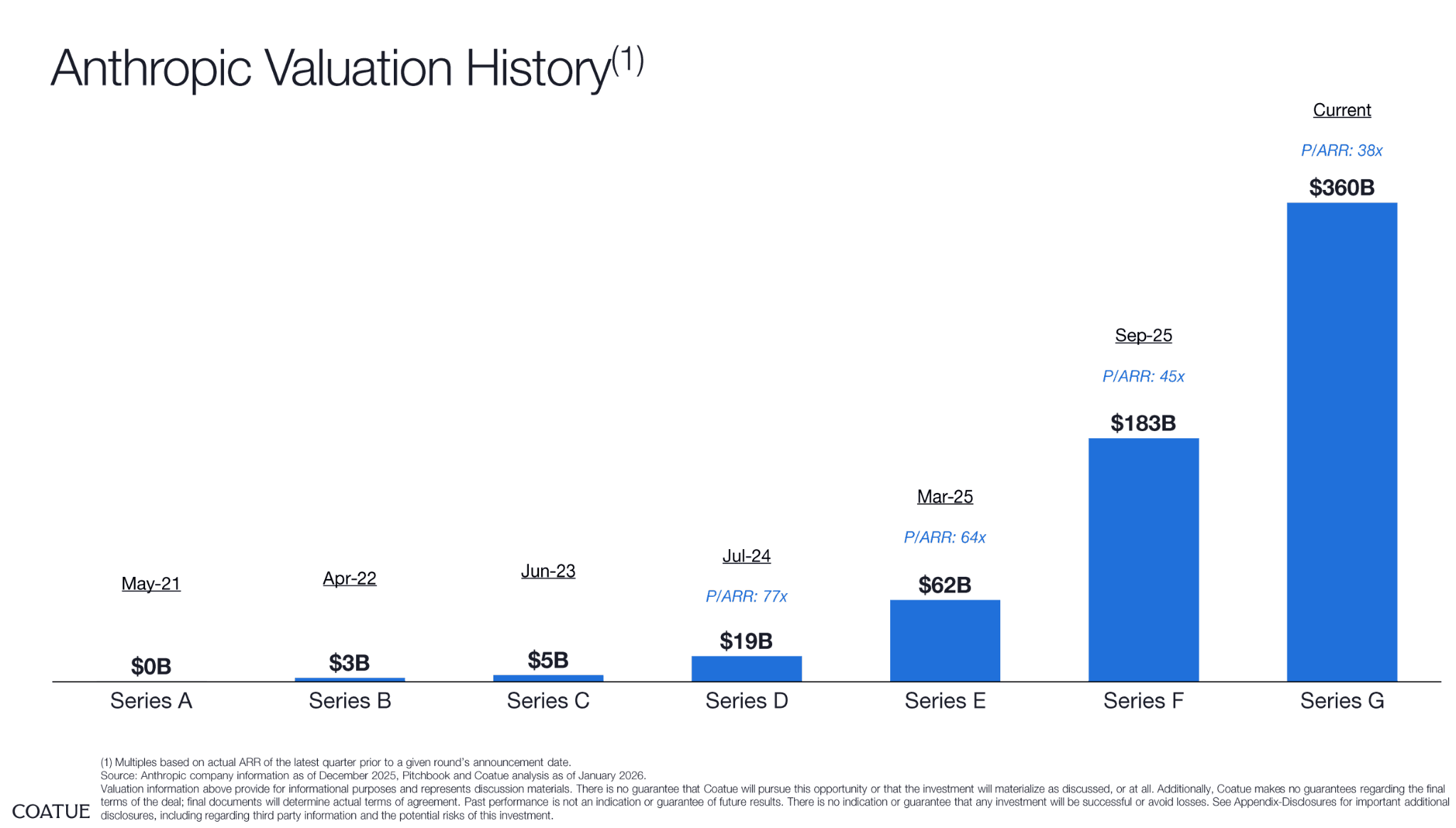
The technical pressure we saw with Tech-Software Sector ETFs during since the beginning of the year was more than just a momentum sell-off; it was a realization that the "per-seat" pricing model is facing an existential threat. Anthropic’s aggressive move to lower enterprise pricing while scaling to a staggering $30B ARR serves as a signal: the incremental dollar in software is no longer going toward human access, but toward agentic execution. And of course, this is highly rewarding to the company from a valuation perspective:
The Thesis: Active Reallocation is Required
While the recent 12% bounce in the software complex suggests a tactical recovery from oversold levels, professional investors must distinguish between a relief rally and a fundamental inflection.
The "Underweight Incumbent" strategy does not suggest a wholesale exit from software. Rather, it advocates for a ruthless pruning of "legacy" SaaS names that rely on human-to-screen interaction, in favor of those building the Model Context Protocol (MCP) servers and the proprietary "Ontologies" that agents require to be effective.
As we look toward the 2028 credit maturity wall, the predictability of cash flow for companies that fail to pivot from "seats" to "outcomes" is no longer a safe bet for a high-conviction portfolio.
The Quantitative Divergence: RPO vs. Agentic Displacement
Historically, a growing RPO was the gold standard for software valuation, signaling predictable future revenue and a healthy sales pipeline. However, in the Agentic AI era, RPO is losing its predictive power.
We are seeing a divergence where Total RPO remains stable due to long-term enterprise contracts, but cRPO (Current RPO) growth is decelerating as renewals come under pressure. The risk is "phantom backlog": contracts signed for a specific number of seats that will not be fully utilized as agents automate the underlying tasks. If an enterprise realizes it only needs 20% of its licensed seats because an agentic layer (like Anthropic’s Managed Agents) is handling the workflow, that RPO won't translate into a renewal.
The "Per-Seat" Cap vs. The "Per-Outcome" Floor
The most significant quantitative threat is the disruption of the seat-based pricing model. For two decades, SaaS scaling was a simple function of headcount growth. Agentic AI breaks this correlation, forcing the investor into a dilemma.
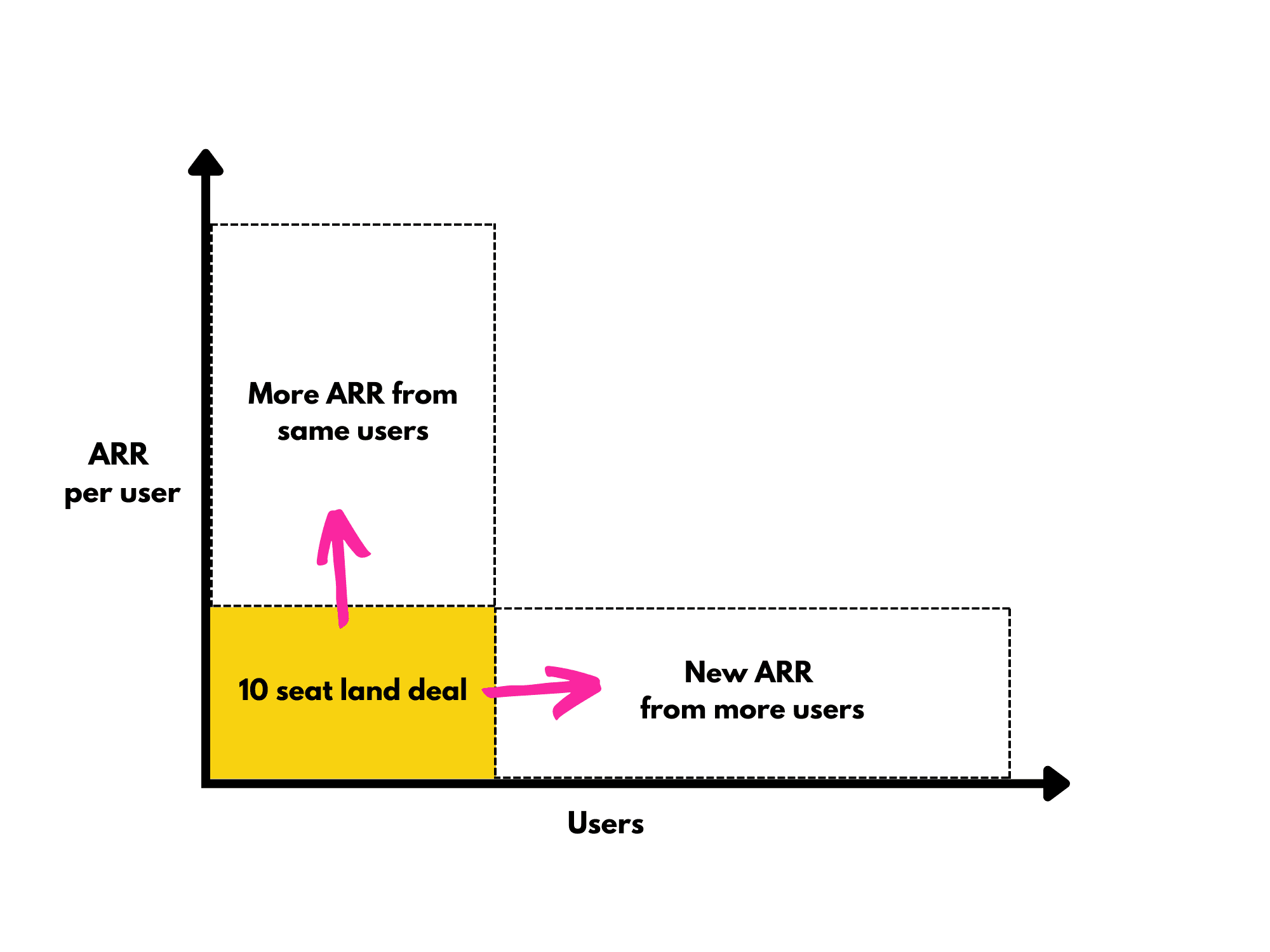
When AI agents autonomously execute workflows without a human logging into the UI, the "User" effectively disappears.
Investors must now discount companies that cannot pivot to usage-based or tokenized pricing. We are looking for a shift where the "System of Record" charges a "toll" for agent access via MCP (Model Context Protocol) servers, rather than a monthly fee per human eye.
Net Retention Rate (NRR) as a Lagging Indicator
Portfolio managers must be wary of trailing 12-month NRR figures. As Anthropic and OpenAI aggressively lower pricing—exemplified by Anthropic’s recent move to $100/user for Pro enterprise plans—the "down-sell" risk for legacy incumbents is immense.
We are monitoring for a "Negative NRR Inflection" in companies that fail to prove their GenAI integration (e.g., ServiceNow’s Now Assist or Salesforce’s Agentforce) is generating incremental ACV (Annual Contract Value). If AI integration merely "protects" existing seats rather than creating new revenue streams, the margin profile will inevitably compress under the weight of increased GPU/Inference costs.
The "Gross Margin Standard" Re-Rating
The SaaS "Rule of 40" is being rewritten. Investors have long rewarded 80%+ gross margins. However, as software companies bear the cost of inference to power their internal agents, we expect a structural shift toward a 70% gross margin floor—aligning more closely with the efficiency profiles of the major AI labs.
In this environment, "High Value" is no longer defined by the size of the backlog, but by the Marginal Cost of Intelligence. Companies that own their data "Ontology" and can provide high-speed "speed to value" without massive manual implementation (the "on-site hand-holding" Burry famously criticized) are the only ones likely to maintain their premium multiples.
In this final section, the focus shifts from the "why" to the "how." For a portfolio manager, the "Underweight Incumbent" strategy is not a retreat from tech, but a migration of capital toward the layers of the stack that possess the highest pricing power and moat durability in an autonomous economy.
Tactical Reallocation: Moving Toward "Cognitive Infrastructure"
The shift to Agentic AI represents a transfer of value from the Application Layer to what we define as Cognitive Infrastructure. As AI agents begin to navigate software autonomously, the traditional "User Interface" becomes a bottleneck rather than a bridge. Consequently, tactical reallocation should prioritize the "Control Planes" and "Foundational Rails" that agents require to operate.
Trimming the "Feature Wrappers"
The first step in rebalancing is identifying incumbents whose core value proposition is being "hollowed out" by managed agents.
Trim exposure to SaaS providers whose primary function is workflow orchestration or data visualization. When an AI agent (like Anthropic’s Claude Cowork) can execute tasks directly via API, the need for a proprietary UI vanishes.
Avoid "Seat-Heavy" legacy names that have not yet announced a credible transition to consumption-based or outcome-based billing. These companies face a "valuation air pocket" as their total addressable market (TAM) in terms of human users begins to contract.
Identifying the "Ontology Exception"
Not all incumbents are created equal. Tactical allocation must favor companies that own the System of Record and have successfully mapped that data into a machine-readable Ontology.
Agents cannot function in a vacuum; they require "ground truth" data. Companies that provide the underlying digital map of an enterprise—the relationships between customers, assets, and processes—act as the "Secure Gateway."
Look for incumbents aggressively adopting the Model Context Protocol (MCP). By becoming a standardized server for AI agents, these companies turn a disruption threat into a distribution channel, charging "toll fees" for every token an agent processes.
Rotation Targets: The Three Pillars of Cognitive Infrastructure
The "Underweight" capital should be redeployed into three specific sub-sectors that provide the physical and logical scaffolding for the Agentic Era:
Custom Silicon & Vertical Integration: As the 45% backlog concentration in major cloud players suggests, "off-the-shelf" compute is no longer enough. Prioritize Hyperscalers with mature custom silicon roadmaps (TPUs/Trainium). These firms control their own margin destiny by reducing reliance on external GPU providers.
The Cybersecurity Control Plane: In a world where autonomous agents are performing enterprise tasks, the "Identity and Access Management" (IAM) layer becomes the most critical piece of software in the stack. Cybersecurity is one of the few software verticals where agentic activity increases the attack surface, thereby increasing—rather than disrupting—the value of the service.
The AI-Native Control Layer: Move toward platforms designed as "AI-Native" from the ground up—those that don't just "add" AI features, but provide the operating system upon which other agents are built. These platforms are the primary beneficiaries of the "Speed to Value" requirement that enterprises are now demanding.
Portfolio managers must view this reallocation through the lens of the 2028 Credit Maturity Wall. The "Underweight Incumbent" strategy is designed to insulate a portfolio from the volatility of companies whose cash flows are becoming less predictable.
By rotating into Cognitive Infrastructure, advisors are betting on the "Lumber and Steel" of the AI era, rather than the "Furniture" that sits on top of it.
From Thesis to Execution: Automating the "Underweight Incumbent" Strategy
Identifying the structural shift toward Cognitive Infrastructure is only half the battle; the other half is the precision of your execution. In a market where a single Anthropic announcement can trigger a 12% swing in the IGV in just three sessions, manual rebalancing is no longer a viable strategy for high-stakes portfolios.
Surmount Wealth bridges the gap between sophisticated institutional analysis and real-time execution. Whether you are looking to hedge against the 2028 credit wall or capitalize on the divergence between legacy SaaS and AI-native "Ontology" leaders, our platform allows you to turn these complex theses into fully automated, rule-based trade strategies.
Why Professional Advisors are Integrating Surmount:
Automate Any Thesis: Don't just watch the 50DMA or RPO inflections—program them. Build custom strategies that trigger reallocations based on the specific fundamental and technical signals discussed in this post.
Institutional-Grade Precision: Move beyond "market orders." Utilize our prebuilt automated strategies or architect your own proprietary logic to manage entries and exits with surgical accuracy, mitigating the "volatility tax" of the Agentic AI era.
Alpha Without the Overhead: We provide the infrastructure; you provide the vision. Surmount allows you to scale your most complex investment strategies across multiple accounts without increasing your operational headcount.
The "Underweight Incumbent" rotation is happening now. The question is whether your portfolio will react to the news or trade ahead of it.
Don't leave your execution to chance. Book a demo with the Surmount Wealth team today and see how our automation engine can power your proprietary investment thesis.