
Blog
A Framework for Investing in AI Cybersecurity
The enterprise security perimeter no longer ends at the firewall. As AI agents embed themselves into developer workflows, cloud environments, and internal databases, the attack surface has fundamentally changed. For professional investors, this shift is not just a technological footnote — it is a structural investment theme with meaningful portfolio implications.
This piece offers a practical framework for evaluating cybersecurity investments through the lens of agentic AI deployment, and outlines where the most consequential opportunities are forming.
Why AI Agent Security Risks Are Reshaping the Enterprise Attack Surface
Cybersecurity has always been a speed problem. Attackers probe continuously. Defenders patch episodically. That gap was manageable when the perimeter was defined by networks and endpoints. It is becoming increasingly difficult to manage as AI agents proliferate inside enterprise environments.
The Shift From Network Perimeters to Software Supply Chain Security
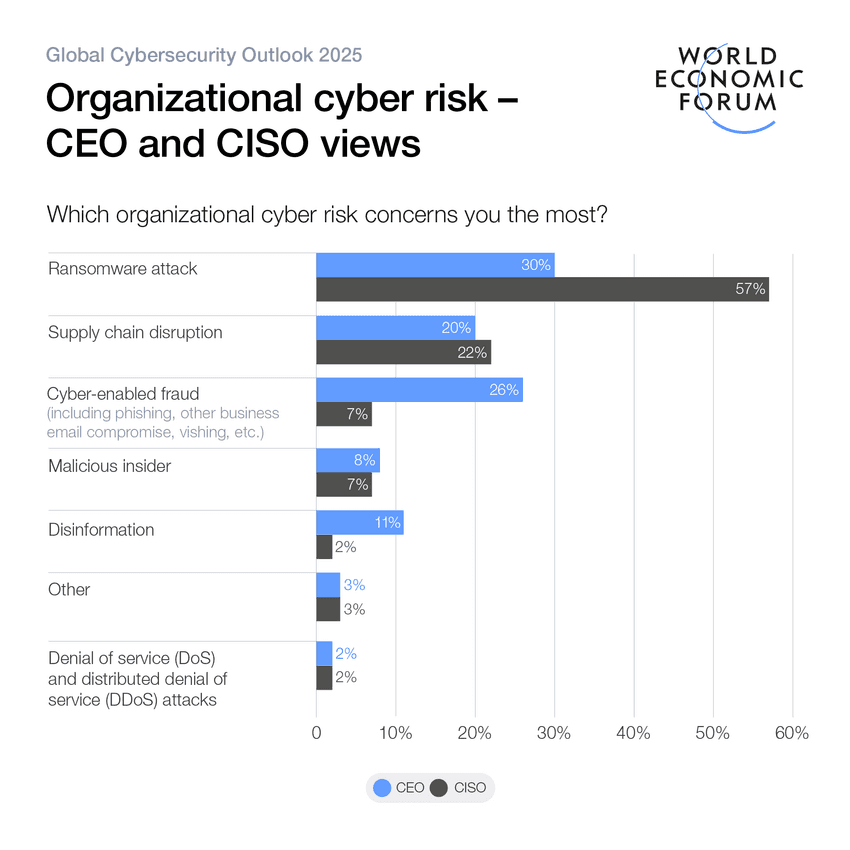
The traditional security model assumed a relatively stable, auditable set of access points. AI agents break that assumption. They connect dynamically to internal tools, external APIs, private databases, and cloud services — often with minimal human oversight. This shift is already disrupting how investors think about incumbent software exposure in the agentic era.
Software supply chain security investing is gaining traction precisely because the connectors and dependencies that AI agents rely on have become as exploitable as the endpoints they bypass.
Enterprise AI Deployment Risks Most Portfolio Managers Are Underpricing
The speed of enterprise AI adoption is outpacing the governance frameworks designed to contain it. Developers ship faster. AI agents act autonomously. Security teams review reactively. The result is an expanding gap between deployment velocity and risk oversight. Agentic AI enterprise risk is not a future concern — it is a present reality that most institutional security budgets have not yet fully priced in. For portfolio managers, that mispricing is worth examining closely.
For a broader look at how AI agents are being deployed inside advisory operations specifically, see our analysis of AI agent adoption among RIAs in 2026.
A Framework for Investing in AI Cybersecurity Infrastructure
Evaluating companies in this space requires moving beyond traditional security categorizations. The agentic era has introduced distinct functional layers, each with its own competitive dynamics and investment characteristics.
Layer 1 — Vulnerability Management and the Investment Thesis for Discovery Tools
The first layer is detection. AI is dramatically accelerating the rate at which vulnerabilities can be identified — not just in production systems, but in code as it is written. The vulnerability management investment thesis rests on a simple dynamic: the volume of exploitable flaws is growing faster than human security teams can address them. Companies that use AI to discover, prioritize, and remediate vulnerabilities at scale are addressing a bottleneck that only widens as codebases grow more complex. AI agent security risks amplify this urgency — autonomous systems can both find and introduce vulnerabilities simultaneously.
Layer 2 — Software Supply Chain Security Investing and Governance Infrastructure
The second layer is governance. As AI agents plug into outside tools and services, enterprises need a registry-like infrastructure to track, approve, and monitor those connections. Software supply chain security investing targets companies building exactly this — governance layers that treat AI agent connectors with the same scrutiny applied to traditional software dependencies. Agentic AI enterprise risk compounds here because a compromised connector does not just affect one system — it can propagate across every agent that relies on it.
Layer 3 — Network and Security Sector AI at the Runtime and Identity Layer
The third layer is protection at the point of execution. This includes encrypted private network connectivity that keeps AI agent traffic off the open internet, identity verification systems that authenticate agents as they operate, and runtime monitoring capable of detecting anomalous behavior at machine speed. Network and security sector AI is most mature at this layer, but enterprise AI deployment risks are also highest here — because this is where agents act, and where a breach has immediate operational consequences.
Cybersecurity Portfolio Allocation in the Agentic AI Era
Positioning a portfolio around this theme requires thinking across subsectors rather than within them. This is a structural approach we previously explored in the context of barbell portfolio construction for the AI economy.
The companies addressing AI-era cybersecurity span cloud infrastructure, developer tooling, network security, and data analytics — which means siloed sector analysis will systematically underweight the full opportunity.
Cross-Sector Spillover and Network and Security Sector AI Exposure
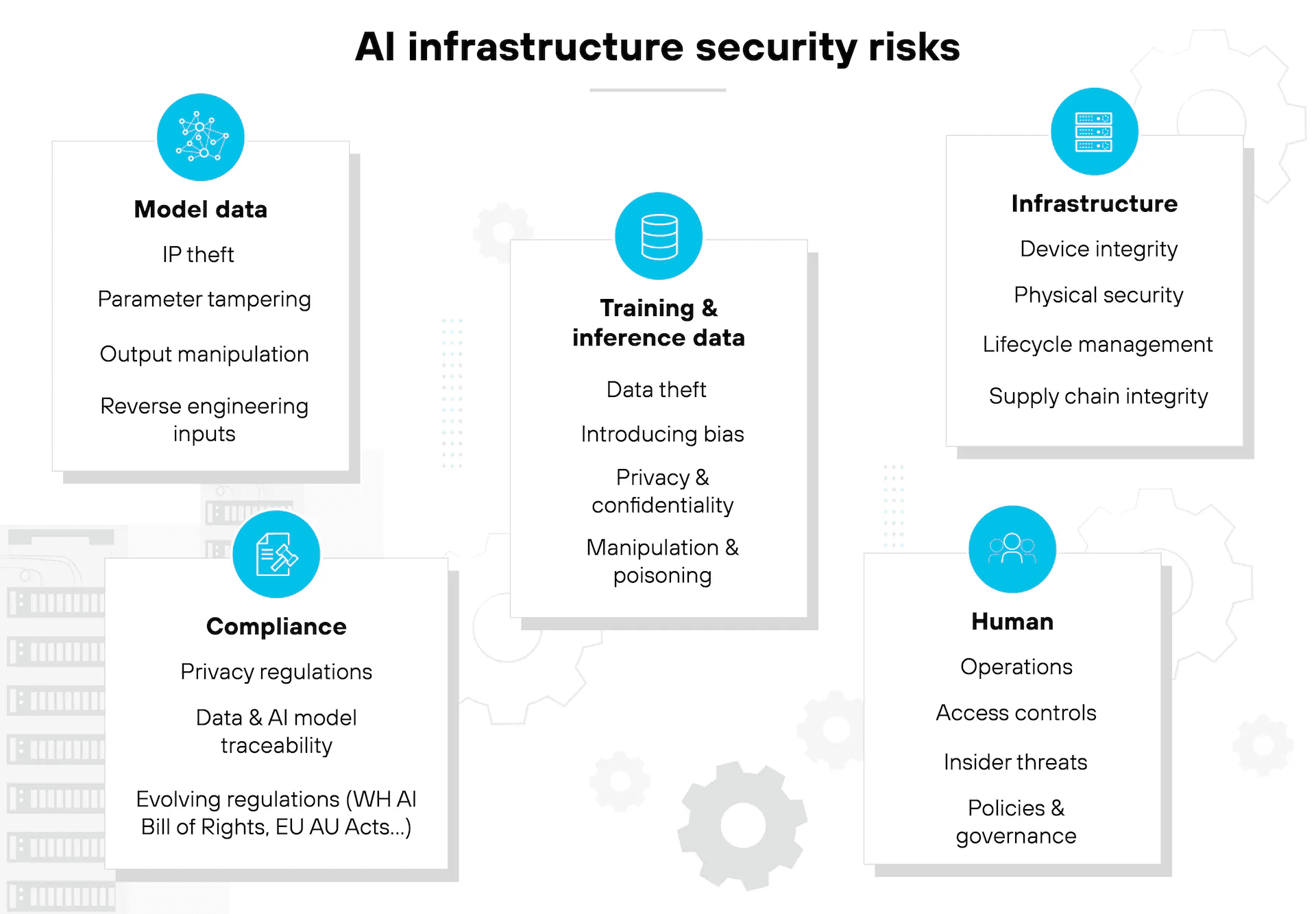
Cybersecurity portfolio allocation in this environment is not a single-sector decision. Network and security sector AI exposure reaches into cloud providers enabling private agent connectivity, semiconductor companies powering on-device inference, and analytics platforms processing the telemetry that makes real-time threat detection possible. AI infrastructure investment themes tie these together — security is becoming a foundational property of the entire AI deployment stack, not a discrete product category sitting alongside it.
Conclusion — What Investing in AI Cybersecurity Means for Portfolio Construction
Investing in AI cybersecurity today means investing in infrastructure. The companies building vulnerability discovery tools, governance layers, identity systems, and encrypted connectivity are not peripheral to AI adoption — they are load-bearing. As agentic AI moves from experimentation to enterprise deployment at scale, the security stack underneath it becomes as critical as the models running on top of it. Cybersecurity portfolio allocation that reflects this structural shift — across cloud, development tooling, network security, and analytics — is better positioned for the next phase of AI-driven market evolution.
Automate This Thesis With Surmount Wealth
Reading a framework is one thing. Acting on it with discipline and consistency is another.
At Surmount Wealth, we give professional investors and self-directed portfolio managers the infrastructure to turn a thesis like this into a live, automated investment strategy — without writing a single line of code or transferring funds away from your existing brokerage.
Consider a hypothetical strategy we might call the Agentic Security Stack — a rules-based, systematically rebalanced portfolio built around the three layers outlined in this piece: vulnerability discovery, governance infrastructure, and runtime protection. Such a strategy could define entry criteria, weighting logic across subsectors, and rebalancing triggers tied to earnings or sector momentum signals — all running automatically in the background.
(This is a hypothetical illustration, not a live product or investment advice.)
That is exactly the kind of strategy our platform is built for. Whether you want to deploy a prebuilt strategy from our library or build a fully custom one around your own research, Surmount Wealth gives you the tools to systematize your edge.
Book a demo today and see how your next investment thesis can run on autopilot. 👉 [Schedule Your Demo at Surmount Wealth]
Frequently Asked Questions
What is the best way to start investing in AI cybersecurity?
Begin by mapping exposure across the three functional layers — vulnerability discovery, governance infrastructure, and runtime protection — rather than treating it as a single-sector allocation. A structured framework ensures you capture cross-sector spillover across cloud, networking, and analytics.
Why are enterprise AI deployment risks growing faster than most investors expect?
AI agents are being deployed into production environments faster than security governance frameworks can keep up, creating exploitable gaps at every connection point. This speed asymmetry makes enterprise AI deployment risks one of the most underpriced dynamics in the market today.
How does agentic AI change the software supply chain security investing thesis?
Unlike traditional software, AI agents connect dynamically to external tools and APIs, meaning a single compromised connector can propagate risk across every system that agent touches. Software supply chain security investing now has to account for this multiplier effect in ways legacy security frameworks were never designed to handle.
What does cybersecurity portfolio allocation look like in the agentic AI era?
Effective cybersecurity portfolio allocation requires cross-sector thinking — meaningful exposure lives in cloud providers, developer tooling, semiconductors, and analytics platforms, not just traditional security vendors. Investors who treat it as a single-sector decision will systematically underweight the full opportunity.
How can I automate an AI cybersecurity investment strategy without coding from scratch?
Platforms like Surmount Wealth allow you to build and deploy rules-based strategies around themes like AI agent security risks directly into your existing brokerage account. You define the thesis, the platform handles execution, rebalancing, and monitoring automatically.