
Blog
Key Person Risk in Client Portfolios (and How to Fix It)
What Is Key Person Risk in Client Portfolios?
Most advisory practices manage operational risk carefully — succession agreements, compliance reviews, cybersecurity protocols. Far fewer apply the same rigor to a quieter vulnerability: key person risk in client portfolios. This is the risk that a single individual, whether the client, a spouse, or even the advisor managing the account, holds enough undocumented knowledge and discretionary judgment that the portfolio becomes fragile the moment that person is unavailable.
Succession Planning for Client Portfolios: Where Most RIAs Fall Short
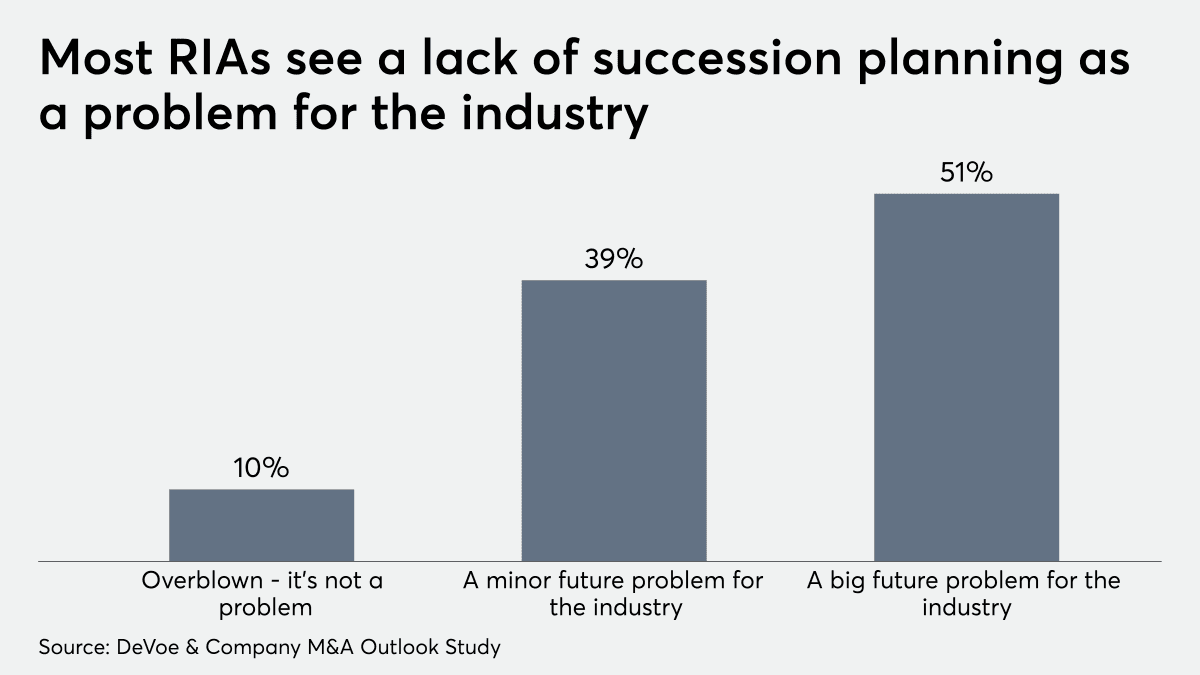
Succession planning for client portfolios typically focuses on the advisory firm's own continuity — who takes over a book of business if a lead advisor retires or exits, a question we explore in depth in our guide to succession, talent, and tech planning for next-gen RIAs. Far less attention goes to continuity risk sitting inside individual households, particularly where one spouse has historically owned every financial decision.
Durable Power of Attorney for Investment Accounts Isn't Enough
Advisors often assume a durable power of attorney for investment accounts solves the continuity problem. It does not, on its own. A POA is a legal instrument authorizing someone to act — it is not the same as being an authorized party on the account itself, and its authority typically ends at the principal's death, precisely when a surviving spouse needs account access most. Firms that treat POA paperwork as a completed checklist item, rather than one piece of a broader authorization and access framework, are leaving a gap that surfaces at the worst possible moment — the same kind of single point of failure we cover in building a resilient RIA.
Cognitive Decline and Investment Suitability: When to Act
Cognitive decline and investment suitability intersect earlier than most firms formally acknowledge. Waiting for a diagnosis or a crisis before revisiting a client's capacity to direct their own account is a reactive posture. A better practice is proactive: documenting decision-making authority, trusted contacts, and account access well before any capacity question arises, so the portfolio's operation never depends entirely on one person's continued cognitive sharpness. This is a gap that overlaps closely with the red flags for elder financial exploitation the SEC's Office of Investor Education has outlined for advisors and families alike.
Rules-Based Investment Management as a Structural Fix
The clearest structural answer to key person risk in client portfolios is rules-based investment management. When a strategy's logic — its entry criteria, rebalancing triggers, drawdown responses — is documented and executed systematically rather than held as tribal knowledge in one person's head, continuity stops depending on any single individual's presence, memory, or day-to-day involvement — the same principle behind why portfolio managers need systematic sell signals instead of discretionary calls.
Reducing Reliance on a Single Portfolio Manager
Reducing reliance on a single portfolio manager is really a portability problem. A systematic strategy can be reviewed, handed off, or audited by another advisor, a successor, or even a family member's CPA, because the mechanics are written down and repeatable rather than improvised. That portability is exactly what was missing in the Bogleheads scenario, where the entire system existed only in one retiree's head — the same discretion problem we unpack in why less advisor optionality often means more consistency.
The DIY Investor Transition to Financial Advisor: What It Signals
The DIY investor transition to financial advisor rarely happens because someone stops trusting their own asset allocation. It happens when a self-directed investor recognizes that competence and continuity are two different problems. Being a capable investor does not automatically produce a plan for what happens when you are no longer the one managing the account. That realization is often the actual trigger point for outreach to an advisor — not underperformance, but a growing awareness of key person risk in client portfolios inside their own household, closely tied to how emotions drive market decisions under uncertainty.
Automated Portfolio Rebalancing for Advisors and Systematic Portfolio Management for RIAs
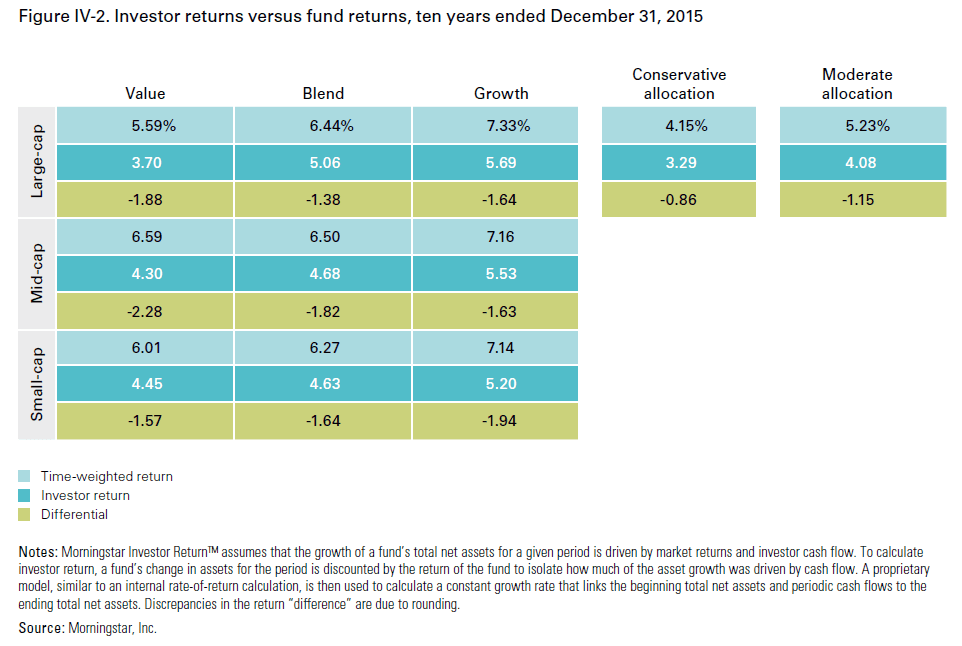
Automated portfolio rebalancing for advisors turns this awareness into an operational advantage. Instead of manually monitoring drift, rebalancing bands, and reallocation timing across every household — a cadence we break down in how often portfolios should actually be rebalanced — advisors can apply systematic portfolio management for RIAs to standardize how strategies run across an entire book of business. This does more than save time. It means any given account can be picked up, reviewed, or transitioned by another team member without reconstructing an individual advisor's undocumented judgment calls — the same continuity gap the Bogleheads thread surfaced at the household level.
Conclusion
Key person risk in client portfolios shows up at every level of the advisory relationship: the client managing their own household finances, the spouse who never learned the system, and the advisor whose judgment never made it into a repeatable process. The fix is not more paperwork after the fact. It is building portfolios around documented, systematic logic from the start, so continuity is a property of the strategy rather than a favor owed to whoever happens to be paying attention.
Turn This Into a Portfolio That Runs Without You
Documenting a strategy is one thing. Executing it identically, every time, regardless of who's watching the account, is another. That's the gap Surmount Wealth's automation infrastructure is built to close.
Surmount lets RIAs and portfolio managers take any thesis — including the continuity-first approach outlined above — and turn it into a rules-based strategy that runs automatically on top of clients' existing brokerage accounts. No fund transfers. No custom code. No dependence on one advisor's memory of how a portfolio is supposed to behave.
Illustrative Concept: A "Continuity Sleeve" Strategy
The following is a hypothetical strategy concept for illustrative purposes only. It has not been backtested, is not currently offered, and does not represent actual or projected performance. Any resemblance to a real Surmount strategy is coincidental.
Picture a rules-based allocation designed specifically around the key-person-risk problem: a documented rebalancing cadence, predefined drawdown thresholds that trigger de-risking, and a fixed set of eligible holdings — all written down and automated rather than held in one person's head. If the advisor managing the account is unavailable, retires, or hands the relationship to a successor, the strategy keeps executing exactly as designed, because the logic lives in the system, not in a person.
Why Advisors Are Automating Strategies Like This on Surmount:
Continuity by design — strategies run on documented rules, not on one advisor's ongoing availability or memory
No asset transfers required — automation layers on top of a client's existing brokerage account
No coding needed — build and deploy systematic strategies without an engineering team
Auditable and transferable — any team member, successor advisor, or reviewer can see exactly how a strategy behaves
Built for scale — apply the same rules-based logic across an entire book of business, not just one household at a time
Drawdown and rebalancing discipline — mechanics execute on schedule, regardless of who's logged in that day
If key person risk is something you've been managing informally — through memory, habit, or hope — it's worth seeing what it looks like to manage it systematically instead.
Book a demo with Surmount Wealth →
FAQ: Key Person Risk in Client Portfolios
What is key person risk in client portfolios?
It's the risk that a portfolio depends on one person's undocumented knowledge — a client, spouse, or advisor — rather than a repeatable process.
How does succession planning reduce this risk?
Succession planning for client portfolios documents decision-making authority and account access before a transition becomes urgent.
Does power of attorney solve continuity gaps?
No — a durable power of attorney for investment accounts typically ends at death, right when a surviving spouse needs access most.
When should advisors address cognitive decline?
Cognitive decline and investment suitability should be addressed proactively, before a crisis forces a reactive capacity review.
Can automation reduce key person risk?
Yes — rules-based investment management and automated portfolio rebalancing for advisors make strategies auditable and transferable, independent of any one person.