
Blog

Are Share Buybacks Good for Investors? A Data-Driven Framework for Advisors
For advisors evaluating a client holding with an active repurchase program, the question rarely stops at “should shares outstanding be shrinking?” The real question — are share buybacks good for investors, or simply good for the optics of a quarterly earnings release — depends on conditions that are easy to overlook in a headline announcement.
A multi-decade backtest spanning 2006–2026, run across the U.S. equity universe, offers a useful lens for answering whether share buybacks are good for investors in any given case. It didn’t test whether buybacks work in isolation. It tested which kind of buyback activity actually correlates with better forward returns — and which kind is closer to financial theater.
What Determines Whether Share Buybacks Are Good for Investors
The short answer: not all buybacks are created equal. A repurchase program can be a genuine transfer of value to remaining shareholders, or it can be a mechanism that primarily offsets dilution from employee compensation — with little net effect on ownership.
The research isolated four layered conditions, tested sequentially, that separate the two:
The company is actively repurchasing stock (measured via buyback yield)
Diluted share count is actually declining
The repurchases are funded by strong free cash flow, not leverage
The balance sheet isn’t stretched to support the program
Each layer materially changed the return spread between the best- and worst-performing companies.
Buyback Yield: A Starting Point, Not a Verdict
Buyback yield — capital spent on repurchases relative to market cap — is the most commonly cited buyback metric, and it does carry signal. In the backtest, the top 20% of companies by buyback yield outperformed the bottom 20% by roughly 8.8 percentage points annually.
Why High Buyback Yield Alone Can Mislead
The results were inconsistent across deciles, and the strongest performance wasn’t in the top decile — it was one rung below it. That inconsistency points to a gap: dollars spent on repurchases don’t guarantee shareholders end up owning more of the business. A company can post an aggressive buyback yield while share count barely moves.
The Diluted Share Count Reduction Test
This is where the risk of a stock-based compensation offset enters the picture. Heavy equity issuance to employees, executives, or through convertible instruments can quietly offset repurchase activity dollar-for-dollar — leaving diluted shares roughly flat even as buyback spending rises.
How Stock-Based Compensation Offsets Buyback Dollars
Layering in a diluted share count reduction filter — confirming that fully diluted shares actually fell over a multi-year window — meaningfully improved the ranking, the same kind of layered screening discipline we outline in building a rigorous due diligence process. The top decile became the strongest performer, and the return spread widened past 10 percentage points. In practice, this means checking whether a repurchase program is closing net-new share issuance from compensation programs, or genuinely shrinking the float.
Free Cash Flow Yield as a Buyback Quality Filter
Adding a free cash flow yield screen produced the largest single improvement in the data — widening the top-to-bottom spread to over 13 percentage points. This layer answers two questions at once: can the company actually afford the buyback from organic cash generation, and is the stock reasonably priced while it’s doing so.
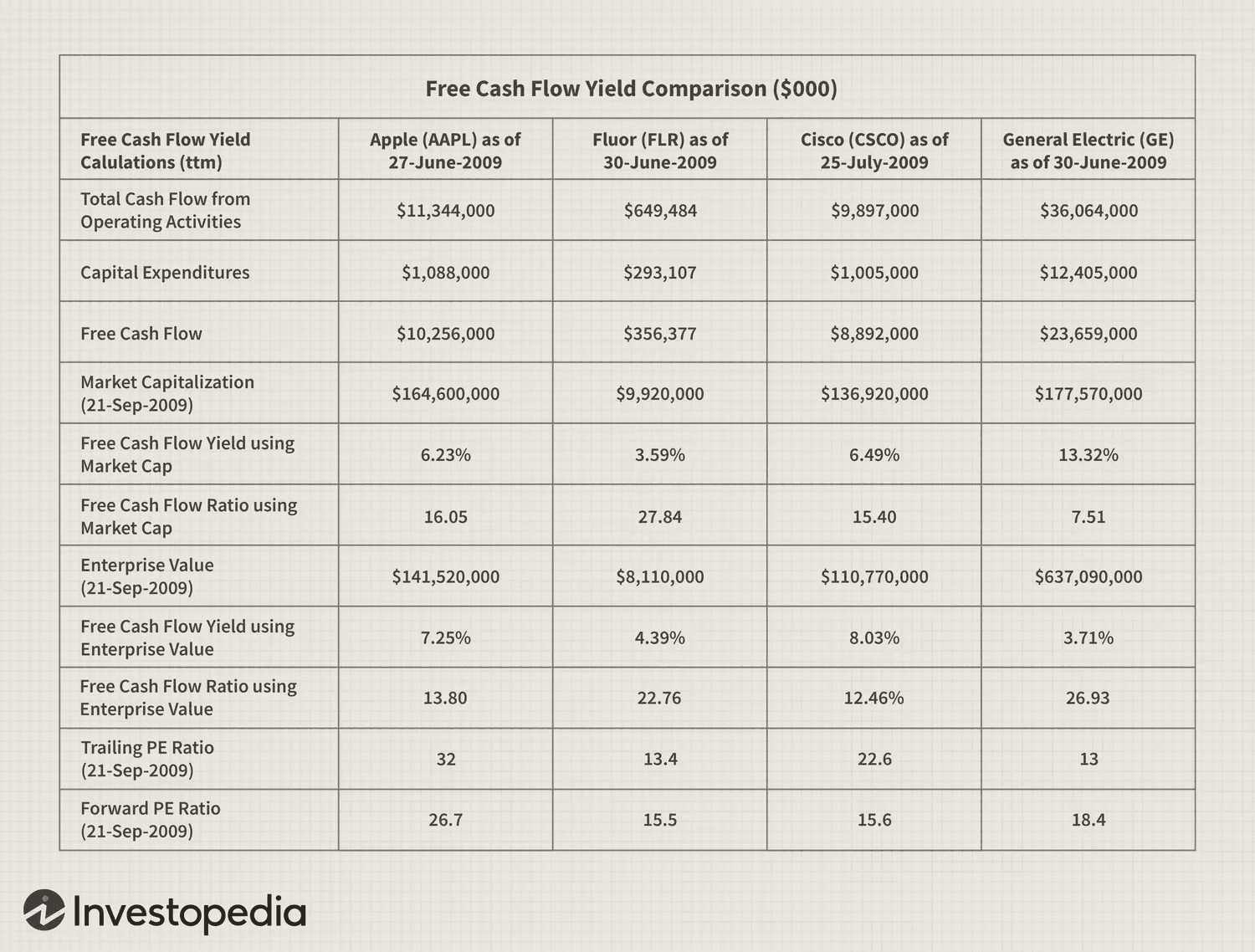
Buybacks funded by abundant free cash flow at a defensible valuation behaved very differently from repurchases executed by cash-constrained or richly valued companies — a distinction we explore further in why even great businesses can be awful investments at the wrong price.
Debt-Funded Buybacks: The Balance-Sheet Red Flag
Debt-funded buybacks told a different story than the other three layers. Adding a leverage screen didn’t meaningfully improve top-decile returns — but it sharpened separation at the bottom, flagging the weakest performers more reliably.
Capital Allocation Quality: Reading Leverage Alongside Buyback Activity
This reframes leverage as a risk filter rather than a return driver. Capital allocation quality isn’t just about whether a company is repurchasing shares — it’s whether that repurchase sits alongside a balance sheet that can support it without added fragility, a dynamic similar to what we found in the low payout ratio anomaly in REITs, where retained capital often outperforms distributed capital.
Bringing It Together: A Rules-Based Framework for Evaluating Buybacks
Layered together, the four conditions form a practical screening framework:
Buyback yield establishes activity, but is noisy on its own
Diluted share count reduction filters out cosmetic programs
Free cash flow yield confirms the buyback is affordable and reasonably priced
Debt levels flag balance-sheet risk the other metrics miss
No single factor is a reliable buy signal in isolation — a lesson that applies just as directly to exit discipline as it does to entry screens, as we cover in why portfolio managers need systematic sell signals. Together, these buyback factors meaningfully separate durable capital allocation from financial engineering — which is the more useful answer to whether share buybacks are good for investors in any specific case.
Automate This Thesis with Systematic Factor Screening
Manually running this kind of systematic factor screening — buyback yield, diluted share reduction, free cash flow yield, and balance-sheet leverage — across an entire coverage universe, updated as new filings land, is exactly the kind of multi-factor, rules-based investing process that doesn’t scale by hand. Surmount Wealth lets advisors and portfolio managers automate frameworks like this directly on top of existing brokerage accounts, without transferring assets or writing a single line of code, using prebuilt or fully custom automated trade strategies based on variables such as social media sentiment, and others.
As a hypothetical illustration only — not an existing Surmount strategy, and not a recommendation — a rules-based screen built on this article’s framework might combine:
A minimum buyback yield threshold to establish repurchase activity
A multi-year diluted share count reduction trend to filter out cosmetic buybacks
A free cash flow yield floor to confirm affordability and valuation discipline
A net debt / free cash flow ceiling to exclude balance-sheet outliers
This is a mechanics-only illustration of how such a screen could be structured — it is hypothetical, has not been backtested or run on Surmount’s platform, and is not a projection or promise of future results. Any real strategy performance shown to clients would be subject to full compliance review and required disclosures.
What Surmount’s infrastructure actually gives advisors:
Prebuilt strategy libraries covering factor-based, thematic, and risk-managed approaches, ready to deploy
Custom strategy automation for building and executing a proprietary thesis — like a multi-factor buyback screen — as a rules-based investing framework
Execution directly on existing brokerage accounts, with no asset transfers or custody changes required
Ongoing rebalancing and rule enforcement, removing the manual review burden of tracking filings quarter over quarter
If a systematic approach to ideas like this is something your practice could use, book a demo with Surmount Wealth to see how automated strategy execution works on your existing accounts.
FAQ: Are Share Buybacks Good for Investors?
Are Share Buybacks Good for Investors?
They can be — but only when backed by real diluted share reduction, strong free cash flow yield, and a healthy balance sheet, not buyback yield alone.
What is a good buyback yield?
There’s no fixed threshold — a high buyback yield only signals quality when it coincides with an actual decline in diluted share count.
How does stock-based compensation affect buybacks?
Heavy equity issuance can offset repurchases dollar-for-dollar, leaving diluted shares roughly flat even as buyback yield rises — a key capital allocation quality check.
Why do debt-funded buybacks matter?
Debt-funded buybacks don’t boost returns directly, but they flag balance-sheet risk — the weakest-performing companies in the data were often the most leveraged.
Can free cash flow yield predict buyback quality?
Yes — free cash flow yield was the strongest single filter in the data, widening the return spread between high- and low-quality buyback candidates.