
Blog

Japan AI Semiconductor Plan: What Advisors Must Know
Japan's Prime Minister Sanae Takaichi has unveiled a $2.3 trillion investment roadmap targeting AI and semiconductors through fiscal 2040. The plan is not a vague policy ambition. It is a structured sovereign commitment with projected economic spillover effects spanning semiconductor manufacturing, physical AI deployment, and vertical industry AI applications. For portfolio managers and RIAs, this announcement reframes what was already a high-stakes global capex race into something more structurally significant: a coordinated, multi-decade government AI infrastructure investment cycle with no clear precedent in modern capital markets.
Understanding the Japan AI semiconductor plan — and its implications for portfolio construction — is no longer optional for advisors managing globally diversified client portfolios.
The Scale of Sovereign Tech Spending
US, China, and Japan — The Trillion-Dollar Race
Sovereign tech spending has reached a scale that is difficult to contextualize within conventional portfolio frameworks. The United States has committed hundreds of billions through the CHIPS Act and related defense-linked AI programs. China has maintained aggressive state-backed semiconductor investment since 2014 through its National Integrated Circuit Industry Investment Fund.
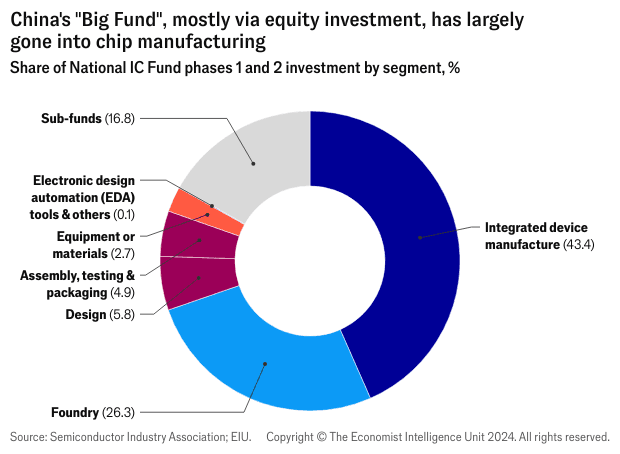
Japan's $2.3 trillion commitment — now the most explicitly structured of the three — adds a third major pillar to what is increasingly a government-directed industrial race.
The projected economic spillover from Japan's plan alone is substantial:
Semiconductor investment: $2.8 trillion in projected economic impact
Physical AI investment: $895 billion in projected economic impact
Vertical AI investment: $1.4 trillion in projected economic impact
These are not speculative projections tied to private sector sentiment. They are government-modeled output estimates backing a multi-decade fiscal commitment. For advisors evaluating AI infrastructure investment as a portfolio theme, that distinction matters considerably.
Why Sovereign Tech Spending Is Structurally Different This Time
Previous cycles of technology investment — the fiber buildout of the late 1990s, the mobile infrastructure buildouts of the 2000s — were primarily driven by private capital chasing demand signals. Sovereign tech spending of this magnitude introduces a fundamentally different dynamic: governments are backstopping demand floors regardless of near-term private sector ROI. This is not pure market allocation. It is industrial policy operating at asset-class scale.
As we examined in our analysis of hyperscaler debt issuance, the private-sector financing of AI infrastructure is already straining free cash flow across the five largest hyperscalers. When sovereign commitments of this size are layered on top, the structural demand floor for semiconductors and AI compute becomes significantly harder to dislodge through a single demand cycle downturn.
Understanding the Semiconductor Capex Cycle
How the Semiconductor Capex Cycle Creates Portfolio Opportunities
The semiconductor capex cycle is one of the most well-documented boom-bust patterns in industrial investing. Capital spending by manufacturers expands aggressively during undersupply phases, then contracts sharply as new capacity comes online and pricing power erodes. The Japan AI semiconductor plan injects sovereign capital into this cycle in a way that may extend the investment phase significantly beyond what purely private-sector dynamics would sustain.
For advisors, the portfolio allocation to semiconductors question is no longer simply about which companies benefit from AI demand. It is about how sovereign capital commitments alter the shape and duration of the cycle itself. Key dynamics to monitor include:
Capex commitment timelines: 14-year government roadmaps create longer demand visibility than typical private-sector planning horizons
Supply concentration risk: Sovereign programs targeting domestic capacity reduce geographic concentration, which has its own implications for incumbents
Equipment and materials demand: Japan's existing strengths in semiconductor equipment and chemical materials position domestic suppliers as early beneficiaries
Reading Late-Cycle Signals Before the Market Does
Even with sovereign demand backstopping the long-term picture, the semiconductor capex cycle still produces significant near-term volatility that advisors must navigate. Gross margin expansion in commodity memory segments, for example, remains a reliable late-cycle warning signal — a framework we explored in depth in our analysis of NAND cycle investing. Sovereign backing does not eliminate cyclicality. It shifts the floor, not the amplitude.
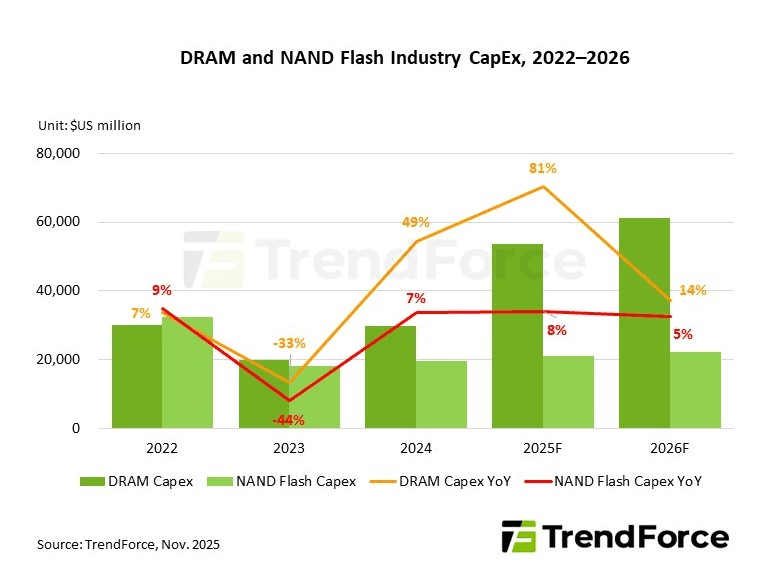
Portfolio managers should therefore distinguish between two separate investment theses: the long-duration structural case driven by geopolitical investing dynamics and sovereign commitment, and the near-term cyclical positioning opportunity created by capex expansion phases.
AI Infrastructure Investment — Durable or Inflated?
The Dotcom Parallel and the AI Investment Bubble Debate
The AI investment bubble debate is a legitimate one, and advisors should not dismiss it. The railroad, fiber, and early internet buildouts were all transformative technologies that also produced catastrophic losses for investors who mistimed entry or mispriced duration. The structural utility of the underlying technology was never the question. The question was always whether current valuations adequately priced in the risks of execution, demand disappointment, and capital misallocation.
Three specific parallels from the fiber bubble deserve attention:
Debt-financed overbuilding: Massive capital commitments financed through debt, with demand assumptions that proved optimistic on the original timeline
Obsolescence risk: Infrastructure built for one technology generation can be stranded by faster-than-expected advances in efficiency
Valuation compression: High-multiple companies that cannot grow into peak-cycle earnings face disproportionate drawdowns when narratives shift
The key difference this time is the sovereign dimension. When governments commit $2.3 trillion explicitly to semiconductor and AI infrastructure — with modeled economic spillover effects — the demand backstop is not purely speculative. That does not make current valuations cheap. It does change the floor analysis.
Separating Structural Demand from Speculative Overflow
The most important analytical distinction for advisors is between AI infrastructure investment that benefits from structural demand — government programs, hyperscaler commitments, enterprise adoption curves — and speculative overflow capital that is simply chasing a narrative. These two pools of capital will not behave identically when sentiment shifts.
Structural indicators worth monitoring:
Government capex disbursement timelines and execution milestones
Hyperscaler free cash flow relative to capex commitments
Enterprise AI adoption rates beyond early-adopter cohorts
GPU and semiconductor equipment order backlogs as leading demand signals
Portfolio Allocation to Semiconductors — A Framework for Advisors
Given the interplay of sovereign commitment, cyclical dynamics, and genuine valuation risk, a disciplined portfolio allocation to semiconductors requires a multi-factor framework rather than a binary bull/bear call. The following principles are worth building into any systematic approach:
Apply a geopolitical investing lens. Sovereign tech spending of this magnitude reshapes competitive dynamics for the companies that supply semiconductor equipment, materials, and advanced packaging. Japan's existing industrial base in these subsectors positions domestic suppliers as structural beneficiaries of the government roadmap — and as potential hedges against geopolitical disruption to TSMC-concentrated supply chains.
Risk-adjust positioning around sovereign capex programs. Not all sovereign commitments translate to executed spending on the announced timeline. Building rule-based monitoring around disbursement milestones, policy execution signals, and currency movements (JPY exposure adds another variable for unhedged international allocations) reduces the risk of sizing positions on announcements rather than delivery.
Size exposure without chasing the headline. The announcement itself has already moved prices. Advisors who build systematic entry frameworks — defined allocation bands, rebalancing triggers, and drawdown thresholds — are better positioned than those making discretionary allocation calls in response to headline flow. As we have covered in our framework for building rule-based macro responses, systematic execution consistently outperforms reactive positioning.
Conclusion
The Japan AI semiconductor plan is a watershed moment in the global sovereign tech spending race — not because Japan alone will determine the outcome, but because its formal commitment confirms that AI and semiconductor infrastructure have become a matter of national economic strategy for every major economy. For portfolio managers and RIAs, this is not a single-stock story. It is a structural, multi-decade theme with real implications for how semiconductor capex cycle exposure, geopolitical investing risk, and AI infrastructure investment are sized and managed across client portfolios.
The advisors best positioned are those who replace headline-driven allocation decisions with systematic frameworks that respond to execution signals, capex disbursement milestones, and cycle-phase indicators — not sovereign announcement dates.
Automate Your Semiconductor Thesis With Surmount Wealth
Identifying the structural opportunity in the Japan AI semiconductor plan is the analysis. Acting on it — systematically, without execution lag, across every client portfolio — is the operational challenge. That is exactly what Surmount Wealth is built to solve.
Surmount is an AI-driven automated investing platform that allows portfolio managers and RIAs to build, backtest, and deploy fully rules-based trade strategies directly on existing brokerage accounts. No fund transfers. No coding. No manual intervention.
Hypothetical Strategy Illustration: The Sovereign Capex Rotation Model
The following is a hypothetical strategy concept for illustrative purposes only. It does not represent an existing Surmount product and is not investment advice.
Imagine a rules-based strategy — the Sovereign Capex Rotation Model — built directly around the dynamics described in this post. The strategy monitors a defined set of signals:
Sovereign disbursement tracking: When Japan, US, or China announce confirmed capex disbursements above defined thresholds, the model increases allocation to semiconductor equipment and materials suppliers
Cycle-phase detection: When gross margin expansion in commodity memory exceeds historical peak ranges, the model trims commodity exposure and rotates toward equipment and IP-protected subsectors
Geopolitical risk signals: When supply chain concentration risk metrics breach defined thresholds, the model shifts weight toward domestically-oriented semiconductor beneficiaries
Drawdown controls: Automatic de-risking triggers if semiconductor sector drawdown exceeds a defined threshold, with systematic re-entry on recovery signals
Why leading advisors choose Surmount Wealth:
Automate any thesis: Turn sovereign capex signals, cycle indicators, or any macro framework into live, rules-based strategies
Prebuilt strategy library: Deploy proven institutional models immediately across your book
Full customization: Define your own logic; Surmount handles execution 24/7
Broker-agnostic: Connects to existing accounts including Interactive Brokers and Alpaca
No fund transfers required: Strategies run directly on your clients' existing brokerage infrastructure
Don't let your best macro research sit in a document. Turn it into a live, automated strategy.
► Book a Demo with Surmount Wealth Now
FAQ: Japan AI Semiconductor Plan
What is Japan's AI semiconductor plan?
Japan's AI semiconductor plan is a $2.3 trillion government roadmap through fiscal 2040 targeting semiconductor manufacturing capacity and AI infrastructure. It projects $2.8 trillion in semiconductor economic spillover and $1.4 trillion from vertical AI applications.
How does sovereign tech spending affect portfolios?
Sovereign tech spending creates structural demand floors for semiconductor and AI infrastructure investment that private-sector cycles alone cannot sustain. It shifts the long-term floor for capex, though it does not eliminate near-term cyclical volatility.
Is AI infrastructure investment in a bubble?
Valuation risk is real and parallels exist with the fiber buildout cycle. However, government-backed AI infrastructure investment introduces a demand backstop that distinguishes this cycle from purely private-sector-driven buildouts like the dotcom era.
How should advisors size semiconductor capex cycle exposure?
Through rule-based frameworks tied to capex disbursement milestones, cycle-phase signals, and defined allocation bands — not discretionary headline-driven decisions. Systematic execution reduces the risk of chasing announcements rather than confirmed delivery.
What is geopolitical investing in semiconductors?
Geopolitical investing in semiconductors means positioning around the structural shifts caused by sovereign competition for chip manufacturing independence — including supply chain concentration risk, subsidy beneficiaries, and the realignment of global semiconductor trade flows.