
Blog

What Is a Margin Call Cascade? A Guide for Advisors
Sharp, leverage-driven drawdowns tend to look chaotic in the moment but follow a predictable mechanical sequence. Understanding that sequence — and where systematic controls can interrupt it — is increasingly relevant as more capital, both retail and institutional, operates on borrowed money. This piece breaks down the mechanics for advisors and portfolio managers who need a clear framework for client conversations and portfolio construction.
What Is a Margin Call Cascade?
A margin call cascade occurs when falling asset prices trigger a wave of margin calls across many leveraged accounts simultaneously, forcing sales that push prices lower and trigger further margin calls. It's a self-reinforcing loop: price decline → margin call → forced selling → further price decline. Unlike an isolated margin call, a cascade is systemic — it moves through a market or asset class rather than staying contained to a single account or firm. For advisors, the key distinction is that a margin call cascade isn't primarily driven by fundamentals; it's a liquidity and mechanics problem that can override fundamentals entirely, at least temporarily.
How Leverage Risk in Portfolios Builds Before a Crash
Leverage risk in portfolios rarely announces itself in advance. It tends to accumulate quietly during extended rallies, when rising collateral values make additional borrowing feel low-risk. Three conditions typically precede a cascade:
Rapid, concentrated price appreciation in a specific sector or index, often driven by a narrow set of names
Rising participation from newly leveraged investors, drawn in by recent gains rather than long-term thesis conviction — a pattern closely tied to recency bias in portfolio decisions
Institutional holders operating near allocation limits, leaving little room to absorb further inflows without eventual rebalancing
None of these conditions are inherently alarming in isolation. Together, they create fragility — a market structure where a moderate price decline can trigger outsized forced selling.
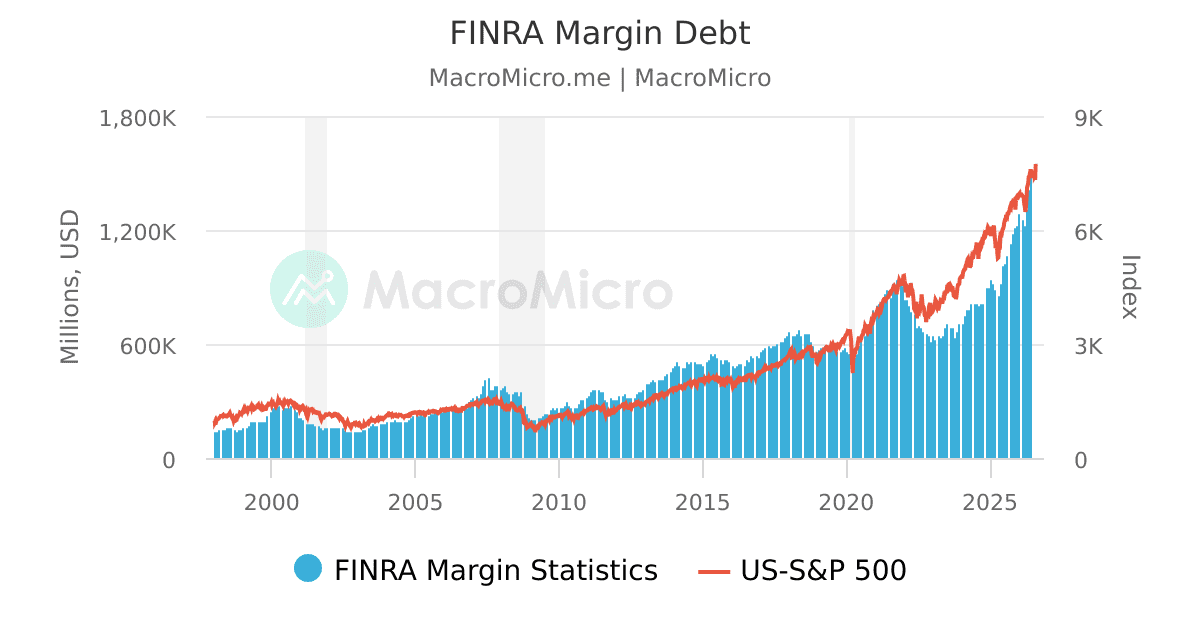
Margin Debt Risk and the Buildup to Forced Selling
Margin debt risk compounds specifically because collateral value and loan exposure move in the same direction as the underlying asset. When prices rise, available margin capacity increases, encouraging more borrowing at exactly the point when valuations are most stretched. When prices reverse, that same mechanism works against the borrower immediately — shrinking collateral value triggers maintenance margin calls, often within hours rather than days. Advisors evaluating client exposure to leveraged products or margin-heavy sectors should treat rising margin debt levels as a leading indicator of fragility, not a lagging confirmation of strength.
The Mechanics of Forced Liquidation and Systemic Deleveraging
Forced liquidation differs meaningfully from voluntary selling. It is price-insensitive — the seller isn't responding to a reassessment of value but to a broker-mandated deadline. This matters because it removes the price discovery function that normally cushions declines.
When enough forced liquidation happens concurrently, it produces systemic deleveraging: a broad reduction in aggregate leverage across a market, a dynamic that often overlaps with broader market contagion risk, often overshooting what fundamentals alone would justify.
From Individual Margin Calls to a Deleveraging Cycle
A single margin call is a routine risk-management event. A deleveraging cycle begins when the selling required to meet one set of margin calls is large enough to move prices further, generating a new set of margin calls elsewhere in the market. This is particularly pronounced in markets with concentrated ownership or thin liquidity, where a relatively small initial trigger — a rebalancing decision, an index reclassification, a macro shock — can produce disproportionate downstream selling.
Portfolio Concentration Risk as an Amplifier
Portfolio concentration risk doesn't cause a margin call cascade on its own, but it significantly amplifies one. When leveraged exposure is spread across a diversified set of uncorrelated positions, forced selling in one position has limited spillover.
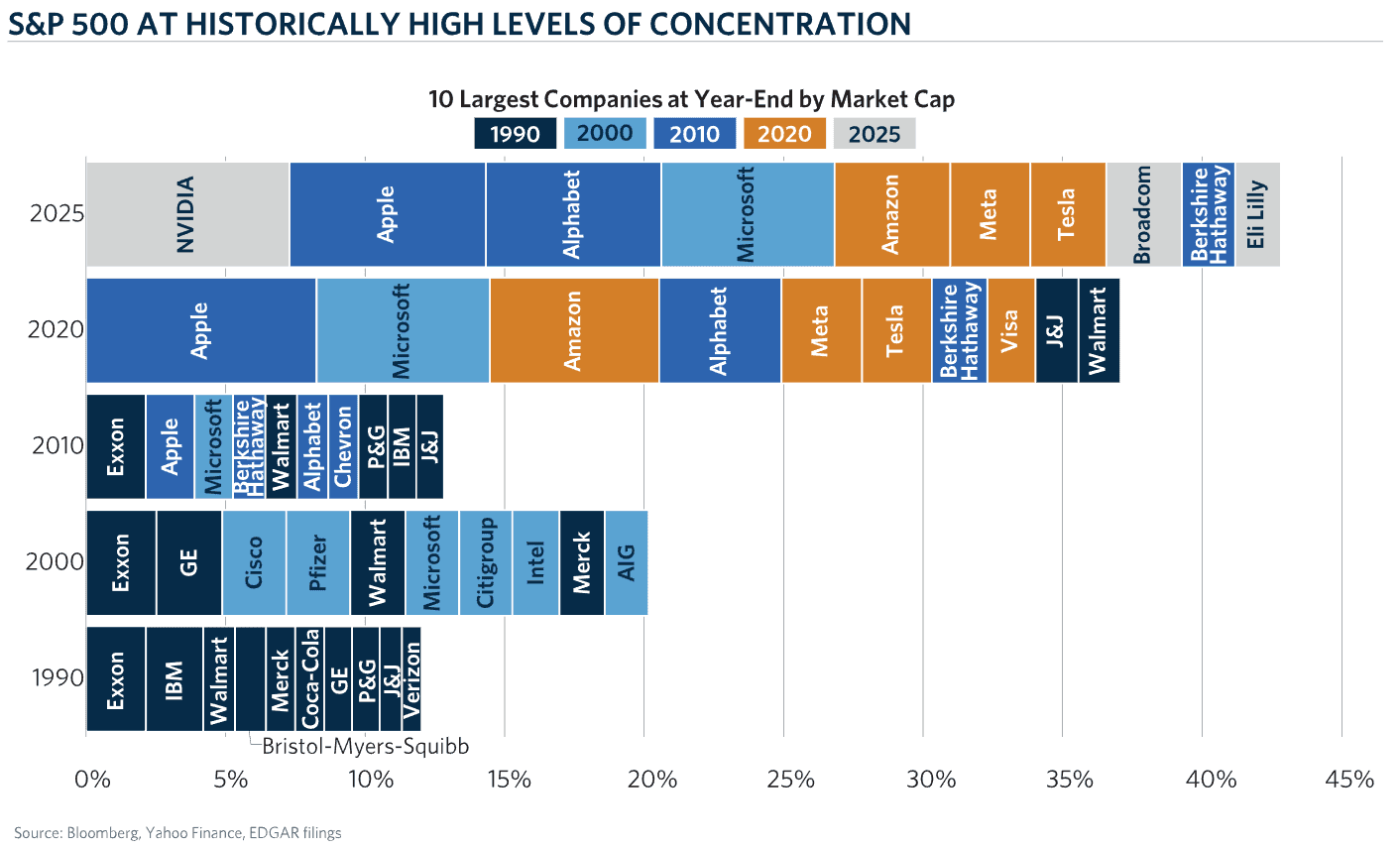
When exposure is concentrated — in a single sector, a small number of names, or a narrow theme — forced selling in one area directly pressures the same names other leveraged holders are also exposed to, a dynamic explored further in our look at concentration risk in major indexes. Advisors reviewing client portfolios for leverage risk should evaluate concentration and leverage together, not as separate risk factors.
Drawdown Risk Management: Rules-Based Approaches
Effective drawdown risk management during leverage-driven events depends less on predicting the trigger and more on having predefined responses in place before volatility hits.
Reactive, discretionary decision-making under stress tends to compound the very dynamics driving the cascade — a pattern closely related to what's known as behavioral gap investing — hesitation, anchoring to recent highs, or emotionally-driven exits at the worst possible moment.
Why Rules-Based Risk Management Outperforms Discretionary Reaction
Rules-based risk management removes the behavioral variable entirely. Predefined rebalancing thresholds, position-sizing limits, and automated de-risking triggers execute consistently regardless of market sentiment — the same logic behind systematic sell signals advisors use to remove hesitation from exit decisions. For advisors managing client expectations, this also creates a clearer narrative: risk decisions were made systematically, in advance, rather than reactively during a crisis.
Conclusion
Margin call cascades are structural, not random — they emerge from a predictable combination of leverage, concentration, and forced, price-insensitive selling. For advisors, the practical takeaway isn't to avoid leverage or concentrated themes entirely, but to build portfolios and processes — informed by disciplined rebalancing over market timing — that anticipate how these dynamics interact under stress, rather than reacting to them after the fact.
Automate the Discipline: How Surmount Wealth Turns Risk Rules Into Action
Understanding a margin call cascade is one thing. Building a portfolio process that's structurally immune to the panic that drives one is another. That's where Surmount Wealth comes in.
Surmount Wealth is an AI-driven, automated investing and wealth management platform that lets advisors and portfolio managers apply professional-grade, rules-based strategies directly to existing brokerage accounts — no fund transfers, no custom code, no manual rebalancing under pressure. Whether you're working from a prebuilt strategy library or building a fully custom thesis, Surmount automates the execution so your risk management framework runs exactly as designed, even when markets are moving fast.
Illustrative concept — hypothetical, for illustration only: Consider a rules-based framework that continuously monitors portfolio-level leverage exposure and concentration by sector, automatically scaling down position sizes when both metrics cross predefined thresholds simultaneously. This is a hypothetical mechanics illustration only — it does not reflect an actual Surmount strategy, and no performance outcome, return, or result is implied or guaranteed. Any such approach would need to be evaluated, tested, and confirmed for your specific use case.
Why advisors are automating drawdown and leverage management with Surmount:
Remove emotional decision-making — predefined rules execute the same way in calm markets and volatile ones
Apply institutional-grade logic without building it in-house — access a strategy library built for systematic risk control
Automate on top of existing brokerage accounts — no asset transfers, no disruption to custody relationships
Customize to your thesis — adapt concentration limits, rebalancing triggers, or de-risking rules to your own framework
Scale consistently across client accounts — apply the same disciplined process firm-wide, not account-by-account
If a leverage-driven drawdown or concentration risk scenario is something you're actively managing for clients, it's worth seeing how automation changes the equation.
Book a demo with Surmount Wealth →
FAQ: Margin Call Cascade
What triggers a margin call cascade?
A sharp price decline that pushes many leveraged accounts below maintenance requirements at once, forcing simultaneous forced liquidation across the market.
How does leverage amplify losses?
Leverage risk in portfolios means losses on the underlying asset are magnified relative to invested capital, accelerating margin depletion.
Why does concentration make cascades worse?
Portfolio concentration risk means forced selling in one position pressures the same names other leveraged holders share, spreading losses faster.
Can rules-based investing reduce this risk?
Yes — rules-based risk management applies predefined thresholds automatically, removing the emotional delay that often deepens a cascade.
What is a deleveraging cycle?
A deleveraging cycle is a self-reinforcing loop where forced selling to meet margin calls triggers further price declines and new margin calls.