Behavioral Gap Investing: What It Costs Your Clients

Behavioral Gap Investing: What It Costs Your Clients
Every advisor has lived this scenario: a client's portfolio technically returns 8% for the year, but the client's actual account grows far less — because they sold in March and bought back in June. This gap between fund performance and investor performance isn't a fluke. It's a measurable, recurring pattern, and understanding behavioral gap investing is central to explaining why disciplined process matters more than raw strategy selection.
What Is the Investor Behavior Gap?
The investor behavior gap — a term popularized by financial planner Carl Richards — describes the persistent shortfall between the returns an investment vehicle generates and the returns its investors actually capture. The mechanism is simple: investors chase performance after gains and flee after losses, buying high and selling low in aggregate, even while individual funds post respectable numbers.
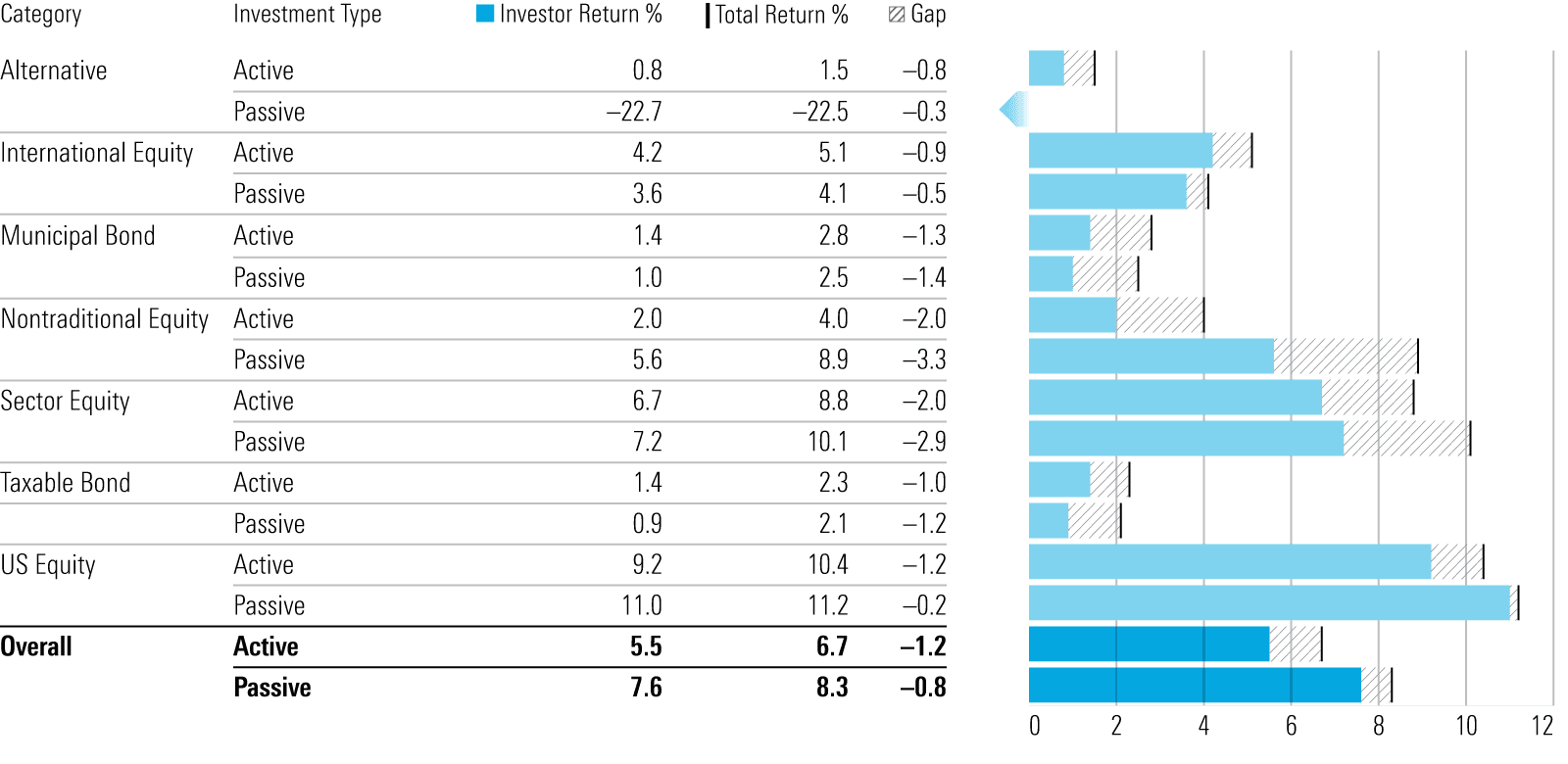
For RIAs and portfolio managers, behavioral gap investing isn't an abstract academic concept — it's a recurring line item in client review conversations. It explains why a well-constructed portfolio can still show signs of investor underperformance relative to its own benchmark, purely as a function of investor timing decisions layered on top of sound allocation.
How DALBAR Study Returns Reveal the Cost of Poor Timing
The DALBAR Quantitative Analysis of Investor Behavior (QAIB) has tracked this gap for decades, and the DALBAR study returns consistently show equity fund investors underperforming the broader market by several percentage points annually over rolling 20- and 30-year periods. The pattern holds across market cycles — bull markets, corrections, and recoveries alike.
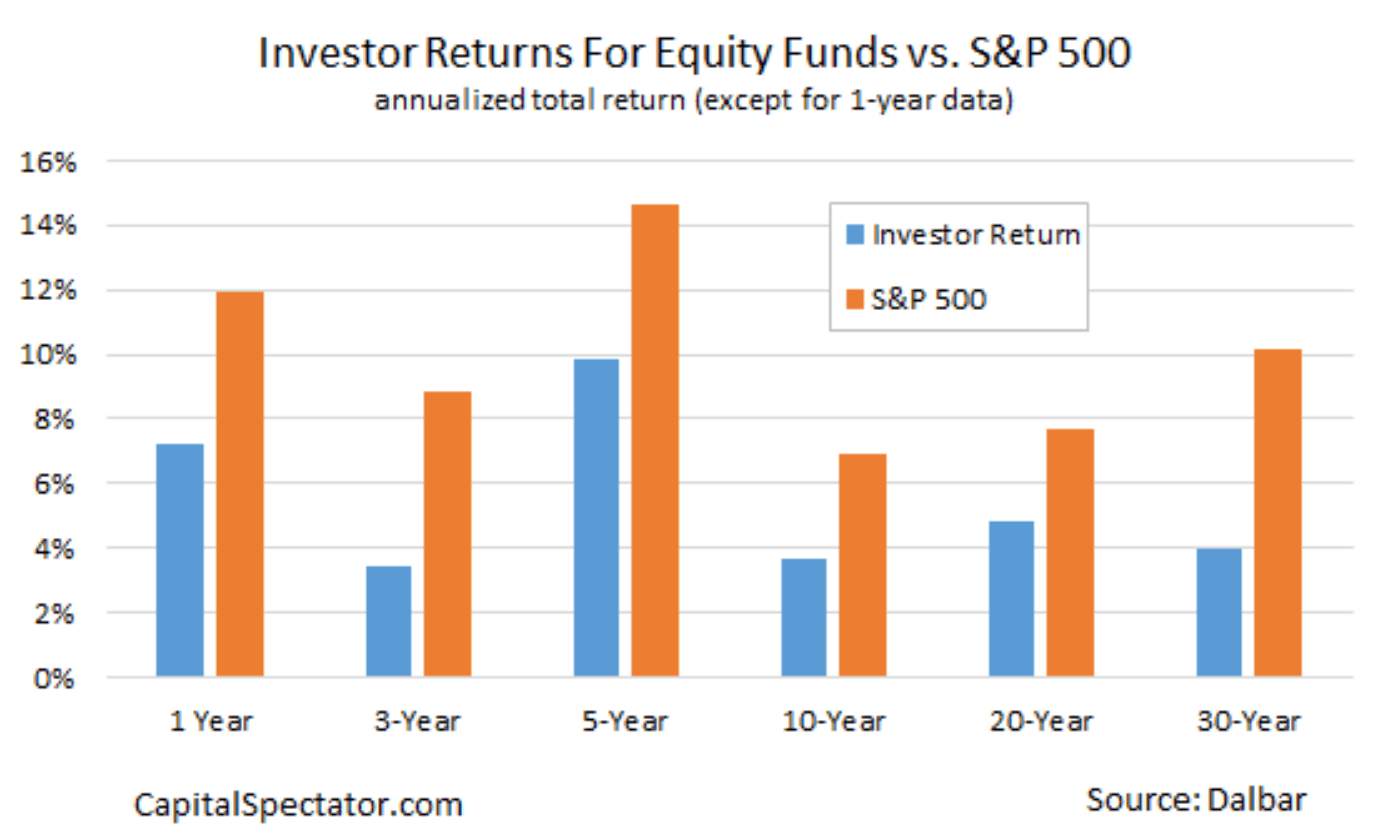
The implication for practice management is direct: clients don't experience investor underperformance because they picked the wrong fund. They underperform because they didn't stay invested through the periods that mattered most, a dynamic closely tied to the recency bias dynamics advisors regularly navigate under client pressure.
Why Rules-Based Investing Closes the Behavior Gap
If the behavior gap is fundamentally a discipline problem, the solution has to address discipline directly — not just strategy selection. This is where rules-based investing earns its place in the conversation. By codifying entry, exit, and rebalancing logic in advance — including systematic sell signals that remove guesswork from exit timing — rules-based frameworks eliminate the moment-to-moment emotional decision points where behavioral gap investing typically originates.
Rather than relying on a client — or even an advisor, under pressure — to make a rational call during a volatile week, a rules-based approach pre-commits to a process. The decision was already made, calmly, in advance, before the market gave anyone a reason to panic. This is also where emotional drivers behind market decisions tend to lose their grip on portfolio outcomes.
The Case for Systematic Investment Strategy Over Emotional Decisions
A systematic investment strategy extends this logic further by applying consistent, quantifiable criteria across the entire portfolio construction and management process. This isn't about eliminating judgment from investing altogether — it's about isolating where judgment adds value (strategy design, risk parameters, client goals) from where it typically destroys value (real-time emotional reactions to headlines).
Academic research from institutions like the CFA Institute has repeatedly linked systematic, rules-driven approaches to reduced behavioral drift, since the framework itself absorbs the decision-making burden that would otherwise fall on an anxious investor mid-drawdown.
Building a Disciplined Investment Process for Clients
Translating this into practice means building a disciplined investment process that clients can see and understand — not a black box, but a transparent, repeatable framework they can trust even when markets get uncomfortable. A few structural elements make this concrete:
Pre-defined rebalancing triggers rather than discretionary timing calls — a distinction explored further in why rebalancing matters more than market forecasts
Documented entry and exit criteria tied to quantifiable signals, not sentiment
Consistent application across market regimes, so clients see the same process in calm and volatile periods alike
Regular reporting that reinforces adherence to the stated strategy, supporting client trust through good years and bad
This structure gives advisors a tool for the hardest part of the job: keeping clients invested through the exact periods when the behavior gap tends to open widest.
How Automated Portfolio Management Reduces Behavioral Drift
Automated portfolio management takes the disciplined process one step further by removing manual execution lag entirely. When a rules-based strategy is automated, the gap between decision and action collapses — there's no window for hesitation, second-guessing, or emotional override once the criteria are met.
For advisors managing multiple client accounts, this also solves a scalability problem: consistent, automated execution ensures every client's portfolio follows the same disciplined logic, regardless of how many accounts an advisor oversees or how fast markets move.
Conclusion: Turning Behavioral Awareness Into Client Outcomes
Behavioral gap investing isn't solved by better stock-picking or more sophisticated forecasting — it's solved by process design that removes the decision points where behavior typically fails. Rules-based, systematic, and automated frameworks all address the same underlying problem from different angles: they replace reactive decision-making with pre-committed discipline. For advisors, closing this gap for clients isn't just a performance story — it's a differentiator in how the practice manages risk and communicates value.
Automate Any Thesis — Including This One
Understanding behavioral gap investing is one thing. Building infrastructure that actually closes it for every client, every account, every market cycle — without relying on manual intervention — is another.
Surmount Wealth's automated trade strategy engine lets RIAs and portfolio managers convert a discretionary thesis into a codified, rules-based strategy that executes without emotional override, directly within clients' existing brokerage accounts.
Hypothetical illustration: picture a “Behavioral Discipline Rebalancer” — a strategy concept that pre-sets rebalancing bands and volatility-triggered de-risking rules in advance, so allocation shifts happen automatically at defined thresholds rather than in reaction to a client's phone call during a selloff.
This is a hypothetical concept for illustrative purposes only. It does not represent an actual Surmount Wealth strategy, a recommendation, or any real or backtested performance figures.
Why advisors are automating their process with Surmount Wealth:
No coding required — build and deploy systematic strategies using a visual strategy library and testing environment
No asset transfer needed — strategies execute directly on clients' existing brokerage accounts
Backtesting tools built in — review how rules-based logic would have behaved historically before deploying it live
Scales across accounts — apply the same disciplined process consistently, whether managing 10 clients or 1,000
Built for the advisor relationship — automated execution frees up time for the client conversations that actually require a human
If client behavior is costing your book of business real basis points every year, the fix isn't another conversation about staying calm during volatility — it's a process that doesn't require calm in the first place.
Book a Demo with Surmount Wealth →
FAQ: Behavioral Gap Investing
What causes behavioral gap investing?
Behavioral gap investing occurs when investors buy high and sell low based on emotion, causing actual returns to trail fund performance.
How large is the investor behavior gap?
DALBAR study returns show average equity investors underperforming the market by several percentage points annually over 20-year periods.
Why use rules-based investing for clients?
Rules-based investing pre-commits to entry, exit, and rebalancing decisions in advance, removing emotional reactions during volatile markets.
Does automation reduce behavioral drift?
Yes — automated portfolio management executes a systematic investment strategy instantly, closing the gap between decision and action.
Who benefits most from a disciplined process?
Advisors managing multiple client accounts benefit most, since a disciplined investment process scales consistent execution across every portfolio.


