How to Demonstrate Advisor Value Beyond Returns

How to Demonstrate Advisor Value Beyond Returns
Why Fee Justification Has Become Harder for Advisors
Client skepticism about advisory fees has intensified. Low-cost index funds are widely accessible, financial content circulates freely across social platforms, and more investors than ever believe they can replicate market returns on their own. In this environment, advisors who lean solely on performance to justify their fee find themselves on shaky ground, since matching or trailing a benchmark in any given year invites the obvious question: why pay for this?
The reality is that advisor value was never meant to be measured by returns alone. But if that value isn't clearly communicated, clients default to the only comparison they can see, a portfolio's return versus a market index. Learning how to demonstrate advisor value beyond returns is no longer optional. It is becoming a core competency of client retention and practice growth.
Behavioral Coaching in Wealth Management: The Value Clients Don't See
How Behavioral Coaching Prevents Costly Client Mistakes
Some of the most consequential moments in a client relationship happen during periods of market stress, not steady growth. Panic selling during a downturn, chasing performance into an overheated sector, or abandoning a long-term plan after a single bad quarter are decisions that behavioral coaching in wealth management is specifically designed to prevent.
Vanguard's Advisor's Alpha research has repeatedly identified behavioral coaching as one of the largest, and least visible, sources of advisor-added value, a dynamic that also explains why clients often lose trust after strong performance years, not just weak ones.
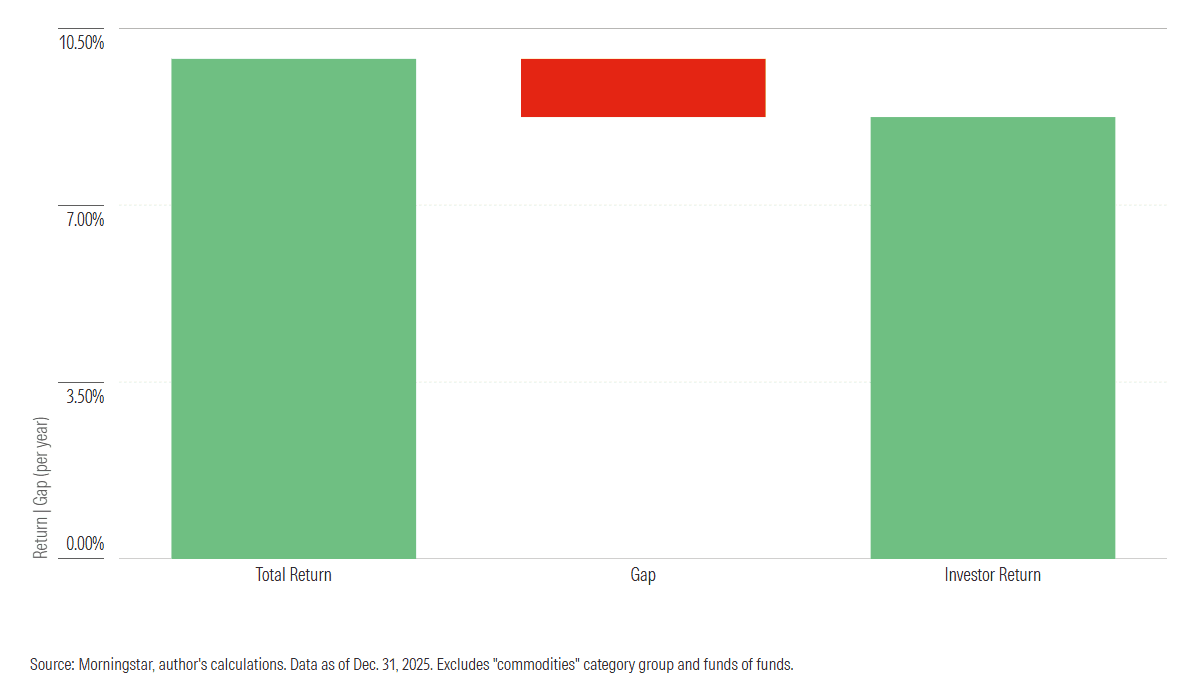
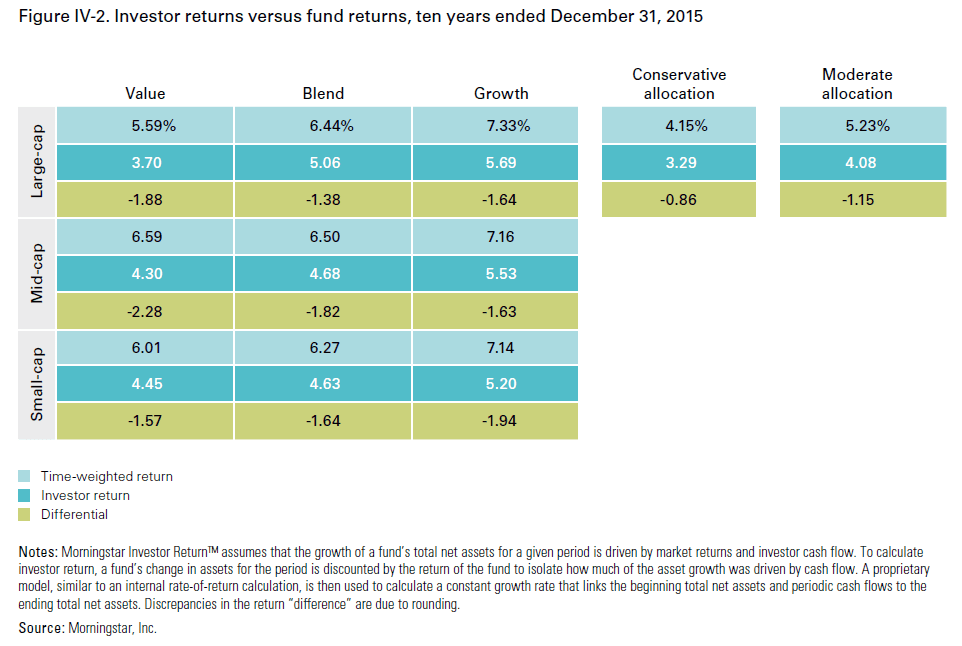
The challenge is that prevented mistakes are invisible by nature, a phenomenon closely tied to what's known as the behavioral gap, the measurable difference between fund returns and the returns investors actually capture. A client who didn't sell at the bottom in 2020 has no line item showing what that discipline was worth. This is precisely why advisors need a structured way to demonstrate advisor value in real time, not just retrospectively.
Documenting Behavioral Interventions Over Time
A simple but underused practice is logging behavioral interventions as they happen: the call made during a volatile week, the plan adjustment avoided, the rationale documented at the moment of the conversation. Over several years, this record becomes a concrete, dated account of advisor value beyond alpha that clients can actually see, rather than an abstract claim made after the fact.
Beyond Alpha: Tax and Planning Value for Clients
Tax-Efficient Strategy as a Demonstrable Value Driver
Tax and planning value for clients is another area where advisor contributions are substantial but easy to overlook. Coordinating withdrawal sequencing, trimming concentrated winners tax-efficiently, managing Roth conversion timing, and aligning account location with a client's tax bracket can meaningfully affect long-term outcomes, independent of market performance. Unlike returns, these are outcomes an advisor can quantify directly and attribute to a specific decision, giving advisors another concrete way to demonstrate advisor value without relying on market performance.
Addressing AUM Fee Justification in Client Conversations
AUM fee justification conversations go better when they are proactive rather than reactive. Waiting for a client to raise the issue after a weak quarter puts the advisor in a defensive position. A more effective approach is to build a habit of advisor-client fee communication into regular client review meetings, framing the fee explicitly around the non-performance value delivered that period, whether that's a planning milestone reached, a behavioral intervention avoided, or a tax strategy executed. Framed this way, fee conversations become an opportunity to demonstrate advisor value directly, rather than a moment to defend a number.
Reducing Client Attrition Through Proactive Value Communication
Client attrition fee concerns rarely appear suddenly. They build gradually, often during periods when a client hears about a friend's index fund returns or reads a headline suggesting advisors are unnecessary. Advisors who address value transparently and consistently, rather than only when pressed, tend to see fewer of these conversations escalate into departures. This is where non-performance value drivers, planning, coordination, and behavioral guidance become the foundation of the relationship rather than a footnote to it.
Building a Repeatable Process to Document Advisor Value
Ad hoc explanations of value are hard to scale and easy to forget under pressure, a pattern that echoes the hidden cost of too much advisor optionality in day-to-day decision-making. A repeatable process, one that captures planning milestones, behavioral interventions, and tax outcomes as they occur, gives advisors a reliable way to document advisor value across their entire book of clients, not just the accounts they remember to track manually.
This is also where rules-based, automated infrastructure becomes relevant, particularly as firms grow, a challenge explored further in why most advisor tech stacks fail to scale past $100M AUM. When portfolio construction and strategy execution follow a documented, systematic process rather than discretionary, ad hoc decisions, advisors gain a built-in audit trail. Every rebalance, every risk adjustment, every strategy applied is logged by design, giving advisors evidence of process discipline to pair alongside their qualitative value story.
Conclusion
Learning how to demonstrate advisor value beyond returns starts with recognizing that the most important parts of the job, behavioral coaching, tax efficiency, planning coordination, are also the easiest to leave undocumented. Advisors who build a consistent habit of capturing and communicating these contributions put themselves in a far stronger position than those relying on performance alone, particularly in a market where low-cost alternatives are one search away.
Turning Advisor Value Into a Documented, Repeatable Process
Everything covered in this piece, behavioral discipline, tax-aware execution, consistent process documentation, points to the same underlying challenge: advisor value is easiest to demonstrate when it's built into the process itself, not reconstructed after the fact.
This is the exact problem Surmount Wealth's automated strategy infrastructure is designed to address. Surmount allows advisors to build, test, and automate rules-based strategies directly on clients' existing brokerage accounts, without transferring assets or writing a single line of code. Every strategy runs on documented, systematic logic, which means every rebalance and every adjustment is logged automatically, giving advisors a built-in record of process discipline to pair with the qualitative value conversations covered above.
Hypothetical Illustration: "Disciplined Rebalance Framework"
The following is a hypothetical strategy concept for illustrative purposes only. It does not reflect an actual Surmount strategy, backtested results, or investment recommendation, and is intended solely to demonstrate how automation could support the concepts discussed in this article.
An advisor exploring the themes in this piece might consider testing a concept like a Disciplined Rebalance Framework, a rules-based structure that:
Rebalances client portfolios on a fixed schedule rather than in response to short-term market moves, reducing the influence of emotional, in-the-moment decisions
Applies predefined thresholds for when tax-loss harvesting opportunities are evaluated, supporting a documented tax-aware process
Logs every rebalance and threshold trigger automatically, creating a time-stamped record advisors can reference in client conversations about process and discipline
An advisor could explore, test, and refine a concept like this within Surmount's platform before applying it to any actual client accounts, with full visibility into the underlying logic at every step.
Why advisors are exploring platforms like Surmount:
Build and test rules-based strategies without writing code
Apply strategies to existing brokerage accounts, no asset transfer required
Maintain a documented, auditable process for every rebalance and adjustment
Scale personalized, systematic portfolio management across an entire book of clients
Pair automated process discipline with the qualitative value story advisors already tell clients
If you're looking for a structured way to support the value conversations covered in this article, book a demo with Surmount Wealth to explore how automated, rules-based strategies could fit into your practice.
FAQ: How to Demonstrate Advisor Value Beyond Returns
What is advisor value beyond returns?
It refers to non-performance contributions like behavioral coaching, tax and planning value for clients, and proactive fee communication.
Why do clients question AUM fees?
Rising access to low-cost index funds fuels AUM fee justification pushback, especially when performance alone is used to explain fees.
How does behavioral coaching help clients?
Behavioral coaching in wealth management helps prevent panic selling and emotional decisions during volatile markets.
How can advisors reduce client attrition?
Proactively communicating non-performance value drivers reduces client attrition fee concerns before they escalate into departures.
How do advisors document their value?
Advisors document advisor value by logging planning milestones, behavioral interventions, and tax outcomes as they occur.