CAPE Ratio Investing Strategy: A Guide for Advisors

CAPE Ratio Investing Strategy: A Guide for Advisors
For advisors and portfolio managers, the lump sum versus phased deployment debate resurfaces every time a client sits on a large cash balance. The conventional research answer favors deploying capital immediately in most environments, yet that answer changes when valuations are stretched. This is where a CAPE ratio investing strategy earns its place in the conversation: instead of treating deployment timing as a coin flip between "all at once" or "spread it out," it gives advisors a defensible, valuation-aware method for sequencing client capital into the market.
Lump Sum vs. Phased Deployment: Revisiting the Debate
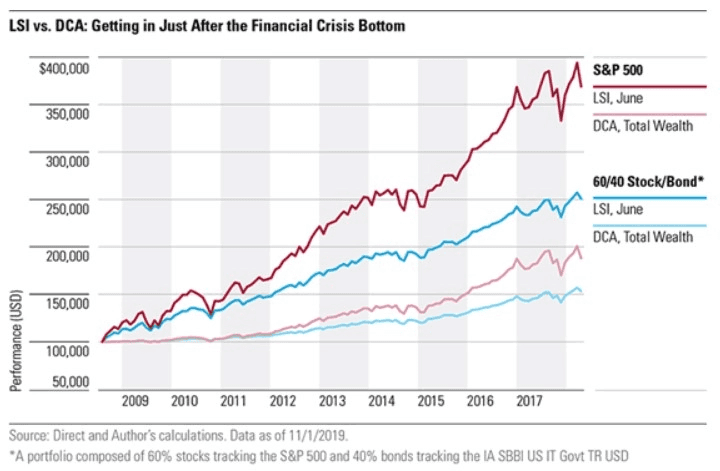
The academic and practitioner literature on dollar-cost averaging vs lump sum is fairly consistent: across most historical periods, deploying a full balance immediately has outperformed staged entry, simply because markets rise more often than they fall. But averages obscure conditional outcomes. When starting valuations are elevated, the odds shift, and staged entry has historically closed more of the performance gap than in a typical period. For advisors managing new inflows — inheritances, business sale proceeds, rollovers — that conditional nuance matters more than the unconditional average, because clients are depositing capital at a specific point in time, not across all of history at once. The same logic applies when managing dollar-cost averaging through periods of elevated volatility, where staged entry is often as much about client psychology as expected value.
What CAPE Ratio Market Valuation Signals for Timing
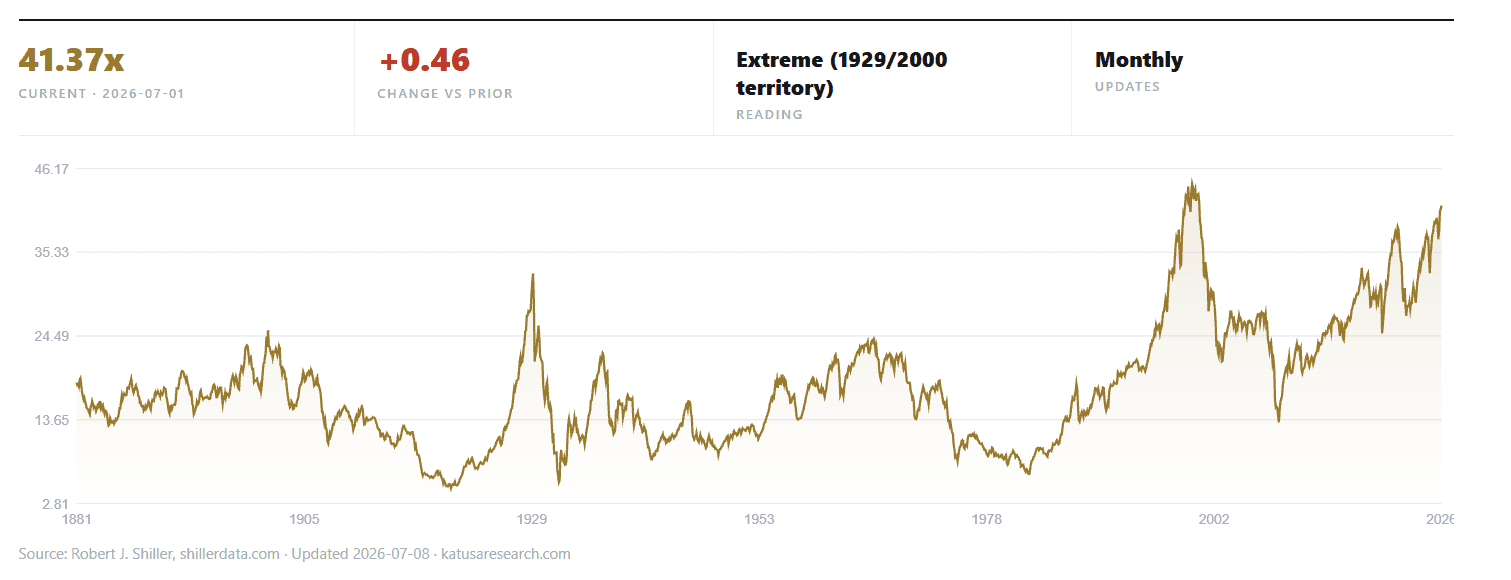
The cyclically adjusted price-to-earnings ratio, developed by economist Robert Shiller, smooths corporate earnings over a rolling ten-year period to reduce the distortion of single-year earnings swings. As a gauge of CAPE ratio market valuation, it is not a short-term timing tool — it says little about next month's returns — but it has shown a meaningful relationship with subsequent long-term return ranges when starting valuations sit well above historical norms, much like the tradeoffs advisors weigh when evaluating whether PEG ratio is a reliable valuation metric at the individual security level.
Valuation-Aware Asset Allocation in Historical Context
Periods of historically elevated CAPE readings have often preceded a decade of below-average forward returns, while periods of depressed CAPE readings have often preceded above-average ones. This is the foundation of valuation-aware asset allocation: rather than ignoring where valuations sit in their historical range, advisors can use that context as one input — among several — when deciding how quickly to bring new capital into a portfolio. Codifying this as valuation-aware asset allocation, rather than a one-off judgment call, is what separates a repeatable process from ad hoc timing.
From Judgment Calls to a Rules-Based Portfolio Strategy
Historically, deployment timing has often lived in the realm of advisor judgment: a qualitative sense that "valuations feel stretched" translated into an ad hoc decision to slow-walk a client's entry — one more example of why discretionary investing is difficult to scale across a growing client base. A CAPE ratio investing strategy converts that instinct into a rules-based portfolio strategy — a documented, repeatable methodology that treats every similarly situated client the same way, rather than relying on case-by-case discretion.
Designing a Systematic Investment Deployment Framework
Turning a CAPE ratio investing strategy into something a firm can apply consistently means moving past a single valuation snapshot and building an actual framework. Building a systematic investment deployment framework typically starts with a few core decisions:
Defining CAPE thresholds that separate "typical," "elevated," and "extreme" valuation regimes
Mapping each regime to a tranche structure — for example, more tranches and a longer window at extreme readings
Setting the interval between tranches (weekly, monthly, or event-driven)
Establishing the maximum time horizon by which full deployment must be complete, regardless of valuation
This discipline mirrors why portfolio managers benefit from systematic sell signals on the exit side of a portfolio, reinforcing systematic investment deployment on the entry side as well.
Setting a Defensible Portfolio Deployment Schedule
A portfolio deployment schedule built this way gives advisors two things a purely discretionary approach struggles to provide:
Consistency across the client base, since the same valuation inputs trigger the same schedule
A documented rationale for why a particular client's capital entered the market on the timeline it did
Neither of those replaces individualized suitability analysis, but both support it with a clear, evidence-based process. It also gives compliance and supervisory staff a documented answer, tied to observable CAPE ratio market valuation data, if a client later questions why their capital entered the market according to the portfolio deployment schedule.
The Behavioral Case — and Testing Before You Automate
Behavioral Finance Investing Decisions in Client Conversations
Behavioral finance investing decisions often outweigh the math for clients living through a downturn shortly after depositing a large balance. A staged approach, framed around valuation, tends to be easier for clients to sit with than a single all-at-once decision, even in periods when the immediate-deployment approach carries a higher expected return — a pattern closely related to recency bias in portfolio management under client pressure. Advisors who fold behavioral finance investing decisions into the schedule design tend to see better client retention through drawdowns.
Automated Investment Strategy Testing Before Deployment
Before any valuation-based framework touches live client capital, automated investment strategy testing against historical CAPE regimes and market cycles is essential. Testing surfaces how a given threshold structure would have behaved across past valuation extremes, including periods this hypothetical framework was not originally designed around, and helps advisors understand the trade-offs before committing to a schedule. It also helps separate a genuinely valuation-aware CAPE ratio investing strategy from one that simply back-fits a handful of favorable historical periods.
Conclusion
A CAPE ratio investing strategy will not tell an advisor exactly when to deploy a client's next dollar. What it offers instead is a valuation-aware rules-based portfolio strategy for a decision that has traditionally been made on instinct — one that can be documented, tested, and applied consistently across a book of clients.
Turn the Framework Into a Testable Strategy
The valuation-aware deployment approach outlined above is exactly the kind of methodology that's hard to run consistently by hand — and exactly what Surmount Wealth's platform is built to support. Surmount lets advisors and portfolio managers build, backtest, and automate rules-based strategies directly on top of existing brokerage accounts, without transferring assets or writing a single line of code.
A Hypothetical Illustration: The "Valuation Tranche Framework"
To make this concrete, consider a hypothetical, illustrative strategy concept — not a live Surmount strategy, an investment recommendation, or a guarantee of any outcome.
A rules-based framework could be structured to divide new client capital into tranches based on where the CAPE ratio sits relative to its historical range — for example, fewer/larger tranches deployed over a shorter window at typical valuations, and more/smaller tranches spread over a longer window at elevated readings. Each tranche entry could be automated on a fixed schedule once triggered, removing manual monitoring from the process.
This is a simplified, hypothetical example intended solely to illustrate how a rules-based concept could be structured. It does not reflect an actual Surmount strategy, back-tested results, or any assurance of future performance. Any such framework would carry assumptions and limitations — including that historical valuation relationships may not persist, that thresholds are subjective design choices, and that past patterns are not predictive of future results — and would need to be tested and evaluated on its own merits before any live use.
Why advisors use Surmount to operationalize frameworks like this:
No manual monitoring — valuation-based (or any other rules-based) triggers can run on autopilot once configured
No asset transfers required — strategies run on top of a client's existing brokerage account
No custom code needed — build and adjust rules through the platform, not a development team
Backtesting built in — test a framework's historical behavior across market cycles before applying it
Consistency at scale — apply the same documented logic across an entire book of clients
Full transparency — every rule, trigger, and adjustment is visible and documented for your own review
Curious what a rules-based deployment framework could look like for your practice? Book a demo with Surmount Wealth to explore how the platform can help you test and structure ideas like this one.
FAQ: CAPE Ratio Investing Strategy
What is a CAPE ratio investing strategy?
A CAPE ratio investing strategy uses valuation-aware asset allocation to guide phased deployment schedules through documented, rules-based triggers.
How does CAPE ratio market valuation work?
CAPE ratio market valuation smooths ten years of earnings to show whether markets sit above or below historical norms.
Lump sum or dollar-cost averaging — which wins?
Lump sum has historically outperformed dollar-cost averaging vs lump sum on average, though staged entry narrows the gap at elevated valuations.
Why automate a portfolio deployment schedule?
Automating a portfolio deployment schedule applies systematic investment deployment rules consistently, removing manual monitoring and emotional decision-making.
Does behavioral finance affect deployment decisions?
Yes — behavioral finance investing decisions often shape how comfortable clients feel with a given schedule, independent of expected returns.