
Blog

Dollar Cost Averaging During Volatility: An Advisor Guide
Market volatility has a way of exposing the gap between what investors know they should do and what they actually do under pressure. Recent leverage-driven blowups and panic-selling episodes have reignited a familiar debate among self-directed investors and their advisors: does disciplined investing still work when the market feels unpredictable? For RIAs and portfolio managers, this is more than an academic question — it's a client-retention issue. Dollar cost averaging during volatility offers a structural answer, but only when it's implemented with the kind of consistency that most investors struggle to maintain on their own.
This guide walks through why volatility triggers poor decision-making, how dollar cost averaging during volatility compares to lump sum approaches, and how systematic execution can turn a sound strategy into a repeatable one.
Why Volatility Triggers the Behavior Gap in Client Portfolios
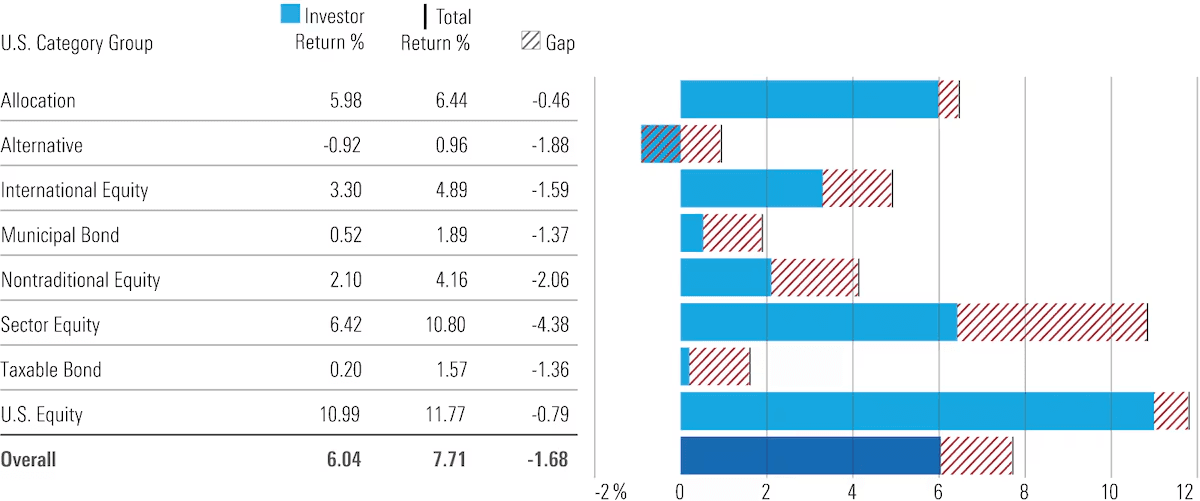
When markets swing sharply, clients don't abandon their strategy because the strategy stopped working — they abandon it because the experience of holding through drawdowns is uncomfortable. This is the essence of behavioral bias in investment decisions: the tendency to chase recent performance, exit at the worst possible moment, or take on outsized leverage in an attempt to catch up — a pattern that carries a measurable cost over time. Academic research, including studies indexed by NBER on investor performance-chasing and panic selling, consistently documents this shortfall between what an investment earns and what an investor actually captures.
How to Avoid Emotional Investing Decisions During Drawdowns
Advisors can't eliminate a client's emotional response to volatility, but they can reduce the number of moments where a decision is even required. Three practices help:
Pre-commit to a schedule. Decide the cadence and amount before volatility hits, not during it.
Automate execution. Removing manual steps removes the opportunity for hesitation or override.
Reframe the metric. Track adherence to plan rather than short-term portfolio value.
Understanding how to avoid emotional investing decisions starts with recognizing that most bad decisions happen in the gap between intention and execution — precisely where automation adds the most value, much like managing recency bias under client pressure requires reducing discretionary moments in the process.
Dollar Cost Averaging During Volatility vs. Lump Sum Investing
The debate between dollar cost averaging and lump sum investing is well-trodden — we've covered the core mechanics and trade-offs in detail here — but volatility changes the calculus in practice, even if not always in theory.
DCA vs Lump Sum Investing: What the Research Shows
Historical studies generally show that lump sum investing outperforms DCA vs lump sum investing approaches over long horizons, simply because markets trend upward more often than not. However, that finding assumes an investor who can tolerate the full volatility of a lump sum entry — an assumption that breaks down for many real clients during turbulent periods. Dollar cost averaging during volatility functions less as a return-maximization tool and more as a behavioral guardrail: it smooths entry points and reduces the single-decision risk that often triggers panic-driven exits later.
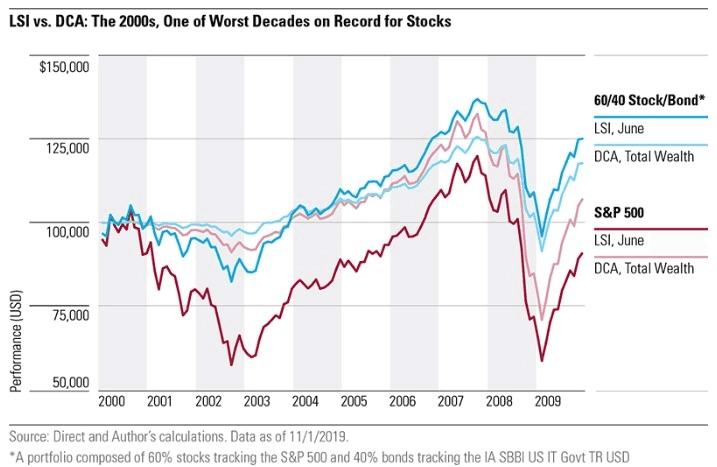
For RIAs, the practical takeaway isn't choosing DCA or lump sum in the abstract — it's matching the approach to what a specific client can actually stick with when conditions turn volatile.
Systematic Investing During Market Volatility: A Framework for Advisors
Systematic investing during market volatility works by converting strategy into a fixed process — one that executes on schedule regardless of headlines, sentiment, or short-term price action.
Building Rules-Based Investing for RIAs Into Client Portfolios
Rules-based investing for RIAs typically involves three components:
Defined entry criteria — the conditions under which capital is deployed.
Fixed rebalancing intervals — removing discretion from timing decisions.
Documented exception handling — pre-agreed responses to extreme scenarios, set before volatility occurs.
Codifying these rules in advance — much like a systematic sell-signal framework — is what separates a strategy clients can hold through a downturn from one they abandon at the first sign of stress.
Automating Discipline: An Automated Investing Strategy for Volatile Markets
Even a well-designed rules-based process is only as reliable as its execution. An automated investing strategy for volatile markets removes the manual step where behavioral bias typically intervenes — the moment an advisor or client has to decide, in real time, whether to follow the plan.
Key Takeaways
Dollar cost averaging during volatility isn't a guarantee against loss, but it addresses the behavioral failure mode that undermines most long-term strategies: inconsistent execution. For advisors, the opportunity isn't just recommending DCA — it's building the infrastructure that makes it automatic, which pays off well beyond volatile periods, including in how clients respond after strong years.
See Your DCA Strategy in Action
Talking to clients about dollar cost averaging during volatility is one thing. Executing it flawlessly, every cycle, without manual intervention, is another. That's where Surmount Wealth's automated trade strategy infrastructure comes in.
Surmount lets you build and automate rules-based strategies directly on top of your clients' existing brokerage accounts — no fund transfers, no custom code required. Whether you're deploying a prebuilt strategy library or designing a fully custom process, Surmount handles the execution discipline so your clients don't have to rely on willpower during volatile markets.
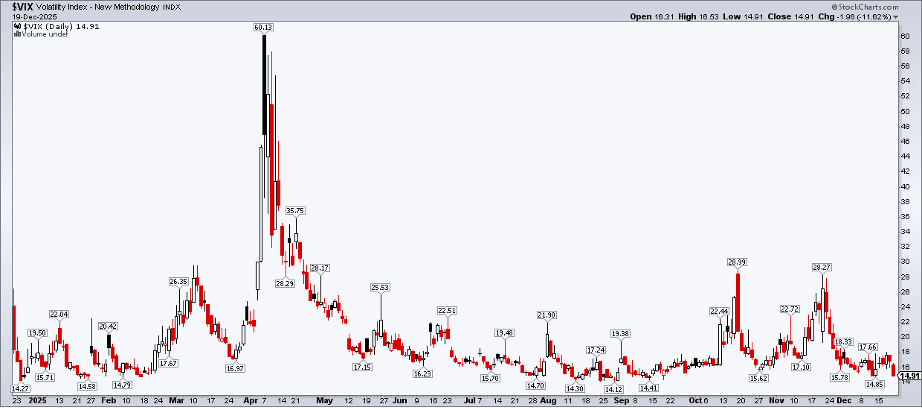
As an illustration of what's possible (this is a hypothetical concept for demonstration purposes only, not a live or backtested Surmount strategy, and not investment advice): imagine a rules-based DCA framework that scales contribution size inversely with a volatility index — deploying smaller increments during high-volatility windows and larger increments as conditions stabilize, fully automated on a fixed schedule. A concept like this would need to be built, tested, and reviewed before ever reaching a client account — but it illustrates the kind of systematic thinking Surmount's infrastructure is built to support.
Why advisors choose Surmount:
Automate any thesis — including dollar cost averaging during volatility — without writing code
Apply strategies directly to existing brokerage accounts, no asset transfers needed
Access a library of prebuilt, rules-based strategies or design fully custom logic
Remove manual execution risk and behavioral drift from client portfolios
Scale systematic investing across your entire book of business
Ready to see how automated execution could strengthen your client strategy? Book a demo today and explore how Surmount can bring systematic discipline to every portfolio you manage.
FAQ: Dollar Cost Averaging During Volatility
What Is Dollar Cost Averaging During Volatility?
Dollar cost averaging during volatility means investing fixed amounts on a set schedule regardless of market swings. It reduces single-decision risk and smooths entry points during turbulent periods.
Does DCA Outperform Lump Sum Investing?
Research generally favors lump sum investing over long horizons, but DCA vs lump sum investing outcomes depend heavily on an investor's tolerance for volatility.
Why Do Investors Abandon Sound Strategies?
Volatility triggers behavioral bias in investment decisions, causing investors to chase performance or exit at the worst possible moment. This gap between strategy and behavior erodes returns.
How Does Automation Reduce Behavioral Bias?
An automated investing strategy for volatile markets removes manual execution steps, eliminating the moments where hesitation or panic typically intervene.
Who Should Use Rules-Based Investing?
Rules-based investing for RIAs suits advisors managing client portfolios through unpredictable markets, since it enforces consistency that manual execution often lacks.