Tactical Cash Reserves: A Framework for Advisors
Tactical Cash Reserves: A Framework for Advisors
Advisors managing client portfolios face a persistent operational question: how much cash should sit on the sidelines, and under what conditions should it move? Without a clear, documented policy, cash levels tend to drift — shaped more by individual habits than by a repeatable process. Building a framework around tactical cash reserves gives advisors a consistent, defensible way to answer that question across every account they manage.
Tactical vs. Strategic: Defining Your Cash Reserve Policy
Not all cash held in a portfolio serves the same purpose. A useful starting point is separating cash into two categories:
Strategic cash allocation — a permanent sleeve of the portfolio, sized according to a client's risk tolerance, time horizon, or liquidity needs, and rebalanced back to target the same way any other asset class would be.
Tactical cash reserves — a temporary, opportunity-driven position held above the strategic target, intended to be reduced when specific pre-defined conditions are met.
Confusing the two is common. Treating opportunistic dry powder as if it were strategic cash can leave a portfolio persistently underexposed to its target allocation. Treating strategic cash as if it were tactical can lead to reactive, unplanned trading decisions.
Tactical Cash Reserves vs. Strategic Cash Allocation
The distinction matters most in how each is governed:
Strategic cash allocation is set by policy, reviewed periodically (e.g., at annual IPS review), and rebalanced on a schedule or threshold basis like any other holding, following the same rebalancing frequency best practices applied elsewhere in the portfolio.
Tactical cash reserves are set by a specific thesis or market condition, sized as a defined percentage above the strategic target, and governed by an explicit cash reserve policy that specifies when and how the reserve should be reduced.
Without this separation documented, it becomes difficult to explain — to a client, or to a compliance reviewer — why cash levels vary across accounts that otherwise share a similar mandate.
The Cost of Idle Cash Drag on Client Portfolios
Cash that sits without a defined purpose creates a measurable cost generally referred to as idle cash drag: the gap between the return a portfolio would have earned fully positioned at target and the return it actually earned while holding excess cash.
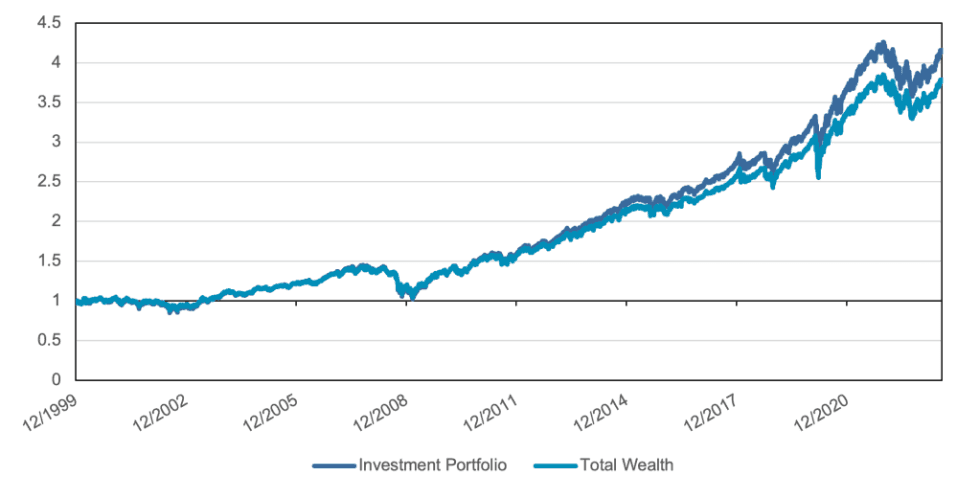
Some drag is the acceptable price of maintaining liquidity or optionality — though as we've discussed in whether clients should still be investing when cash yields 5%, that price is easy to underestimate.
But undocumented, drifting cash allocations often extend well beyond what any policy would call for, quietly reducing long-term performance without a corresponding benefit. For advisors managing many accounts, this drag compounds — and tends to grow largest during periods of market stress, precisely when clients are asking why the account isn't fully positioned.
Designing a Dry Powder Strategy for Opportunistic Cash Deployment
A dry powder strategy treats tactical cash as a defined-size reserve, not an undefined float, similar in spirit to the adaptive allocation framework we outlined for navigating Fed policy uncertainty.
Rather than holding cash open-endedly "until something looks interesting," the reserve is capped, monitored, and tied to explicit criteria for opportunistic cash deployment. A basic framework typically defines:
Reserve size — the maximum percentage of the portfolio held as tactical cash above the strategic target.
Deployment triggers — specific, pre-defined conditions (valuation levels, volatility thresholds, or drawdown levels) that would prompt redeployment.
Time limits — a maximum holding period, after which unused tactical cash reverts to the strategic allocation by default.
Review cadence — how often the reserve and its triggers are reassessed against the client's policy.
Setting Triggers for Opportunistic Cash Deployment
Triggers should be specific enough to remove ambiguity at the moment of decision. Vague criteria — "wait for a pullback" — tend to be reinterpreted in real time based on sentiment rather than policy. Clear, pre-committed triggers, documented in advance, are what separate a tactical cash reserves policy from simple cash hoarding.
Behavioral Cash Hoarding and the Case for Rules-Based Rebalancing
Behavioral cash hoarding — holding more cash than any policy calls for, driven by anticipated volatility or macro uncertainty — is a well-documented pattern in both retail and professional portfolio management. Left unmanaged, it can persist well past the conditions that originally justified it.
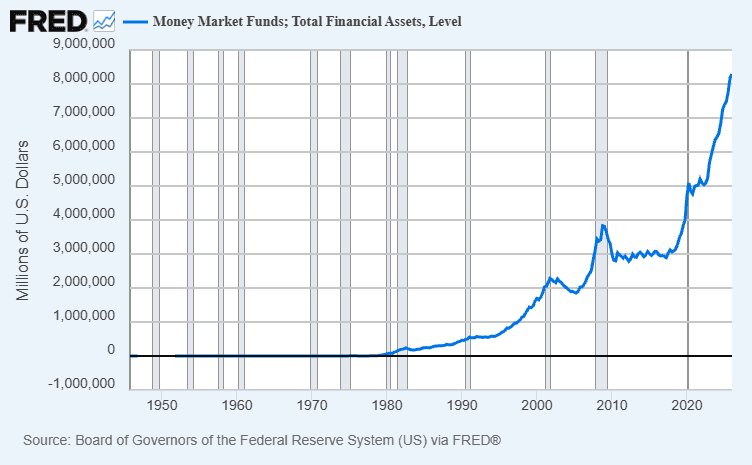
Rules-based rebalancing offers a structural counterweight — a theme we've explored in more depth in why rebalancing matters more than market forecasts.
When cash reserve targets, trigger conditions, and rebalancing schedules are codified in advance, reducing a cash position no longer depends on someone overriding their own discomfort with market conditions in real time.
How Rules-Based Rebalancing Removes Emotional Bias
A framework like this works by pre-committing to the decision before the emotionally difficult moment arrives:
Triggers are set when conditions are calm, not during periods of stress.
Execution follows the rule rather than a fresh judgment call each time.
Deviations from policy require an explicit, documented override — not a default.
This doesn't eliminate discretion; it relocates the discretionary decision to policy design, where it can be made deliberately, rather than to the moment of execution, where behavioral bias is strongest.
Cash Sweep Automation and Portfolio Liquidity Management at Scale
For advisors managing dozens or hundreds of accounts, even a well-designed tactical cash reserves policy is difficult to enforce manually, a challenge we've covered more broadly in why modern RIAs are moving from spreadsheets to software-driven portfolio management.
Reviewing cash levels account-by-account against defined triggers doesn't scale, and inconsistent enforcement undermines the policy's value. Cash sweep automation — systematically monitoring and applying cash rules across accounts — addresses this operational gap directly. Combined with broader portfolio liquidity management practices, it allows a firm's documented cash policy to be applied consistently, rather than existing only on paper.
Conclusion
A clear distinction between strategic and tactical cash reserves — backed by defined triggers, review cadences, and consistent enforcement — turns cash management from an ad hoc habit into a documented, repeatable part of portfolio policy. For advisors, that consistency isn't just an efficiency gain; it's part of building a defensible, auditable process across every account under management — the same discipline that underpins other underused frameworks, like tax diversification.
Turning This Framework Into an Automated, Rules-Based Strategy
Everything above works best on paper — but a tactical cash reserves policy only delivers value if it's actually enforced, consistently, across every account. That's the operational gap Surmount Wealth is built to close.
Surmount lets advisors and portfolio managers build, test, and automate rules-based strategies directly on top of existing brokerage accounts — no fund transfers, no custom code. A cash reserve policy like the one outlined in this piece can be translated into an automated ruleset that monitors reserve levels and applies pre-defined triggers consistently, account by account.
To illustrate the concept, consider a hypothetical rules-based framework we'll call "Reserve Threshold Monitor." This is an illustrative example only, not an existing Surmount strategy or investment recommendation, and is meant solely to demonstrate how a policy like this could be structured within an automated system:
Defines a tactical cash ceiling — e.g., a maximum percentage above the strategic cash target, flagged automatically when exceeded.
Applies pre-set deployment triggers — such as valuation or volatility thresholds, defined in advance rather than judged in the moment.
Enforces a time-based reversion rule — unused tactical reserves default back to the strategic allocation after a defined holding period.
Logs every trigger event — creating a documented, auditable trail for compliance and client reporting purposes.
Because it's rules-based, a framework like this would run the same way whether markets are calm or volatile — which is the entire point of separating policy design from in-the-moment decisions.
What automating a strategy like this on Surmount could offer:
Consistent application of cash policy across every client account, without manual review
A documented, auditable record of when and why reserves were adjusted
The ability to test a hypothetical framework like this against historical conditions before applying it
Freeing up advisor time currently spent on manual cash monitoring
If a structured approach to tactical cash reserves is something you've been meaning to formalize, Surmount's platform lets you build, backtest, and automate rules like these on your existing accounts.
Book a demo to explore how Surmount could support your cash reserve policy →
This section describes a hypothetical illustrative strategy concept for educational purposes only. It does not represent an actual Surmount Wealth product, strategy, or performance track record, and should not be construed as investment advice or a recommendation to buy or sell any security. All strategies carry the potential for loss. Advisors should independently evaluate any strategy design against their fiduciary obligations and client suitability requirements before implementation.
FAQ: Tactical Cash Reserves
What are tactical cash reserves?
Tactical cash reserves are a temporary, opportunity-driven cash position held above a portfolio's strategic cash target, governed by a defined cash reserve policy.
How do tactical and strategic cash differ?
Strategic cash allocation is a permanent, policy-set sleeve rebalanced like any other asset class; tactical cash reserves are temporary and tied to specific deployment triggers.
Why does idle cash drag matter?
Idle cash drag represents the return a portfolio forgoes by holding excess, undocumented cash beyond what any policy calls for, and it compounds over time.
How do you build a dry powder strategy?
A dry powder strategy defines reserve size, deployment triggers, time limits, and a review cadence — turning tactical cash into a structured framework rather than an open-ended float.
Can cash sweep automation reduce hoarding?
Yes — cash sweep automation applies rules-based rebalancing consistently across accounts, reducing the behavioral cash hoarding that comes from in-the-moment judgment calls.