Pricing vs Valuation: The Distinction That Matters

Valuing Non-Cash Flow Assets: A Framework for Advisors
A client asks why their gold position is priced where it is. Another wants to understand a pre-revenue private placement, or a rare collection inherited from a parent. The standard toolkit of discounted cash flow and earnings multiples returns nothing useful, because there are no cash flows to discount.
Valuing non-cash flow assets requires a different discipline. It starts with accepting what these holdings can and cannot tell you, then matching each category to the method that fits. This guide sets out a practical framework advisors can use to explain, size, and monitor these positions consistently.
Why DCF Breaks Down for Non-Productive Assets
A DCF model estimates an asset's worth as the present value of its expected future cash flows. Remove the cash flows, and the model has nothing to work with.
Warren Buffett drew this line in his 2011 Berkshire Hathaway shareholder letter, separating productive assets such as farmland and operating businesses from assets that will never produce anything. For the second group, he argued, the outcome depends on what a future buyer is willing to pay.
For advisors, non-productive assets create three practical problems:
No discount anchor. With no cash flow stream, no expected return falls out of the asset itself.
No terminal value. There is no mature state at which the asset "settles."
No reconciliation point. Price can drift from any reference level for years without a mechanism that forces it back.
Pricing vs Valuation: The Distinction That Matters
NYU Stern professor Aswath Damodaran frames the issue cleanly. In his analysis of Bitcoin, he writes that "not everything can be valued, but almost everything can be priced."
The difference between pricing vs valuation is the foundation of this framework:
Valuation estimates intrinsic value from fundamentals: cash flows, growth, and risk.
Pricing estimates what something should trade for, based on what comparable items trade for, plus demand and sentiment.
Damodaran sorts holdings into assets, commodities, currencies, and collectibles. Only cash-generating assets can be both valued and priced; the rest can only be priced. When valuing non-cash flow assets, the question shifts from "what is it worth?" to "what is a defensible pricing range, and what would change it?"
A Four-Category Framework for Valuing Non-Cash Flow Assets
In practice, valuing non-cash flow assets means matching each category to a different primary tool. Applying the wrong one is where most analysis goes off track.
Collectibles: Relative Valuation and Comparable Sales
Art, rare coins, and similar alternative assets are priced through relative valuation:
Recent auction results for comparable items (same creator, period, and condition)
Provenance and authentication, which can move prices materially
Liquidity discounts, since transactions are infrequent and costly
The output is a range, not a point estimate. Advisors may consider documenting the comparables used so the estimate can be revisited.
Monetary Assets: Pricing a Store of Value
Gold and digital assets are typically held as a store of value rather than for income. Their prices tend to respond to:
Real interest rates, which set the opportunity cost of holding a zero-yield asset
Currency debasement concerns and central bank demand
Supply dynamics; the World Gold Council estimates total above-ground gold stock at roughly 222,600 tonnes as of mid-2026
Research by Claude Erb and Campbell Harvey in The Golden Dilemma (NBER) found gold to be an unreliable inflation hedge over practical investment horizons, and that periods of high real gold prices were historically followed by below-average returns.

Commodities: Real Rates and Production Costs
Industrial commodities have a use-value floor that collectibles lack. Two reference points help:
Marginal cost of production. Prices well below the cost of the highest-cost producer tend to curb supply over time.
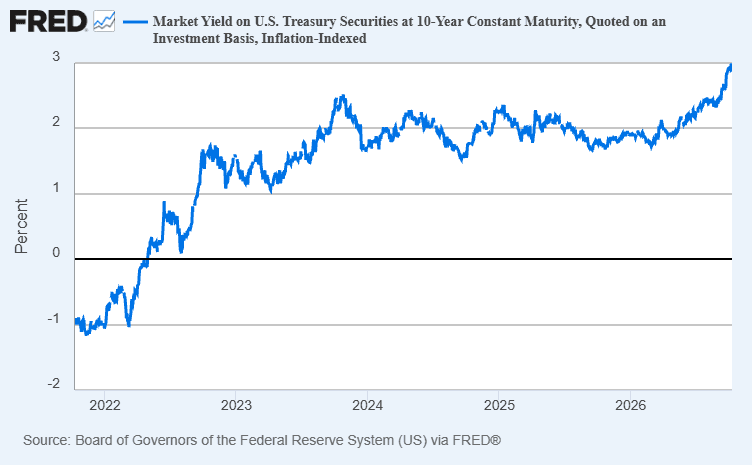
Real rates. The 10-year TIPS yield on FRED is a widely used gauge of real interest rates, which shape the opportunity cost of holding physical inventory.
Startups: Replacement Cost and Pre-Revenue Valuation
Early-stage businesses sit in a gray zone. They may eventually generate cash flows, but forecasting them is highly uncertain. Damodaran's The Dark Side of Valuation addresses this problem directly.
Two complementary lenses apply to pre-revenue valuation:
Replacement cost valuation: What would it cost to rebuild the technology, team, licenses, and infrastructure? This sets a rough floor.
Scenario-weighted outcomes: Estimate outcomes under success, partial success, and failure, then weight each by probability.
Greater Fool Theory: When Pricing Becomes Speculation
The greater fool theory holds that a price can be sustained only as long as a later buyer will pay more. It is the risk embedded in any holding that can be priced but not valued.
Signs that pricing has detached from any reference point include:
Price moves driven mainly by flows and narrative rather than comparable transactions
A rapid influx of new, inexperienced participants
Arguments that rely on future buyers rather than measurable use or demand
None of these signs say anything about timing. They indicate that the position's risk profile has changed.
Managing Holdings Without an Intrinsic Value Anchor
Without an intrinsic value estimate, discretionary judgment has little to lean on. That makes predefined rules more important, not less. When valuing non-cash flow assets inside a client portfolio, advisors can consider:
Position-size caps tied to volatility rather than conviction
Rebalancing bands that trim or add mechanically when weights drift
Trend filters that reduce exposure when price behavior deteriorates
Proxy checks that compare the holding against its closest substitutes
Writing these rules down before a position is opened removes the need to defend a price target that cannot be defended.
Conclusion
Valuing non-cash flow assets is less about finding a single number and more about choosing the right method and being honest about its limits. Classify the holding, price it against the most relevant reference, watch for signs of speculative detachment, and manage it with explicit rules. That discipline gives advisors a defensible process when clients ask why a position is sized the way it is.
Put Your Pricing Discipline on Autopilot with Surmount Wealth
Holdings without cash flows are where discretionary judgment is most exposed. With no intrinsic value to fall back on, consistency has to come from rules applied every time, not only when markets are calm.
Surmount Wealth lets advisors and portfolio managers turn a thesis like the one in this article into an automated, rules-based strategy that runs on existing brokerage accounts. No asset transfers. No coding.
What Surmount brings to your workflow:
Automate any thesis. Translate pricing signals, trend filters, and sizing rules into a strategy that executes consistently.
Start from a library or build your own. Explore prebuilt strategies, including trend-following and volatility-aware models covering gold and digital-asset exposure, or design a custom rule set.
Test before you apply. See how a rule set would have behaved across past market regimes before it touches a client account.
Keep your custodian. Strategies connect to existing brokerage accounts, so client assets stay where they are.
Scale across clients. Apply one documented rule set across many accounts without manual rebalancing.
Hypothetical Strategy Concept: The "No-Anchor" Rule Set
For illustration only. This is a hypothetical concept, not an existing Surmount strategy, and not a recommendation.
Imagine a rules-based sleeve built for a holding that can be priced but not valued, such as a gold position:
Real-rate signal. Reduce the target weight when the 10-year TIPS yield trends higher, and restore it when the yield trends lower.
Trend filter. Hold the full target weight only while price stays above its 200-day moving average.
Volatility cap. Scale position size down as realized volatility rises above a set threshold.
Rebalancing bands. Rebalance to target only when the weight drifts beyond ±3 percentage points.
Assumptions and limitations: This concept is illustrative. Its thresholds are arbitrary and untested, and no performance results, backtested or otherwise, are presented or implied. Real-world outcomes would depend on data quality, trading costs, taxes, liquidity and execution timing. Any rule set may underperform a simple buy-and-hold approach.
See how a rule set like this could be built and tested within your own process.
Book a demo with Surmount Wealth →
Disclosure: This content is for informational and educational purposes only and does not constitute investment advice, a recommendation, or an offer to buy or sell any security. The hypothetical strategy described above is for illustrative purposes only and does not represent an actual account, product, or result. Any backtested results are hypothetical, have inherent limitations, and do not guarantee future outcomes. All investing involves risk, including possible loss of principal.
FAQ: Valuing Non-Cash Flow Assets
What is a non-cash flow asset?
An asset that produces no income, such as gold, art, or collectibles. Because there is nothing to discount, these non-productive assets are priced rather than valued.
Can you value gold without cash flows?
Not in the intrinsic value sense. When valuing non-cash flow assets like gold, advisors price them as a store of value, referencing real rates and central bank demand.
What is pricing vs valuation?
Valuation estimates intrinsic value from cash flows, growth, and risk. Pricing estimates what an asset should trade for, based on comparable transactions and demand.
How are pre-revenue startups valued?
Pre-revenue valuation often pairs replacement cost valuation, which sets a rough floor, with scenario-weighted outcomes across success, partial success, and failure.
Why does greater fool theory matter?
It describes prices sustained only by later buyers. Recognizing it helps advisors spot when a holding has shifted from pricing toward speculation.

