
Blog

Crypto Allocation for Client Portfolios: A Framework
Digital assets have moved from a speculative curiosity to a line item advisors can no longer ignore. Yet many portfolios still treat crypto as an all-or-nothing bet rather than a sized, monitored allocation. Client behavior around digital assets — buying near tops, panic-selling near bottoms — mirrors the recency bias patterns seen across other volatile asset classes. Building a disciplined, rules-based approach to crypto allocation for client portfolios is no longer optional for advisors managing risk-aware books.
Why Crypto Needs a Digital Asset Allocation Policy
Without a written digital asset allocation policy, crypto exposure tends to accumulate ad hoc — a client requests exposure, an advisor adds a position, and no one revisits sizing until volatility forces the conversation. This is the same behavioral trap seen in concentrated single-stock positions: conviction grows during rallies, and discipline evaporates during drawdowns.
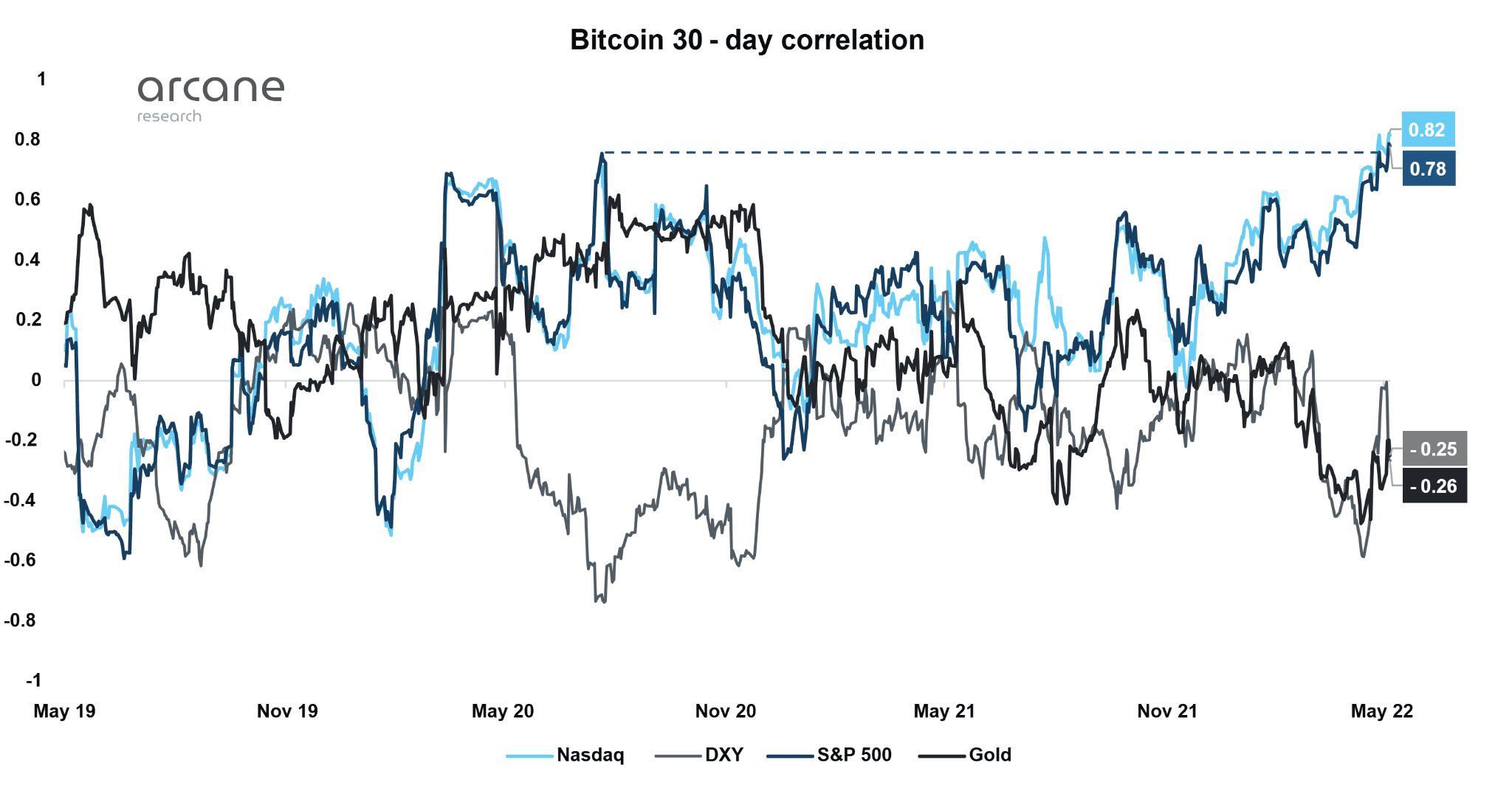
A policy-based approach solves this by pre-committing to sizing, rebalancing, and monitoring rules before volatility hits — not during it. This is standard practice for alternative allocations generally, and crypto is no exception.
Treating Crypto as a Portfolio Sleeve, Not a Bet
The most effective crypto allocation for client portfolios treats digital assets as a defined sleeve within the broader portfolio — consistent with a core-satellite approach — rather than a discretionary, unbounded position.
Sizing the Allocation: Risk Budgeting for Digital Assets
Risk budgeting for digital assets starts with volatility-adjusted position sizing rather than a flat percentage. Given crypto's historical volatility relative to equities, many advisors size the sleeve as a small percentage of total risk contribution, not total dollar allocation — meaning the effective dollar weight is often smaller than the nominal target once volatility is accounted for.
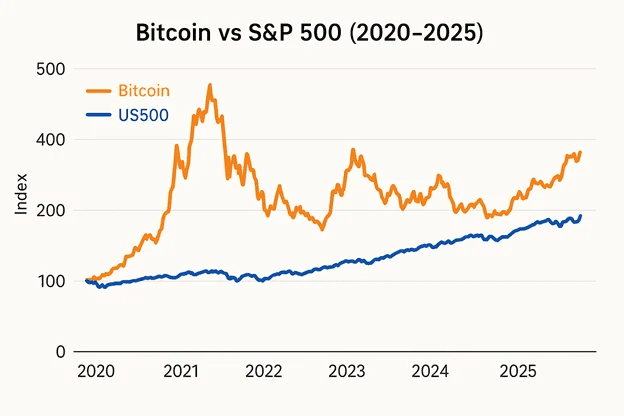
Key sizing considerations:
Client risk tolerance and liquidity needs, documented and revisited periodically — similar to the entry-timing tradeoffs advisors weigh in dollar-cost averaging versus lump sum decisions
Correlation to existing holdings, since crypto's correlation profile shifts across market regimes
Maximum drawdown tolerance, translated into a position size the client can hold through a full cycle
Setting Rebalancing Bands for Crypto
Rebalancing bands for crypto typically need to be wider than those used for equities, given the asset class's volatility profile. A common approach:
Set a target allocation percentage for the sleeve
Define a tolerance band (e.g., a percentage-point range around the target)
Trigger rebalancing when the position drifts outside the band — not on a fixed calendar alone
Threshold-based bands tend to outperform pure calendar-based rebalancing for volatile assets — a distinction covered in more depth in our guide to rebalancing frequency best practices — since calendar-only approaches can leave a portfolio significantly overweight or underweight between review dates.
Building a Digital Asset Policy Statement (IPS Language)
Formalizing this into a digital asset policy statement (IPS) protects both the advisor and the client. At minimum, this documentation should specify:
Target allocation and permissible range
Rebalancing triggers and methodology
Custody and execution approach
Circumstances under which the sleeve would be reduced or eliminated
Documenting crypto as a portfolio sleeve within the IPS — rather than leaving it undocumented — creates an auditable record that supports both compliance and client communication during volatile periods.
Rules-Based Rebalancing vs. Manual Intervention
Manual rebalancing decisions are vulnerable to the same behavioral biases that drive client panic — a dynamic explored further in why rebalancing matters more than market forecasts — anchoring advisors to recent price action rather than the policy.
Why Automation Reduces Behavioral Drag
Rules-based rebalancing removes discretion from the equation entirely. Once bands and triggers are defined, execution becomes systematic rather than reactive — directly addressing the behavioral gap that erodes returns when decisions are made under emotional pressure.
Conclusion
A disciplined crypto allocation for client portfolios requires more than a one-time sizing decision. It requires a documented policy, defined rebalancing bands, and — ideally — a systematic process for executing that policy consistently, regardless of market noise. Advisors who formalize this now are better positioned to manage both the asset class's volatility and their clients' behavioral responses to it.
See This Framework in Action: Automating Your Crypto Allocation Policy
Designing a crypto allocation policy is one thing — enforcing it consistently, across every client account, without manual overhead, is another. This is where Surmount Wealth's automated strategy infrastructure comes in.
Surmount allows advisors to build, test, and automate rules-based strategies directly on top of existing client brokerage accounts — no fund transfers, no custom code required. Whatever sizing and rebalancing logic you've defined for a digital asset sleeve, Surmount can help you turn it into a systematic, repeatable process applied consistently across your book.
To illustrate how this might work, consider the following hypothetical construct:
"Threshold-Triggered Digital Asset Sleeve" (Hypothetical Illustration Only)
A hypothetical rules-based strategy might define a target digital asset allocation with a fixed tolerance band. When the position drifts outside that band — in either direction — the strategy could systematically trigger a rebalance back to target, removing the need for manual monitoring or discretionary timing decisions.
This is a hypothetical illustration for educational purposes only. It does not represent an actual Surmount strategy, is not investment advice, and is not a recommendation to buy, sell, or hold any asset. Hypothetical illustrations do not reflect actual trading, involve inherent limitations, and should not be relied upon for investment decision-making. Past or hypothetical performance is not indicative of future results.
What advisors can explore with Surmount:
Prebuilt strategy library — explore existing rules-based strategies across asset classes, including risk-managed and rebalancing-driven approaches
Custom strategy construction — translate your own policy logic (sizing rules, rebalancing bands, drift triggers) into a systematic, testable strategy
Backtesting tools — test how a defined ruleset would have behaved historically before considering live use
Direct integration — apply automated strategies to existing brokerage accounts without transferring assets
Consistent execution across accounts — apply the same documented policy uniformly, reducing manual rebalancing workload and behavioral drag
Systematic execution won't eliminate the judgment required to design a sound policy — but it can help ensure that once a policy is set, it's actually followed.
FAQ: Crypto Allocation for Client Portfolios
What is a digital asset allocation policy?
A documented framework defining target sizing, rebalancing bands, and monitoring rules for digital asset exposure within a portfolio.
How much crypto should be in a portfolio?
Sizing depends on volatility-adjusted risk budgeting rather than a flat percentage, factoring in client risk tolerance and correlation to existing holdings.
How often should crypto allocations rebalance?
Threshold-based rebalancing bands generally outperform fixed calendar schedules for volatile assets like digital assets.
Why treat crypto as a portfolio sleeve?
Sizing and bounding the allocation, rather than treating it as an unbounded bet, keeps exposure consistent with a documented risk policy.
Who benefits from rules-based rebalancing?
Advisors managing volatile allocations across multiple client accounts, since automation reduces manual monitoring and behavioral drag.