
Blog

Systematic vs Idiosyncratic Risk: Auditing Your Thesis
Many investment theses are written as if they are about a company. Read closely, a surprising number are about something else: an election outcome, a tariff schedule, or the path of interest rates. The company becomes a vehicle for a macro view, yet the position is monitored like a stock-specific call.
The textbook framework of systematic vs idiosyncratic risk helps, but it was not designed to catch this problem. This article offers an audit process that goes one layer deeper, classifying each thesis driver by where it originates, not just by how it diversifies.
Systematic vs Idiosyncratic Risk: Why the Standard Split Falls Short
The classic framework, standard as per conventional statisticians, separates risk into two buckets:
Systematic risk: Market-wide exposure, such as recessions and rate cycles, that diversification cannot remove.
Idiosyncratic risk: Company-specific exposure that declines as a portfolio adds holdings.
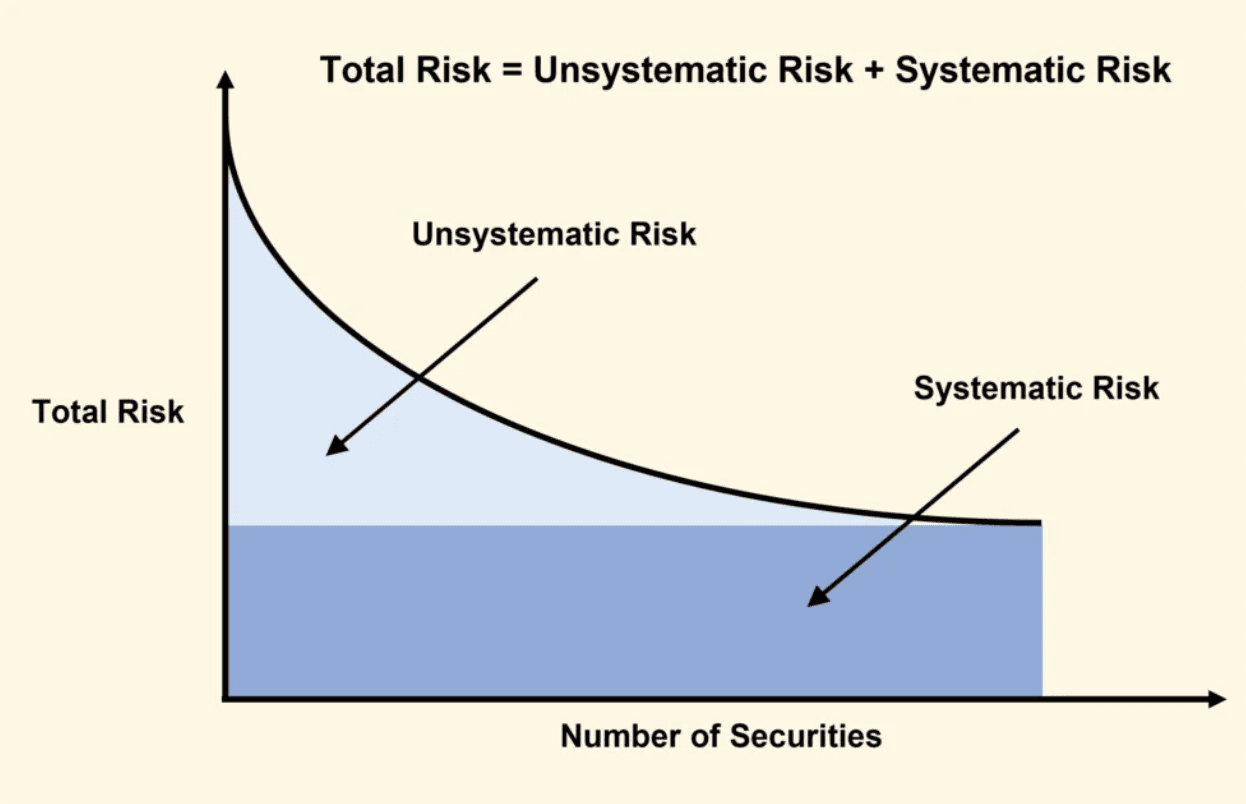
The distinction, formalized in William Sharpe's capital asset pricing model, has real portfolio consequences. Research by Campbell, Lettau, Malkiel and Xu found that firm-level volatility rose relative to market volatility between 1962 and 1997, increasing the number of stocks needed to reach a given level of diversification. A 2022 follow-up by the same authors showed idiosyncratic volatility spiking again during the 2008–09 financial crisis and the 2020–21 pandemic.
However, the systematic vs idiosyncratic risk distinction describes how a risk behaves inside a portfolio. It says little about who controls it. A single company can carry a concentrated, stock-specific exposure that originates entirely in a legislature.
Exogenous Risk and Endogenous Risk: A Sharper Lens
A more useful audit question sits beneath the systematic vs idiosyncratic risk split: could management change this outcome?
Endogenous Risk: What the Company Controls
Endogenous risk arises inside the business. Typical drivers include:
Execution on product launches and capacity expansion
Cost discipline and margin management
Capital allocation, including buybacks, acquisitions, and leverage
Pricing strategy and customer retention
Fundamental research is built to assess these drivers through filings, earnings calls, and management track records.
Exogenous Risk: What the Company Doesn't Control
Exogenous risk originates outside the company. Common sources include:
Central bank policy and the cost of capital
Trade policy and tariff regimes
Tax legislation and regulatory change
Commodity input prices and currency moves
Management can respond to these forces but cannot set them, as recent trade policy shocks to client portfolios have shown. A thesis dominated by outside drivers is, in effect, a macro forecast carrying a single-stock label.
Where Policy Risk Blurs the Line
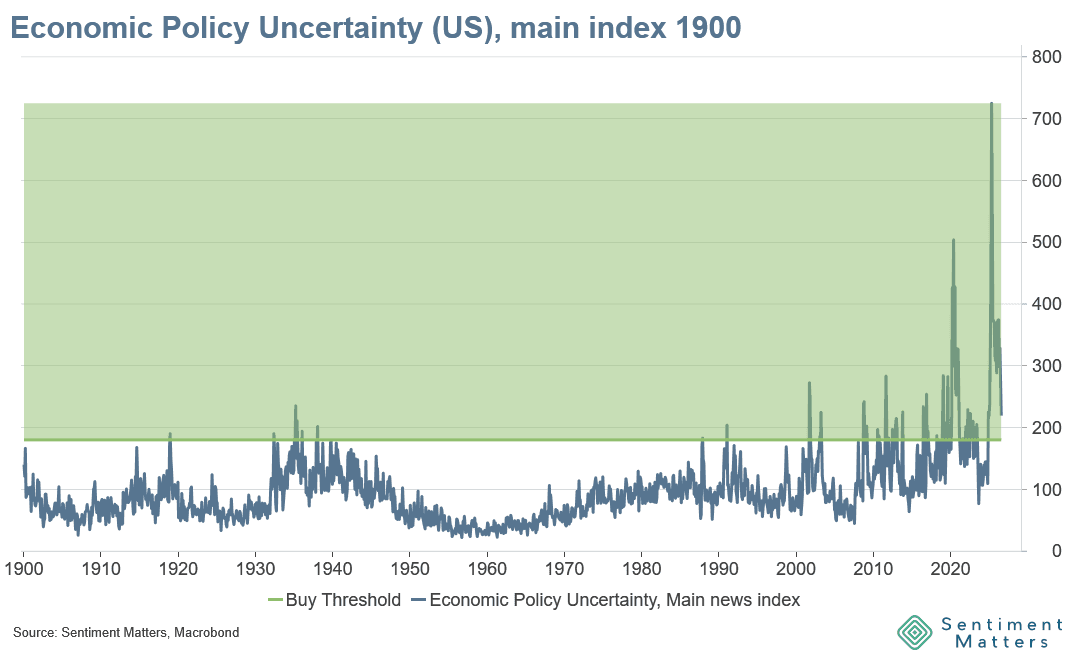
Policy risk is where the two frameworks diverge most sharply. Consider a hypothetical manufacturer whose operating profit depends substantially on a government tax credit. Under the Inflation Reduction Act, eligible taxpayers can transfer certain clean energy credits to unrelated buyers in exchange for cash, so credit sales can flow directly into reported results, one reason earnings quality analysis should separate operating performance from policy-driven income.
That exposure looks idiosyncratic because it is concentrated in a narrow group of companies. Its origin, however, is external: a legislative change can alter it regardless of how well the business executes. Standard classification labels it stock-specific, while an origin-based audit flags it as a political variable.
A Four-Step Investment Thesis Risk Audit
The following process can help advisors and portfolio managers surface hidden investment thesis risk before markets surface it for them.
Step 1: Map Every Thesis Driver
Write the thesis as a list of discrete assumptions.
Label each assumption as company-controlled or external.
Mark the assumptions the thesis cannot survive without.
If most load-bearing assumptions are external, the position may warrant macro-level monitoring, not just a quarterly earnings review.
Step 2: Measure Exposure to Macro Risk Factors
Estimate how much of the expected outcome depends on outside variables. Useful questions include:
What share of earnings comes from subsidies, credits, or protected pricing?
How sensitive is the valuation to a change in the discount rate?
Does the thesis require a specific policy outcome to work?
Quantifying exposure to macro risk factors turns a vague concern into a trackable metric.
Step 3: Stress-Test with Scenario Analysis
Build at least three cases: base, adverse policy, and adverse rates. Scenario analysis is most informative when each case changes only the external drivers while holding company execution constant. This isolates how much of the thesis rests on factors management cannot influence. For a worked example, see our guide to stress-testing client portfolios for an oil price shock.
Step 4: Set Thesis Invalidation Triggers
Define in advance the measurable conditions that would break the case, for example:
A credit or subsidy is repealed or materially reduced
A rate or credit spread threshold, such as a level on the 10-year Treasury yield, is breached
Operating margin falls below a defined floor
Thesis invalidation triggers written before a position is established are harder to rationalize away later, when anchoring and sunk-cost thinking tend to take hold.
Why Rules-Based Portfolio Management Fits This Framework
An audit only adds value if its conclusions are applied consistently. Many discretionary processes struggle here: external variables move on their own schedule, often between review meetings, and tracking dozens of triggers across client accounts by hand is difficult.
Rules-based portfolio management treats this as a process problem. Conditions defined during the audit can be encoded as explicit rules, much like systematic sell signals, and reviewed consistently, reducing the room for emotional overrides. It does not remove policy risk, but it can make the response more disciplined and repeatable.
Conclusion
The systematic vs idiosyncratic risk framework remains essential for portfolio construction, but it leaves a blind spot. Many positions that appear stock-specific are, in substance, views on elections, tariffs, or rates. Classifying each driver by origin, stress-testing the external ones, and pre-committing to invalidation triggers gives advisors a clearer picture of what a portfolio is actually exposed to, and a more defensible process to explain to clients.
Turn Your Thesis Audit Into Rules with Surmount Wealth
A thesis audit is only as useful as the discipline behind it. Surmount Wealth helps advisors and portfolio managers turn the conclusions of an audit like this one into explicit, automated rules, applied to existing brokerage accounts with no asset transfers and no coding.
What the platform offers:
Prebuilt strategy library: Explore a range of ready-made, rules-based strategies as starting points.
Custom strategy builder: Encode your own thesis, triggers, and rebalancing logic without writing code.
Testing before automation: Review how a set of rules would have behaved historically before choosing whether to automate it.
Works with existing accounts: Connects to current brokerage accounts, so there is no migration of assets.
Consistent execution: Pre-defined rules are applied the same way every time, which reduces ad hoc overrides.
Hypothetical Concept: The "Thesis Dependency Monitor"
For illustration only. This is a hypothetical idea, not an existing Surmount strategy, a recommendation, or investment advice.
To show how the framework in this article could be expressed as rules, imagine a strategy built around three layers:
Driver tagging: Each holding is tagged with the external variables its thesis depends on, such as a benchmark interest rate or a specific policy status.
Trigger rules: If a tagged variable crosses a pre-defined threshold, the holding's target weight is automatically reduced to a preset level.
Scheduled review: Positions are rebalanced on a fixed calendar, so trigger checks happen consistently rather than only when headlines prompt a look.
Assumptions and limitations: This concept is illustrative only and has not been tested or implemented. It assumes the relevant external variables can be reliably measured and defined as thresholds, which may not hold for every policy or macro factor. Rules-based approaches can also react to false signals, incur trading costs, and underperform discretionary judgment in some conditions. No performance results, whether actual, backtested, or projected, are presented or implied.
Ready to see how your own process could translate into rules?
👉 Book a demo with Surmount Wealth today and see how prebuilt and custom automated strategies work in practice.
Disclaimer: This content is for informational and educational purposes only and should not be considered investment, tax, or legal advice. References to hypothetical strategies are illustrative. All investing involves risk, including possible loss of principal.
FAQ: Systematic vs Idiosyncratic Risk
What is systematic vs idiosyncratic risk?
Systematic risk affects the whole market and cannot be diversified away. Idiosyncratic risk is specific to a company and declines as holdings are added.
Why does exogenous risk matter for advisors?
Exogenous risk comes from outside a company, such as interest rates or legislation. A well-run business can still see its thesis break because of it.
How do you audit investment thesis risk?
List each thesis assumption and tag it as endogenous or exogenous. Then stress-test the external drivers using scenario analysis.
When should thesis invalidation triggers be set?
Before a position is established. Conditions defined early are harder to rationalize away once anchoring and sunk-cost bias take hold.
Can rules-based portfolio management reduce policy risk?
It cannot remove policy risk. It can, however, apply pre-defined responses consistently rather than relying on ad hoc decisions.