WACC Valuation: A Practitioner's Guide for Advisors

WACC Valuation: A Practitioner's Guide for Advisors
Why WACC Valuation Matters More in a Higher-Rate Environment
For much of the past two decades, discount rate assumptions in most valuation models sat quietly in the background. Cheap financing meant the weighted average cost of capital was low and relatively stable, so small differences in this methodology rarely swung outcomes dramatically. That environment has shifted. As borrowing costs rise, the gap between a rigorous WACC valuation and a lazy one widens considerably, and future cash flows become more sensitive to the assumptions built into the model. This dynamic echoes a broader shift in how the opportunity cost of capital shapes portfolio decisions more generally in today's rate environment.
This matters directly for portfolio managers and RIAs. A company's justified valuation increasingly depends on how well its future cash flows can be defended against a higher cost of capital, not just its growth narrative. That shift rewards analysts and advisors who apply this discipline consistently, rather than treating it as a one-time exercise buried in a spreadsheet template.
The Core Components of a WACC Valuation Model
A properly built framework rests on a handful of interdependent inputs. Getting any one of them wrong tends to distort the whole model, which is why standardizing these components matters more than most advisors initially assume. It's a similar discipline problem to the one we've explored in evaluating whether PEG ratio still holds up as a valuation shortcut — inputs matter as much as the formula itself.
Cost of Equity: Estimating the Equity Risk Premium
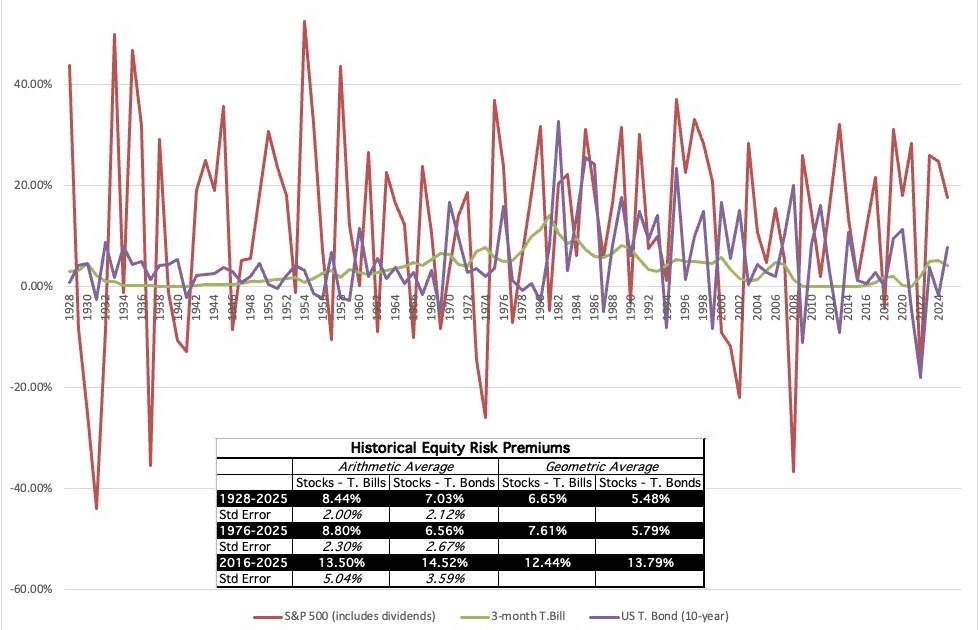
The cost of equity is typically derived using a required-return framework that incorporates the risk-free rate, a beta estimate, and the equity risk premium. Of these three, this premium tends to generate the most disagreement among practitioners, since it reflects a forward-looking judgment about how much compensation investors require for holding equity risk over risk-free alternatives. Small changes in this assumption can meaningfully shift the resulting valuation, which is why documenting the source and methodology behind it matters for defensibility. For a deeper look at how equity risk premium assumptions are shifting heading into 2026, see our companion analysis.
Cost of Debt and Capital Structure Weighting
The cost of debt component is generally more observable, often derived from a company's current borrowing rate or yield on outstanding obligations, adjusted for tax effects. Where models frequently go wrong is in how that figure is weighted against equity in the capital structure — the ratio used to blend the two costs into a single blended rate. Using stale or market-value-mismatched weightings is one of the more common, and more avoidable, sources of valuation error.
Discount Rate Assumptions: Where Models Go Wrong
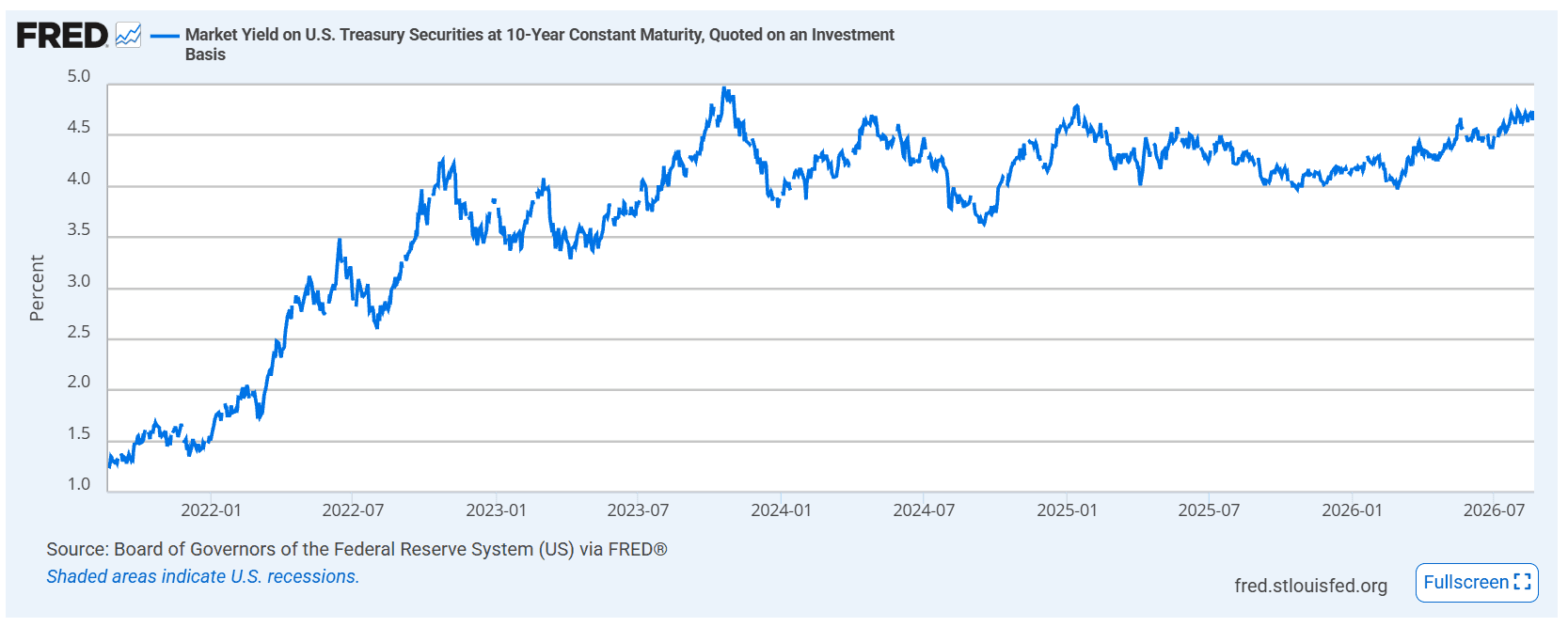
Beyond the individual cost-of-equity and cost-of-debt inputs, the broader set of assumptions, including how they're updated over time, is where many valuation models lose rigor. A discount rate calculated once and left static for years no longer reflects the financing environment a company actually operates in. Refreshing these inputs on a defined cadence, rather than ad hoc, is a small process change that meaningfully improves model integrity.
From Terminal Value to Present Value: Putting WACC to Work
Once a discount rate is established, it's applied across a projection period and, critically, to the terminal value — the estimated value of cash flows beyond the explicit forecast horizon. Because this figure often represents a substantial share of total valuation, even modest changes to the underlying WACC can move the output significantly. This is one of the more persuasive arguments for treating WACC valuation as a live input to be revisited, not a fixed constant set once and forgotten.
Common Pitfalls in Discounted Cash Flow (DCF) Modeling
Several recurring issues tend to undermine an otherwise sound discounted cash flow (DCF) model:
Applying a single discount rate across business segments with meaningfully different risk profiles
Failing to update the equity risk premium as market conditions shift
Using book-value rather than market-value weightings in the capital structure calculation
Treating terminal growth assumptions as static regardless of changing macro conditions
Inconsistent tax-adjustment treatment on borrowing costs across models
These pitfalls mirror a pattern we've seen elsewhere — much like the case for building systematic sell signals rather than relying on discretionary judgment, valuation discipline breaks down when it isn't process-driven. Each of these is a process failure rather than a theoretical one — the underlying framework is sound, but manual, inconsistent application introduces avoidable error.
Building Consistency: Standardizing Valuation Model Inputs Across Client Portfolios
For advisors managing valuation work across many holdings or client mandates, the real challenge isn't understanding WACC theory — it's applying these model inputs consistently at scale. When the underlying assumptions, weightings, and premium estimates are refreshed manually and inconsistently across a book of business, models drift apart from each other in ways that are difficult to justify or audit later. This is the same consistency problem we outlined in our framework for rigorous ETF due diligence — ungoverned processes drift, regardless of the asset class.
A standardized, documented approach, with clearly defined update cadences and consistent methodology across holdings, reduces this drift and creates a more defensible analytical record over time.
Conclusion
As the cost of capital continues to shape valuation outcomes more meaningfully than it has in years, the advisors who benefit most will be the ones who treat WACC valuation as a disciplined, repeatable process rather than a one-off calculation. Standardizing these inputs and revisiting them on a defined schedule is a modest process investment with an outsized payoff in model integrity and client-facing credibility.
Promo Section: Turning WACC Discipline Into an Automated Process
Understanding WACC valuation theory is one thing. Applying it consistently — refreshing discount rate assumptions, capital structure weightings, and equity risk premium inputs across every holding, on a defined schedule, without manual drift — is a different challenge entirely. This is precisely the kind of process discipline that Surmount Wealth's automated strategy infrastructure is built to support.
Surmount allows advisors to take any rules-based thesis — including a valuation-discipline framework like the one outlined above — and turn it into a systematic, automatable process layered directly on top of existing brokerage accounts. No fund transfers. No custom code. Advisors can explore prebuilt strategy templates or work with Surmount to construct a custom rules-based approach, then test it before applying it to client portfolios.
What this looks like in practice:
Prebuilt strategy library — explore existing rules-based frameworks built around valuation discipline, quality screens, and systematic rebalancing logic
Custom strategy construction — translate a specific thesis or process (such as standardized cost-of-capital review cadences) into an automatable rule set
No asset transfer required — strategies run on top of your existing brokerage relationships and custodial infrastructure
No coding required — strategy logic is built through Surmount's platform tools, not from scratch
Testing before implementation — review how a rules-based framework would have applied historically before considering it for client use. For more on where automation genuinely adds value versus where it doesn't, see our breakdown of what's real and what's hype in AI-driven portfolio management.
A Hypothetical Illustration
The following is a hypothetical concept for illustrative purposes only. It does not reflect an actual Surmount strategy, is not backtested, and should not be interpreted as a performance claim, prediction, or recommendation.
Consider a hypothetical rules-based framework that periodically flags portfolio holdings for valuation review whenever a company's estimated cost of capital shifts beyond a defined threshold — prompting a systematic re-check of discount rate assumptions rather than relying on an ad hoc, manually-triggered review. This is the type of mechanical, rules-based logic that Surmount's infrastructure is designed to help advisors construct and test.
Curious what a rules-based version of your own valuation process could look like? Book a demo with Surmount Wealth to explore how prebuilt or custom automated strategies could support your process.
FAQ: WACC Valuation
What Is WACC Valuation?
WACC valuation uses a company's weighted average cost of capital as the discount rate applied to its projected future cash flows.
Why Does WACC Rise With Interest Rates?
WACC typically rises with interest rates because both the cost of debt and the risk-free rate embedded in the cost of equity increase.
How Is Cost of Equity Calculated?
Cost of equity is generally estimated using the risk-free rate, a beta estimate, and the equity risk premium.
When Should Discount Rate Assumptions Be Updated?
Discount rate assumptions should be reviewed on a defined, regular cadence rather than left static, since financing conditions shift over time.
Who Uses WACC in Practice?
Portfolio managers, RIAs, and equity analysts use WACC valuation to anchor discounted cash flow models and assess whether a company's valuation is justified.