Rising Bond Yields in Asia: What US Investors Must Know

Rising Bond Yields in Asia: What US Investors Must Know
Most US investors have their eyes on the Middle East right now. Hormuz Strait headlines are moving commodity prices daily, and the noise is hard to ignore. But while that drama plays out in the near term, a quieter and potentially far more consequential story is developing in Japan and South Korea.
Rising bond yields in Asia may be one of the most important (and most overlooked) macro risks facing US investors today.
Why Rising Bond Yields in Asia Are Making Headlines
For decades, government bond yields in Japan and South Korea were remarkably low. Japan's 10-year government bond yield sat below zero for extended periods between 2016 and 2020. That era appears to be over. Japan's 10-year yield now sits near 2.69%, while its 30-year yield has climbed to approximately 3.90% — levels not seen since the 1990s. South Korea's 10-year government bond yield has similarly surged past 4%, among its highest readings in over a decade.
These are not just numbers on a chart. Risk-free rates set the baseline for how all assets are valued. When government bond yields rise sharply, equity valuations face headwinds.
With equity prices in both countries already elevated, the combination creates meaningful valuation risk and raises the odds of continued market volatility in the region. Similarly, as we explored in our analysis of the equity risk premium in 2026, compressed valuations leave little room for error when risk-free rates move sharply.
Rising bond yields in Asia therefore signal something much broader than a regional story — they represent a fundamental shift in the monetary regimes of two of the world's most systemically important economies.
The Yen Carry Trade — And Why Its Unwind Matters
To understand why rising bond yields in Asia threaten US markets, you need to understand the yen carry trade and the role global liquidity plays in sustaining asset prices worldwide.
How Japan's Debt Became a Global Liquidity Engine
Japan carries the highest debt-to-GDP ratio of any major economy in the world, sitting at approximately 200%. In absolute terms, it is the third-largest issuer of government debt globally, representing nearly 9% of the total global debt pool.
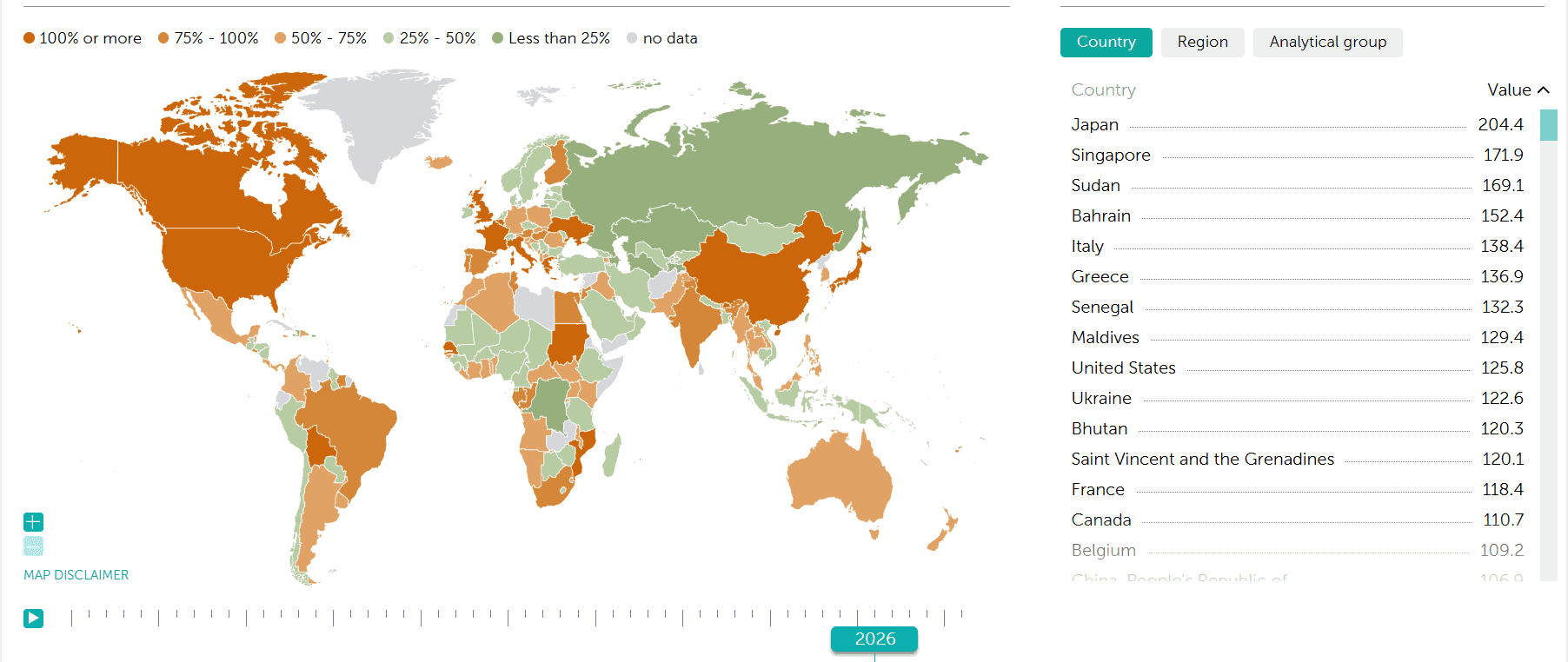
For years, Japan government bond yields were so low (even negative) that investors borrowed yen at virtually zero cost and deployed that capital into higher-returning assets elsewhere. US equities and bonds, being the largest and most liquid markets in the world, absorbed a disproportionate share of that flow.
This is the yen carry trade. And it has quietly been one of the most powerful sources of global liquidity fueling the US bull market. As Japan government bond yields rise toward multi-decade highs, the economics of this trade deteriorate — a dynamic that mirrors what the 30-year Treasury yield is signaling in the US as well
South Korea's Role in the Global Capital Picture
South Korea bond yields tell a similar story, though the country's role as a liquidity source is smaller than Japan's. What South Korea lacks in capital export capacity, however, it more than compensates for through its position in the global semiconductor supply chain. US equity market risk tied to South Korea is therefore less about capital flows and more about supply chain dependencies.
The Semiconductor Connection — Asia's Other Risk to US Markets
Rising bond yields in Asia are not the only transmission mechanism between these markets and your portfolio. South Korea sits at the center of the global memory chip industry, and disruptions there carry direct consequences for US technology stocks and the AI boom.
Memory Chips, HBM, and the AI Boom's Hidden Vulnerability
Two South Korean companies together control over 68% of the global DRAM market and approximately 79% of the high-bandwidth memory market — the specific type of chip that powers today's most advanced AI systems. The AI stock market risk embedded in this concentration is significant. A credit tightening, a labor disruption, or even a modest contraction in these companies' valuations could ripple across the entire AI infrastructure supply chain. That means potential delays in data center buildouts, rising memory unit prices, and a possible slowdown in the capital expenditure pace that has been driving US technology sector earnings.
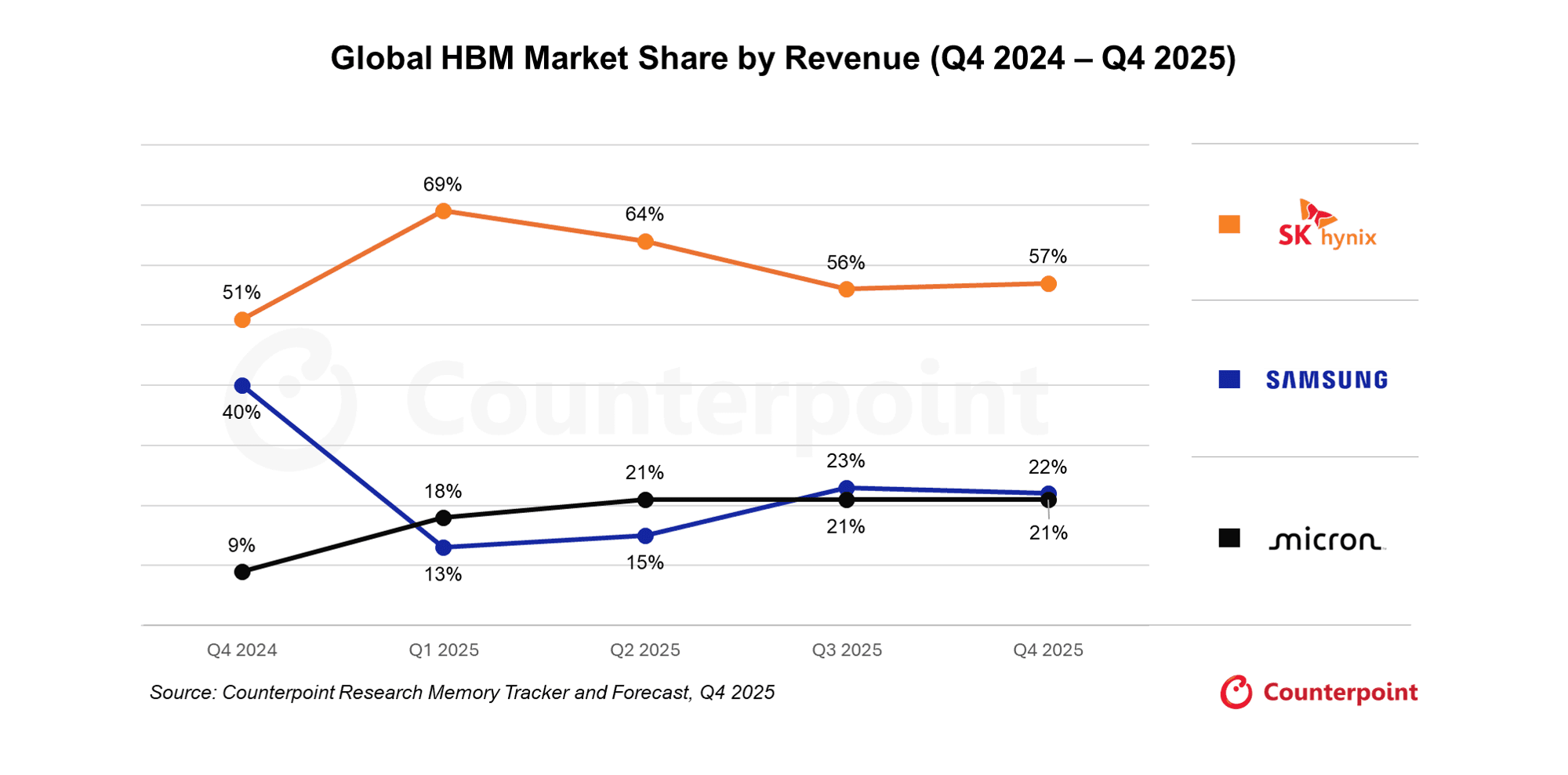
The semiconductor supply chain risk here is not theoretical. It is structural, and it runs directly through Seoul.
Why Korea's Equity Market Is a Leading Indicator
Experienced macro investors often treat the Korean equity market as a leading indicator for the US technology sector. When Korean equities sell off sharply — as they did with a historic intraday drop earlier this year, followed by a further correction of nearly 24% — it tends to foreshadow stress in global technology and AI-related stocks. Monitoring South Korea bond yields and Korean equity volatility as part of your macro investing strategy can give you an early warning signal that US markets have not yet priced in.
How US Investors Should Be Thinking About This
Portfolio risk management in this environment requires looking beyond domestic data points and recession indicators. The Federal Reserve, US earnings seasons, and domestic inflation figures all matter — but so does what is happening in Tokyo and Seoul. Rising bond yields in Asia represent a slow-moving but potentially powerful force that could drain the global liquidity that has supported elevated US equity valuations.
A macro investing strategy that accounts for yen carry trade dynamics, Asian bond market trends, and semiconductor supply chain risk is better positioned to navigate what comes next. That does not necessarily mean reducing equity exposure dramatically. It means being aware of where hidden risks are accumulating — and having a plan when those risks begin to materialize.
Rising bond yields in Asia may not make for the most dramatic headline — but for investors already concerned about S&P 500 concentration risk, they represent yet another layer of structural vulnerability hiding in plain sight.
For many portfolios, this starts with revisiting the case for global diversification in 2026 before the next liquidity shock forces the conversation.
Conclusion
The macro story unfolding in Japan and South Korea deserves far more attention from US investors than it is currently receiving. Between the unwinding of the yen carry trade, the pressure on global liquidity, and the semiconductor supply chain risk concentrated in Korea, the transmission mechanisms to US equity markets are real and well-established. Staying informed and building these dynamics into your investment framework is essential.
Automate Your Macro Thesis With Surmount Wealth
Understanding the macro environment is only half the battle. Acting on it — consistently, without emotion, and at the right time — is where most investors fall short.
That is exactly what Surmount Wealth's automated trade strategies are built for.
Imagine a strategy like the "Asia Yield Pressure Monitor" — a hypothetical automated strategy that tracks rising bond yields in Asia alongside yen carry trade indicators and Korean equity volatility signals. When the model detects a confluence of stress signals — spiking Japanese bond yields, a weakening yen, and Korean equity underperformance — it automatically reduces exposure to AI and semiconductor-heavy positions and rotates toward defensive assets or cash. When conditions normalize, it scales back in. No hesitation. No second-guessing. (Note: This is a hypothetical strategy for illustrative purposes only.)
This is just one example of what is possible. With Surmount Wealth, you can deploy prebuilt automated strategies crafted by experienced investors, or work with the team to build a fully custom strategy around any thesis — including the macro dynamics we just explored.
Stop watching the signals and start acting on them.
👉 Book a demo with Surmount Wealth today and see how automation can turn your macro insights into a disciplined, systematic edge.
FAQ: Rising Bond Yields in Asia
Why are Asian bond yields rising now?
Central banks in Japan and South Korea are normalizing policy after decades of ultra-low rates. Rising inflation expectations and fiscal pressures are pushing yields to multi-decade highs.
How do rising yields affect US stocks?
Higher yields in Asia unwind the yen carry trade, draining global liquidity that has long supported US equity valuations. Less liquidity typically means more pressure on elevated stock prices.
What is the yen carry trade?
It is a strategy where investors borrow cheap yen to invest in higher-returning assets globally. As Japan government bond yields rise, this trade becomes less profitable and begins to unwind.
How does South Korea impact the AI boom?
Samsung and SK Hynix control nearly 80% of the HBM memory chip market powering AI infrastructure. Any disruption to their operations creates direct semiconductor supply chain risk for US tech stocks.
What should investors do about this?
Build a macro investing strategy that monitors Asian bond markets and yen carry trade dynamics alongside domestic indicators. Systematic, rules-based portfolio risk management is the most reliable way to act on these signals.