
Blog

How to Manage Client FOMO Without Losing Their Trust
Every advisor has had the call. A client watched a single stock double in a week, a friend bragged about it at dinner, and now they want to know why their diversified portfolio isn't doing the same thing. That tension is client FOMO — the fear of missing out that pulls clients toward speculation and away from the plan you built together.
This isn't new, but the always-on nature of financial social media and retail trading forums has made it harder to contain. A single viral post about a portfolio hitting a round-number milestone can undo months of careful positioning in one client conversation — a dynamic closely tied to recency bias under client pressure.
What Is Client FOMO — and Why It's Getting Worse
Client FOMO shows up when clients see other investors — often on public forums — posting outsized gains and want to replicate that outcome inside their own portfolio, regardless of whether it fits their risk profile or long-term plan.
The dynamic has intensified for a few structural reasons:
Real-time portfolio tracking apps let retail investors publicly compare returns
Social platforms reward dramatic single-stock wins, not diversified outcomes
Low-cost, no-friction brokerage access makes acting on impulse instantaneous
For advisors, the job has shifted. It's no longer just about constructing a sound portfolio — it's about defending that portfolio's calm, unremarkable performance against loud, remarkable-looking outliers.
The Cost of Speculative Investing Risk in Client Portfolios
When a client acts on that impulse, the damage isn't always immediate. A single off-plan trade might not sink a portfolio. But the pattern compounds. Repeated exposure to speculative investing risk erodes diversification, increases concentration in unproven positions, and — perhaps most damaging — undermines the client's confidence in the plan the advisor built.
Research on investor behavior consistently shows that individuals who chase performance tend to underperform the funds and strategies they're invested in, largely due to poorly timed entries and exits driven by emotion rather than process.
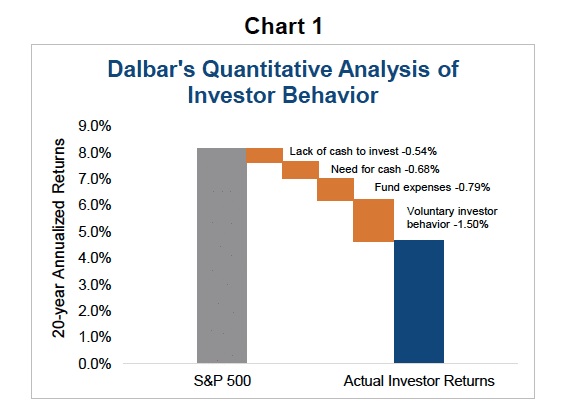
Recognizing the Warning Signs Before a Client Chases a Hot Stock
A few signals often precede a client's move toward an off-plan, speculative trade:
The client references a specific ticker they heard about outside your relationship
They ask about performance relative to a friend, coworker, or online community
Their questions shift from "is this right for my goals" to "how much could I make"
They express frustration with "boring" or "safe" returns during a bull run
Catching these signals early gives advisors room to respond proactively rather than reactively.
Client Communication Strategies That Defuse FOMO in the Moment
Advisors who navigate this successfully tend to rely on consistent client communication strategies rather than improvising in the moment:
Reframe the conversation around goals, not returns — ask what the money is actually for
Use opportunity cost, not risk, as the anchor: "what would this displace" lands better than "this could go to zero"
Normalize the desire without validating the action — acknowledging FOMO as a natural response reduces defensiveness
Scripts for the "Should I Buy This?" Conversation
A simple, repeatable framework helps:
Acknowledge: "I get why that's interesting — big moves like that get attention."
Contextualize: "Let's look at what role speculation already plays in your plan."
Quantify: "If we allocated a small percentage to something like this, here's what that would look like against your goals."
Decide together: let the client choose, informed, rather than being told no outright.
This keeps the advisor in a collaborative role rather than a gatekeeping one — which matters for long-term trust.
Behavioral Coaching for Advisors: Building Long-Term Discipline
Managing individual conversations is necessary but not sufficient. Advisors who see the best long-term outcomes build behavioral coaching for advisors into their client relationship model as a standing practice, not a one-off intervention. This means:
Setting expectations about volatility and "boring" periods before they happen, not during
Reviewing the plan's original goals regularly, so speculation requests are measured against a real benchmark
Documenting client risk tolerance and revisiting it as life circumstances change

Staying Disciplined During Market Hype Cycles
Market hype is cyclical, and staying disciplined during market hype requires structure clients can see — not just trust in the advisor's judgment. Transparent decision points give clients a tangible reason to hold steady, because the plan itself explains why action isn't being taken.
Why Rules-Based Investing Reinforces Client Trust
This is where structure does some of the behavioral work for you. Rules-based investing removes ambiguity from the moment emotion enters the conversation, because the criteria for portfolio changes were agreed upon before the conversation ever started. Instead of an advisor saying "trust me," the plan says "here's what we agreed would trigger a change — and this isn't it."
That distinction matters enormously for client trust. It reframes discipline as a shared, pre-committed decision rather than an advisor's unilateral judgment call in the heat of the moment — a principle explored further in why rebalancing matters more than market forecasts, and closely related to the systematic sell signals many portfolio managers now use to take discretion out of high-pressure moments.
Conclusion
Client FOMO isn't going away — if anything, the visibility of speculative wins will keep increasing. The advisors best positioned to manage it aren't the ones with the most compelling pep talks; they're the ones with structure that makes discipline the default, not a decision that has to be re-won every time markets get loud.
Turn Discipline Into Infrastructure — Not Just a Conversation
Every framework above still depends on one thing: the advisor being available, consistent, and disciplined in the exact moment a client's FOMO kicks in. Surmount Wealth gives advisors a way to make that discipline structural instead of situational.
Surmount Wealth is a rules-based automation platform built for RIAs and portfolio managers. It lets you take a defined thesis — like the plan-first, criteria-driven approach outlined in this article — and turn it into a strategy that runs on pre-set rules, applied consistently across client accounts, without requiring clients to move assets or advisors to code anything from scratch.
As a hypothetical illustration only — not a recommendation, and not reflective of any actual or backtested Surmount Wealth strategy — consider what a "Plan-First Guardrail" approach might look like:
Defined allocation bands for core holdings that only shift when specific, pre-agreed thresholds are met
A capped speculative sleeve (e.g., a small, fixed percentage of the portfolio) that clients can direct toward higher-conviction ideas within pre-set limits — giving them agency without letting FOMO override the broader plan, similar in spirit to the guardrails advisors use in direct indexing strategies to balance personalization with discipline
Automated rebalancing triggers so drift back toward target allocation happens on schedule, not on impulse
Transparent rule documentation clients can reference themselves, reinforcing the "we agreed to this in advance" framing from the communication scripts above
This is a hypothetical construct meant to illustrate how a thesis like this could be structured — not an actual Surmount Wealth product, backtested strategy, or performance claim. Any specific strategy, allocation, or return assumption would need to be reviewed before use.
What automating a strategy through Surmount Wealth can offer advisors:
Apply professional-grade, rules-based strategy logic to existing brokerage accounts — no asset transfers required
Remove real-time discretion from the moments clients are most likely to ask for an exception
Build and test custom strategies, or start from a prebuilt library, without writing code
Give clients a documented, consistent rationale for "why not now" — reinforcing trust rather than straining it
Scale disciplined portfolio management across your full book of clients, not just the ones you can personally talk down in the moment
Curious how a rules-based approach could support the way you already talk to clients about risk and discipline? Book a demo with Surmount Wealth to see how automated strategy infrastructure fits into your practice.
FAQ: Client FOMO
What causes client FOMO in investing?
It's driven by visible, often exaggerated gains shared on social media and trading forums, which create pressure to abandon a diversified plan.
How do advisors manage client FOMO?
Through proactive client communication strategies, transparent rules, and framing conversations around goals rather than returns.
Why does rules-based investing reduce impulsive trades?
It sets criteria for changes in advance, so speculative requests are measured against pre-agreed triggers rather than emotion.
When should advisors start behavioral coaching?
Behavioral coaching for advisors works best as a standing practice — setting expectations before volatility or hype cycles happen, not during them.
Is some speculative investing risk acceptable?
Many advisors use a small, capped allocation for speculative ideas, which supports staying disciplined during market hype while still giving clients some agency.