Labor Risk Portfolio Management: What Advisors Miss

Labor Risk Portfolio Management: What Advisors Miss
Most equity analysis treats labor as a line item. Wages flow through the income statement, headcount figures appear in 10-K filings, and pension liabilities sit quietly on the balance sheet. What rarely gets modeled explicitly is the dynamic, event-driven nature of labor risk — the kind that can wipe billions from a company's earnings in a single quarter, with little warning and no correlation to broader market conditions.
For portfolio managers and investment advisors running industrial, consumer discretionary, or materials exposure, labor risk portfolio management is not an abstraction. It is a quantifiable risk factor that belongs inside your framework — not as a footnote, but as a first-order input into position sizing, sector allocation, and earnings quality assessment — alongside the macro and structural risks that already command attention in professional portfolio construction.
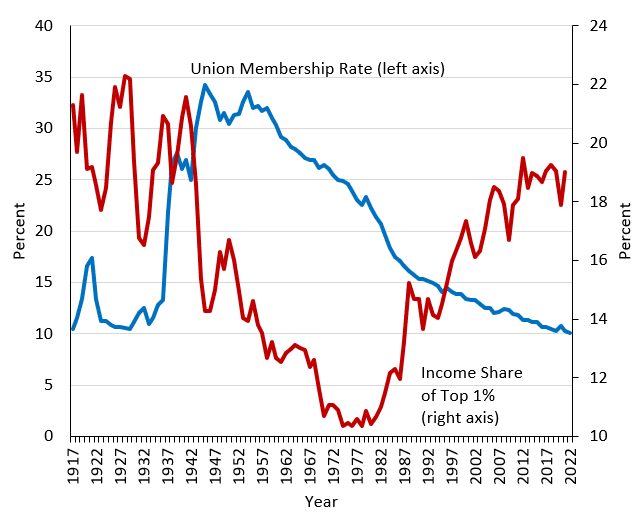
Why Labor Risk Is Underpriced in Equity Markets
Equity markets are reasonably efficient at pricing in risks that are visible, recurring, and easily modeled. Labor risk is none of those things. Contract cycles are irregular. Strike outcomes are binary. The financial impact of a work stoppage depends on inventory buffers, supplier redundancy, and customer substitution — variables that are difficult to standardize across companies or industries.
The result is systematic underpricing. Analysts embed labor cost assumptions into operating margin models, but few build explicit probability-weighted strike scenarios into their valuations. That gap creates both a risk and an opportunity for advisors who are willing to do the work.
How Union Contracts Create Earnings Volatility
Union contracts in capital-intensive industries create a specific type of earnings volatility that is distinct from macro cyclicality. Contract expiration dates create concentrated risk windows — periods during which unresolved negotiations can rapidly escalate into work stoppages. The earnings volatility in unionized companies is therefore not randomly distributed across time. It clusters around predictable dates, which means analysts have the information they need to flag elevated risk well in advance.
When a strike does occur, the financial damage is front-loaded and asymmetric. Lost production is rarely fully recovered. Supply chain partners absorb secondary losses. And the contract terms that emerge from the dispute frequently add to the structural cost base for years afterward — in the form of higher base wages, expanded benefit commitments, and restrictive work rules that compress margins independent of revenue performance.
Strike Risk and Its Impact on Forward Guidance
Strike risk equity valuation is complicated by the fact that management teams are rarely forthcoming about the probability or potential severity of a labor dispute. Forward guidance issued during active contract negotiations tends to assume resolution — which means consensus estimates are often built on an optimistic base that does not reflect the full distribution of outcomes. When a strike materializes, the guidance gap can be severe. The Bureau of Labor Statistics Major Work Stoppages data documents the historical frequency and duration of major strikes across industries, providing a useful baseline for probability modeling.
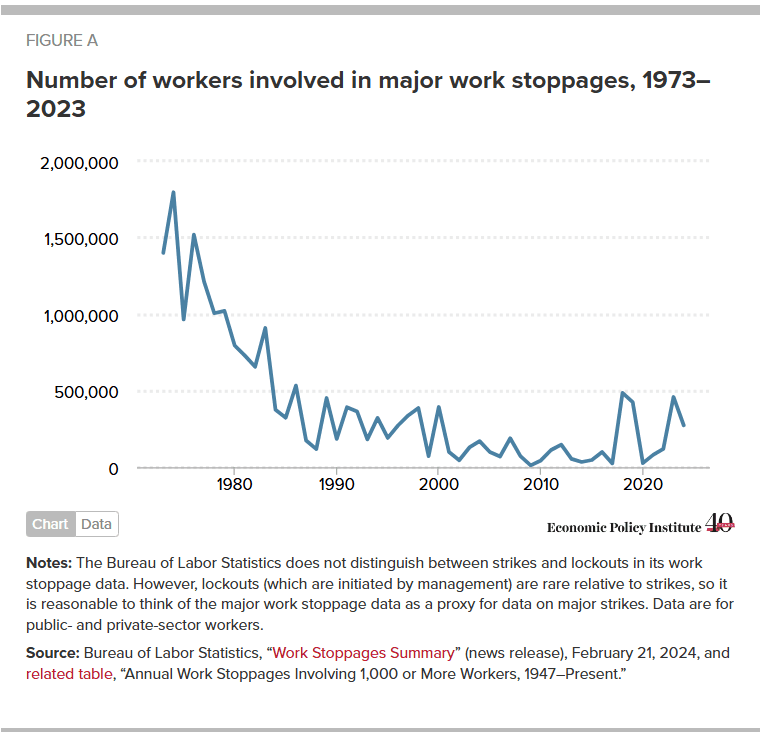
Historical examples across the automotive and aerospace sectors show that major work stoppages have generated EBIT-adjusted losses in the range of $1 billion to $3.6 billion per incident — figures that often represent a meaningful percentage of full-year earnings for the affected company. Advisors who had already modeled these downside scenarios were better positioned to act decisively when events unfolded, rather than reacting to guidance revisions after the damage was done.
UAW Impact on Stock Price and Sector Allocation
The UAW impact on stock price is one of the clearest illustrations of how labor risk can move equity valuations independently of macro conditions. When major strikes have occurred in the automotive sector, the affected companies have seen meaningful stock price dislocations in the weeks surrounding the dispute — driven not just by the immediate earnings hit, but by the market's reassessment of structural competitive position.
This is because automotive strikes highlight a durable competitive disadvantage: UAW-represented manufacturers face cost structures that non-union foreign transplants operating in the U.S. do not carry. The BLS Union Members Summary consistently documents the wage and benefit premium that union representation carries relative to non-union operations. As non-union competitors have expanded domestic production and grown market share, the structural margin gap has widened. For advisors with long exposure to legacy U.S. manufacturers, modeling this dynamic is not optional — it is a fiduciary obligation.
Industrial Sector Allocation Around Labor Cycles
Industrial sector allocation that ignores labor cycle timing is leaving a systematic risk factor unmanaged. Contract expiration calendars for major unionized employers are publicly available. A disciplined approach to labor risk portfolio management maps those expiration dates onto existing sector exposures — flagging elevated-risk windows and allowing position sizing to reflect the probability distribution of outcomes more accurately.
In practice, this might mean trimming concentrated exposure to a specific manufacturer in the six months preceding a major contract negotiation, rotating toward non-union competitors with equivalent sector exposure, or building explicit downside hedges around peak risk windows. This kind of structured approach to labor cycle timing aligns with broader frameworks for managing macro risk factors systematically.
Building a Labor Risk Framework for Your Portfolio
Effective labor risk portfolio management does not require a proprietary data feed or a team of labor economists. It requires a structured analytical process applied consistently across holdings with significant union exposure.
The starting point is exposure mapping: identify which positions carry material union labor costs as a percentage of total operating expenses, flag upcoming contract expirations, and note the historical relationship between that company and its primary union. Companies with a history of contentious labor relations warrant higher risk premiums than those with collaborative bargaining histories — even if the current contract is not yet expired.
Quantifying Union Labor Costs in Equity Analysis
Union labor costs investment analysis should go beyond the wage line. Direct labor costs are visible in the income statement, but the full cost of a unionized workforce includes pension and OPEB obligations on the balance sheet, contractual restrictions on staffing flexibility, productivity differentials between union and non-union operations, and the long-term trajectory of legacy cost commitments that compound across contract cycles.
A complete labor cost model integrates these variables into a normalized earnings framework — one that strips out the one-time noise of strike settlements and presents the underlying cost structure clearly. This connects directly to broader questions of earnings quality and income statement interpretation that distinguish sophisticated portfolio analysis from surface-level screening.
Pension underfunding deserves particular attention. Defined benefit pension liabilities at heavily unionized manufacturers can represent a significant contingent liability that does not appear in standard earnings multiples. When discount rates shift — as they have in the current rate environment — the balance sheet impact can be substantial and immediate.
Supply Chain Disruption and Strike Risk Equity Valuation
One dimension of labor risk that receives even less analytical attention than direct strikes is supplier-level labor disruption. In industries that rely on just-in-time supply chains, a work stoppage at a single critical supplier can idle final assembly operations within days — creating earnings damage at the OEM level that is disconnected from any labor dispute at the OEM itself.
Supply chain disruption equity risk from supplier strikes is harder to model but no less real. It requires mapping the supply chain dependencies of major holdings — identifying single-source suppliers with union workforces, assessing inventory buffer levels, and stress-testing revenue scenarios against different stoppage durations. NBER research on just-in-time manufacturing vulnerability has documented how lean inventory practices amplify the downstream earnings impact of supplier disruptions. This analysis connects to the broader challenge of identifying structural vulnerabilities embedded in complex global supply chains.
The competitive dimension matters here as well. A supply chain disruption at a union-dependent manufacturer does not affect non-union competitors in the same way. During a prolonged stoppage, customers migrate. Some of that migration is permanent. For advisors holding both union-exposed and non-union industrial names, a supplier strike at one may actually be a positive catalyst for the other — a dynamic worth building into industrial sector allocation logic explicitly.
Conclusion
Labor risk portfolio management is one of the most consistently underweighted analytical disciplines in professional equity research. The information is available. The historical record is clear. The financial consequences are measurable. What has been missing is a systematic framework for incorporating these variables into position-level decision-making rather than treating them as unpredictable events after the fact.
Advisors who build labor risk explicitly into their frameworks — mapping contract expiration calendars, quantifying union labor cost structures, stress-testing supply chain dependencies — will be better positioned to manage earnings volatility in unionized sectors and to act decisively when disruptions materialize. That is a durable, repeatable edge.
Automate Your Labor Risk Strategy with Surmount Wealth
Understanding labor risk is the analytical half of the equation. Acting on it — systematically, consistently, and without emotional interference at the exact moment disruption strikes — is where most advisors fall short. That is precisely what Surmount Wealth is built for.
Surmount Wealth is an AI-driven investment platform that allows portfolio managers and RIAs to build, backtest, and fully automate sophisticated investment strategies directly on top of existing brokerage accounts. No fund transfers. No coding required.
Hypothetical Strategy Concept: The "Union Cycle Rotation Model"
Note: This is a hypothetical strategy for illustrative purposes only. It does not represent a live Surmount strategy and should not be construed as investment advice.
Imagine a rules-based strategy that monitors contract expiration calendars for major unionized manufacturers across the industrial and automotive sectors. In the 90-day window preceding a major contract deadline, the model automatically reduces exposure to the affected name and rotates equivalent sector exposure toward non-union competitors or diversified industrial ETFs. If a strike is confirmed, the rebalance deepens and a pre-defined stop is activated. When the contract is resolved and forward guidance is reinstated, the model scales back in systematically. No hesitation. No reactive decision-making under pressure.
This is the kind of thesis-driven, event-aware automation Surmount Wealth makes possible. Here is what the platform delivers:
Prebuilt strategy library — deploy institutional-grade strategies instantly across any thesis
Custom strategy builder — encode any framework, including labor cycle rotation, into fully automated rules
No fund transfers required — strategies run directly on existing brokerage accounts
Backtesting infrastructure — validate your labor risk thesis against historical strike events before going live
Automated rebalancing — execute pre-defined allocation shifts the moment your trigger conditions are met, not after the fact
Built for professional advisors — the platform is designed for the analytical rigor that RIAs and portfolio managers demand
Your labor risk framework deserves execution infrastructure that matches its quality. Book a demo with Surmount Wealth today and see how your next thesis can run on autopilot.
👉 Book a Demo with Surmount Wealth Now
FAQ: Labor Risk Portfolio Management
What is labor risk in equity analysis?
Labor risk in equity analysis refers to the earnings and valuation impact of union contract cycles, strike events, and structural labor cost disadvantages. It is a systematic risk factor that is frequently underweighted in standard fundamental models.
How does a strike affect stock valuation?
A work stoppage reduces production volumes and revenues immediately, often triggering guidance cuts and consensus estimate revisions. Strike risk equity valuation effects are compounded by the long-term cost increases that emerge from post-strike contract settlements.
Why does union exposure increase earnings volatility?
Earnings volatility in unionized companies clusters around contract expiration dates, creating predictable but binary risk windows. The outcome of each negotiation can materially shift the cost structure for the duration of the new contract.
How should advisors manage industrial sector allocation?
Industrial sector allocation should incorporate contract expiration calendars as a risk timing tool. Reducing exposure to union-heavy names ahead of major negotiation windows and rotating toward non-union competitors is a structured way to manage labor cycle risk.
Can supply chain strikes affect non-striking companies?
Yes. Supply chain disruption equity risk from a supplier strike can idle final assembly at the OEM within days in just-in-time manufacturing environments. The earnings impact can be as severe as a direct strike, even with no active labor dispute at the OEM itself.


