
Blog

How Deficits Affect Portfolio Returns: An Advisor Guide
The Fiscal Deficit Backdrop: Why It Matters for Portfolios
Federal budget deficits are not a new phenomenon, but their scale and persistence have shifted how advisors need to think about long-term asset allocation. According to data tracked by the Federal Reserve Bank of St. Louis (FRED), the federal debt-to-GDP ratio has shifted meaningfully across recent economic cycles. When government spending consistently outpaces revenue, the resulting borrowing needs ripple through interest rates, currency valuation, and inflation expectations.
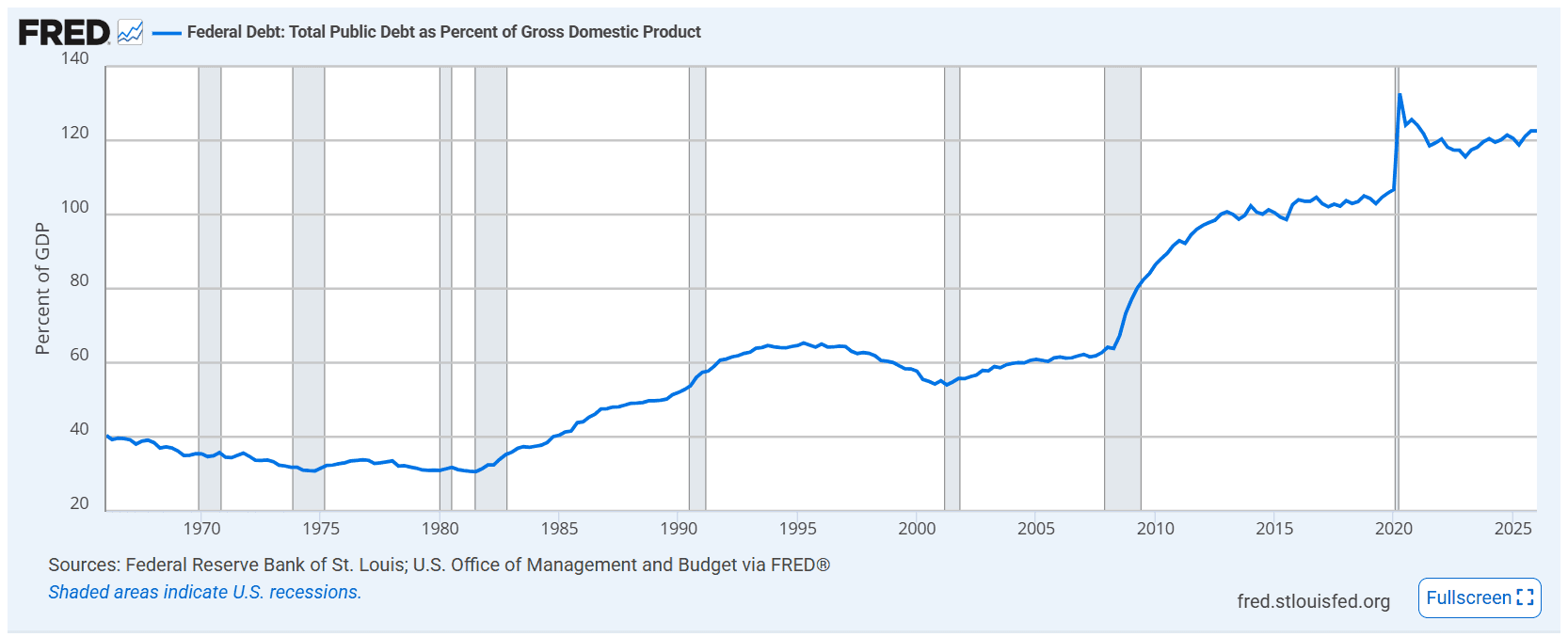
For portfolio managers, the question is rarely whether deficits matter, but how deficits affect portfolio returns over a multi-year planning horizon.
This matters most for advisors managing multi-decade financial plans, where compounding assumptions about growth and inflation directly shape retirement outcomes. A framework grounded in historical fiscal cycles, rather than headline anxiety, gives advisors a more defensible basis for portfolio construction, and a clearer answer the next time a client asks how deficits affect portfolio returns in practical terms.
Real vs. Nominal Returns: The Core Framework
Any serious discussion of how deficits affect portfolio returns has to start with the distinction between real and nominal returns. Nominal returns describe the raw percentage gain on an investment, while real returns subtract the effect of inflation. When deficit-driven spending contributes to inflationary pressure, the gap between nominal and real returns widens, which can quietly erode purchasing power even as account balances rise.
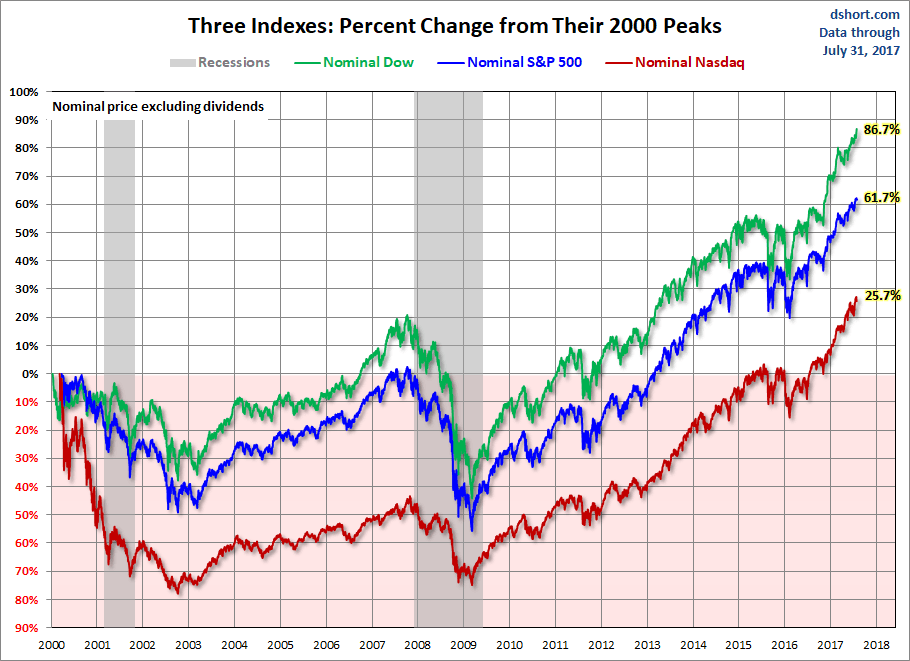
Advisors who anchor client expectations to nominal figures alone risk overstating the actual growth of wealth — a gap that assets like inflation-sensitive real estate structures are sometimes used to help close. Framing performance in real vs. nominal returns terms gives clients a more accurate picture of what their portfolio is actually accomplishing after inflation is accounted for.
A Real Return Framework for Advisors
A practical real return framework for advisors starts with three steps: establish a baseline inflation assumption tied to a credible published source — NBER research on U.S. debt-to-GDP dynamics is a useful reference point — stress-test portfolio return targets against that assumption, and revisit the assumption on a fixed schedule rather than reactively. This keeps the framework disciplined rather than driven by short-term headlines about deficit spending or debt ceiling debates.
Deficit Spending and Inflation: The Transmission Mechanism
The relationship between deficit spending and inflation is not automatic, but the transmission channels are well understood. Research from the BIS notes that the policy regime in place heavily impacts the link between deficits and inflation. When deficits are financed through increased money supply or accommodative monetary policy, the added liquidity can contribute to broader price pressure. When deficits are financed primarily through debt issuance absorbed by willing buyers, the inflationary effect tends to be more muted, though borrowing costs and interest rate dynamics still shift.
Advisors do not need to forecast which path fiscal policy will take. What they can do is build portfolios resilient to a range of outcomes, rather than positioning around a single deficit narrative.
Fiscal Policy and Portfolio Strategy: Practical Adjustments
Translating fiscal policy portfolio strategy into practice means focusing on structural resilience rather than tactical bets. This can include diversifying across asset classes with different sensitivities to inflation and interest rate movement — including why fixed income still belongs in the allocation mix — maintaining exposure to both growth and income-generating assets, and avoiding overconcentration in any single macro outcome.
The goal is not to predict fiscal policy but to build portfolios that perform reasonably well across a range of plausible deficit and inflation scenarios.
Systematic Portfolio Rebalancing as a Discipline Tool
Systematic portfolio rebalancing plays a central role here because it removes emotion and headline reactivity from the equation. Rather than adjusting portfolios in response to each new debt or inflation data point, a rules-based rebalancing schedule keeps allocations aligned with long-term targets regardless of short-term noise. This discipline is particularly valuable during periods of elevated fiscal uncertainty, when the temptation to make reactive changes is highest.
Talking to Clients: A Framework for Inflation Risk Conversations
Clients frequently raise concerns about national debt headlines, and advisors need a repeatable way to respond without letting short-term pressure override long-term planning. Structured inflation risk client conversations start by acknowledging the legitimacy of the concern, then redirecting toward what is actually controllable: asset allocation, time horizon, and diversification, rather than predictions about fiscal policy outcomes.
Macro Risk Client Communication: Do's and Don'ts
Effective macro risk client communication follows a few consistent principles:
Do explain the real vs. nominal returns distinction in plain language clients can retain.
Do connect deficit and inflation concerns back to the client's specific plan and time horizon.
Do use historical context to normalize concern without dismissing it.
Don't make specific predictions about future deficit levels or inflation rates.
Don't imply that any single asset class is a guaranteed hedge against fiscal risk.
Don't let one news cycle override a previously agreed-upon long-term plan.
Conclusion
Deficits are a permanent feature of the fiscal landscape, and client anxiety about them is unlikely to disappear. What separates a reactive advisor from a trusted one is a repeatable process for evaluating how deficits affect portfolio returns: understanding the issue through the lens of real versus nominal performance, building portfolios structurally resilient to a range of fiscal outcomes, and communicating with clients through a consistent, non-predictive framework. Advisors who can clearly explain how deficits affect portfolio returns, without resorting to prediction, build a durable form of client trust. That combination of analytical rigor and client communication discipline is what turns a macro headline into a productive planning conversation rather than a source of reactive decision-making.
Turn This Framework Into a Systematic Strategy
Understanding how deficits affect portfolio returns is only half the equation — the other half is having a disciplined, repeatable way to act on that understanding without letting headlines drive decisions. That's exactly the gap Surmount Wealth is built to close.
Surmount Wealth gives RIAs and portfolio managers access to a library of prebuilt, rules-based trade strategies, along with the ability to build and backtest fully custom strategies — all without transferring client funds or writing a single line of code. Any thesis your team develops, including the real-return and fiscal-resilience framework outlined above, can be translated into a systematic, automated strategy that runs consistently across client accounts.
As a hypothetical illustration only — not a strategy currently offered, backtested, or recommended by Surmount Wealth — consider what a “Real Return Resilience” strategy concept might look like:
A rules-based framework that periodically rebalances toward asset classes an advisor's own research identifies as inflation-resilient, based on predefined triggers rather than discretionary calls
Automated rebalancing cadence designed to reduce reactive, headline-driven trading
Fully customizable thresholds so advisors can align the framework with their own house view on fiscal and inflation risk
This concept is illustrative only. It is not a real Surmount Wealth strategy, carries no performance history, and should not be interpreted as investment advice or a recommendation. Any hypothetical strategy built on the platform would require its own assumptions, limitations, and compliance review before use with client assets.
As with any rules-based approach, this type of framework carries its own risks and limitations: predefined triggers may underperform a discretionary approach in market conditions the rules weren't designed for, historical relationships between asset classes and inflation are not guaranteed to hold going forward, and a systematic strategy does not eliminate the risk of loss. Any real-world version of this concept would need its own risk disclosures specific to its actual construction.
Why advisors are exploring Surmount Wealth:
Apply professional-grade, systematic strategies to existing brokerage accounts — no asset transfer required
Build fully custom strategies around your own macro or fiscal views
Remove emotion and reactivity from rebalancing decisions
Maintain full transparency and control over strategy logic
Scale a consistent process across every client account
If your team is thinking about how to operationalize a real-return or fiscal-resilience framework at scale, the Surmount Wealth platform could offer you a viable route towards following such a strategy.
Schedule a Demo with Surmount Wealth →
FAQ: How Deficits Affect Portfolio Returns
What are real vs. nominal returns?
Nominal returns are raw investment gains before inflation. Real returns subtract inflation to show actual purchasing power growth.
How does deficit spending cause inflation?
Deficit spending can contribute to inflation when financed through increased money supply, though the effect depends on how the deficit is funded.
Why do advisors need a real return framework?
A real return framework for advisors keeps inflation assumptions consistent and disciplined, rather than reactive to short-term headlines.
When should portfolios rebalance for fiscal risk?
Systematic portfolio rebalancing works best on a fixed schedule, not in reaction to individual debt or inflation data points.
How should advisors discuss deficits with clients?
Effective macro risk client communication focuses on what's controllable — allocation and time horizon — rather than fiscal predictions.