
Blog

Why Does the Stock Market Rise on Bad Economic News?
Advisors fielding client questions in early August faced a familiar but disorienting pattern: payrolls fell, wage growth cooled, and the labor market clearly softened — yet equities pushed to record highs. For clients watching headlines, this looks contradictory. For portfolio managers, it's a recurring feature of markets that rewards a process, not a reaction.
Understanding why does the stock market rise on bad economic news requires separating the mechanical driver (rate expectations) from the fundamental one (earnings and growth). These two forces don't always move together, and the gap between them is where risk quietly accumulates.
The "Bad News Is Good News" Market Reflex, Explained
The mechanism is straightforward. Weak economic data lowers the probability that the Federal Reserve tightens policy, and in many cases raises the odds of future easing. Because equity valuations are sensitive to the discount rate applied to future earnings, any reduction in expected rates increases the present value of those earnings — particularly for longer-duration, growth-oriented assets.
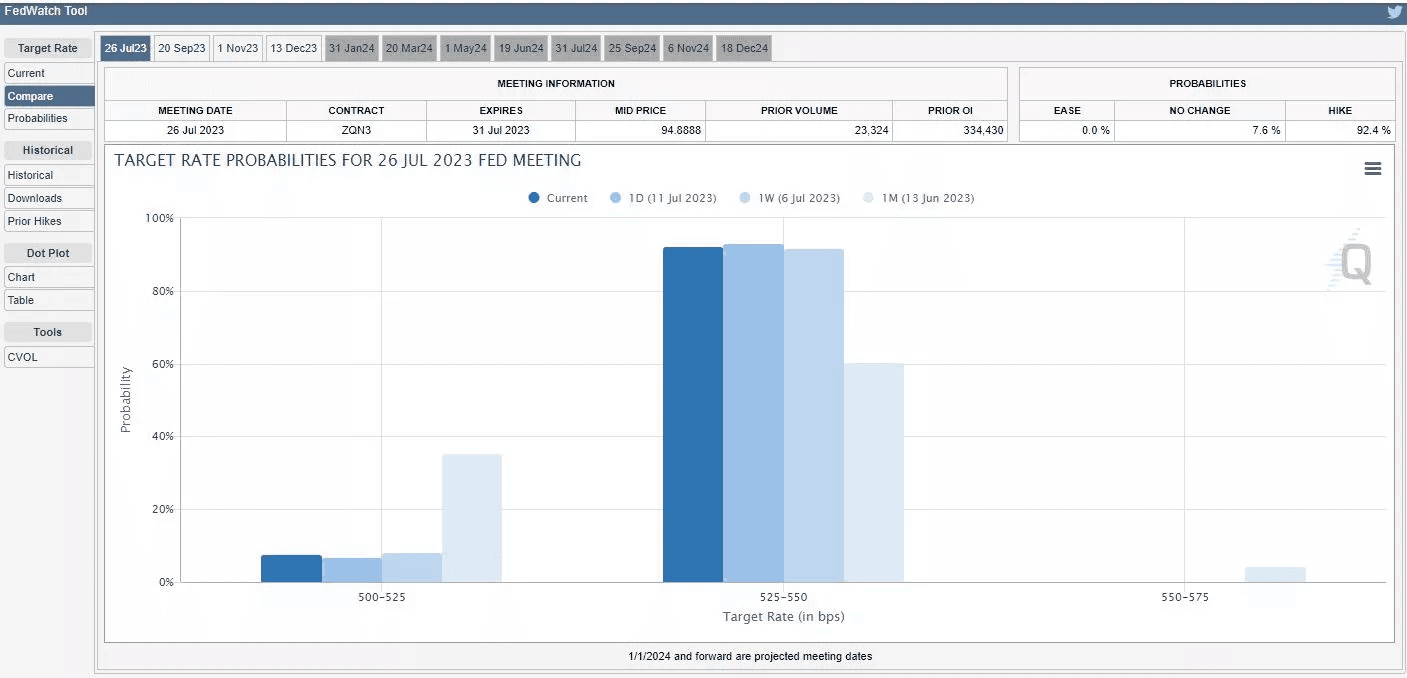
This is the core reason why does the stock market rise on bad economic news in so many cycles: the market isn't cheering weakness itself, it's repricing the policy path that weakness implies — a repricing process that has grown more volatile as forward guidance itself has become less reliable.
Why Weak Labor Market Data Fuels a Risk-On Market Rally
Labor data carries outsized influence because employment sits at the center of the Fed's dual mandate. According to the Federal Reserve, the FOMC is committed to promoting maximum employment and stable prices. A softening jobs report is one of the clearest signals available that demand is cooling, which directly feeds into inflation forecasts and policy assumptions — yet many portfolio construction processes still underweight labor risk entirely.
Labor Market Weakness and Fed Rate Cut Expectations
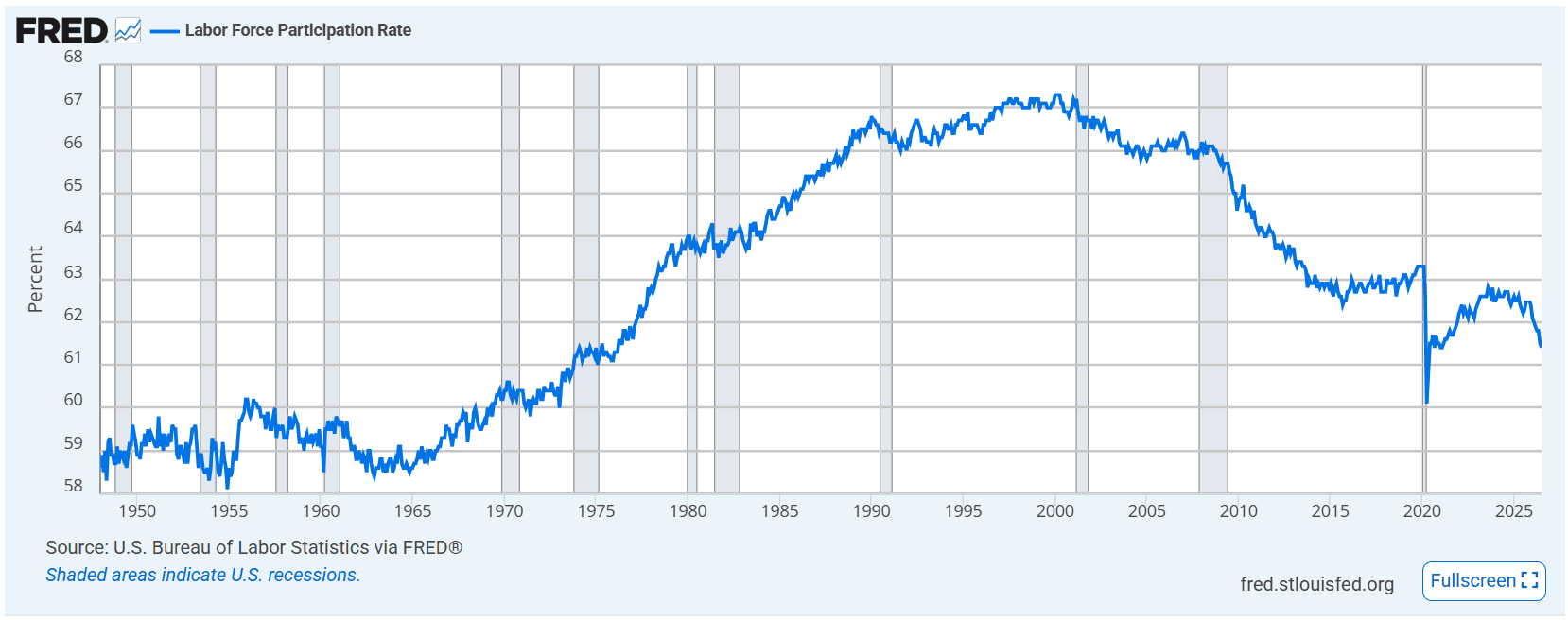
When headline payroll growth disappoints and prior months are revised lower, markets often interpret this as confirmation that labor market weakness is broad rather than noisy. That reading typically firms up Fed rate cut expectations, which is the direct catalyst behind a risk-on market rally. Falling participation, however, complicates this interpretation: a lower unemployment rate driven by workers exiting the labor force is a different signal than one driven by genuine hiring strength, a distinction explored further in our analysis of decelerating wage growth trends.
When the Reflex Breaks Down: Late-Cycle Economic Indicators to Watch
The bad-news-is-good-news dynamic isn't guaranteed to hold. It depends heavily on the inflation backdrop. If inflation is well-behaved, softer growth data supports a "goldilocks" outcome — slower growth, no hikes, an eventual easing path. If inflation is still elevated, the same soft data creates a much harder policy tradeoff.
Distinguishing Late-Cycle Cooling from Healthy Disinflation
This is where late-cycle economic indicators become essential. Notably, the NBER's Business Cycle Dating Committee places relatively little weight on the unemployment rate itself, instead prioritizing measures like payroll employment trends when identifying turning points in the business cycle. A jobless rate that falls only because of shrinking participation, combined with declining real wage growth and falling total employment, points toward late-cycle cooling rather than a benign slowdown — the same pattern flagged among key recession indicators portfolio managers should track.
The Hidden Risk in Economic Data Revisions
A less-discussed but material risk lies in the data itself. Initial payroll prints are estimates built from survey response rates that have declined significantly — falling from over 60% between 2016–2019 to less than 43% in recent years — and they are frequently revised, sometimes by large margins, in subsequent months.
Why First-Print Data Can Mislead Portfolio Decisions
Meaningful economic data revisions mean the number driving a same-day rally may look materially different within 60 days. Advisors building tactical decisions around a single print are effectively trading on a number the market itself may later disavow. This isn't a data integrity conspiracy — it reflects real measurement lag — but it's a structural reason to treat any individual report as probabilistic rather than definitive.
Building a Process-Driven Framework for Macro Interpretation
None of this means macro data should be ignored. It means data should inform a process rather than trigger a reaction. A durable framework treats each release as one input among several: participation trends, revision patterns, inflation trajectory, and policy language, weighted together rather than traded individually — the same logic underpinning systematic sell signal design.
Why Rules-Based Investing Removes Emotional Noise
This is precisely where rules-based investing earns its place in portfolio construction. As CFA Institute research notes, investment professionals can improve outcomes by recognizing behavioral biases and applying strategies to mitigate them, since complex decisions often default to heuristics rather than full rational analysis. Systematic frameworks apply consistent logic across releases instead of re-litigating strategy after every headline. They don't get swept into a rally on an ambiguous signal, and they don't panic-sell into a single hot print — a discipline that directly addresses the recency bias pressures advisors face from clients during volatile data weeks.
Conclusion
The market's reaction to weak economic data isn't irrational — it's a rational repricing of policy expectations that can diverge sharply from underlying economic health. Advisors who understand why does the stock market rise on bad economic news are better equipped to separate short-term rate-driven rallies from genuine improvements in fundamentals, and to build client conversations — and portfolios — around process rather than headlines.
Turn Market Frameworks Into Automated Strategy
Understanding why markets react the way they do to macro data is only half the equation. The harder problem for advisors is translating that understanding into a consistent, repeatable process — one that doesn't rely on manually re-evaluating every headline in real time.
This is exactly the gap Surmount Wealth's strategy infrastructure is built to close. Surmount Wealth allows RIAs and portfolio managers to build, test, and automate rules-based trade strategies directly on top of existing brokerage accounts — no fund transfers, no coding from scratch, no rebuilding your tech stack.
As a hypothetical illustration of how the framework discussed in this article could be structured into a systematic approach, consider a strategy built around the following criteria:
Signal inputs: Labor force participation trend, wage growth rate of change, and payroll revision magnitude, monitored jointly rather than in isolation
Confirmation layer: Core inflation trajectory, to help distinguish a genuine "goldilocks" setup from a late-cycle warning
Rules-based response: Predefined portfolio tilts that adjust systematically as these inputs shift, rather than being triggered by any single data release
This is a hypothetical concept only, shown for illustrative purposes. It has not been backtested, does not reflect actual performance results, and is not a recommendation to use this or any strategy. Any actual implementation would require its own testing, assumptions review, and risk disclosures specific to a client's objectives and constraints before use.
Why advisors are exploring automated strategy infrastructure like this:
Removes single-headline emotional reactivity from portfolio decisions
Applies consistent logic across every data release, not just the ones that make the news
Runs on top of your existing custodial relationships — no asset transfers required
Lets you test strategy logic against historical scenarios before considering live use
Frees up advisor time from manual macro monitoring to client-facing work
Scales the same rules-based discipline across every client account
If building a systematic, macro-aware framework like this is something your practice has been considering, Surmount Wealth's team can walk through how the platform supports custom and prebuilt strategy libraries tailored to your process.
Book+ a demo with Surmount Wealth
FAQ: Why Does the Stock Market Rise on Bad Economic News?
Why do stocks rally on weak jobs data?
Weak jobs data often lowers Fed rate expectations, which raises the present value of future earnings and fuels a risk-on market rally.
Is a falling unemployment rate always good?
Not necessarily — if driven by labor market weakness like falling participation rather than hiring, it can signal late-cycle cooling.
How reliable are initial jobs reports?
Less than commonly assumed. Economic data revisions are frequent and can meaningfully change the picture within two months.
What breaks the bad-news rally pattern?
Persistent inflation. If inflation stays elevated, weak data can force the Fed into a harder policy tradeoff instead of cuts.
Why use rules-based investing for macro data?
Rules-based investing applies consistent logic across every release, reducing emotional reactions to any single economic report.